


Bazzite 45 has officially launched, bringing updated graphics drivers, expanded gaming handheld compatibility and several improvements for Linux gamers. Released on November 3, 2026, the latest version is based on Fedora Linux 45 and introduces stable support for the ASUS ROG Xbox Ally X20, initial compatibility with the Acer Predator Atlas 8 and additional Logitech TrueForce racing-wheel support.
The Bazzite development team confirmed the release through its official Universal Blue announcement, detailing changes to the operating system’s gaming components, hardware support and update infrastructure. The release includes GNOME 51.1, KDE Plasma 6.8.2, Mesa 26.2.6 and updated Linux kernels, alongside improvements to Steam Input and optional gaming network optimizations.
Bazzite is a Linux distribution designed to provide a console-like gaming experience on handheld PCs while also supporting traditional gaming desktops and laptops. Unlike a standard Fedora installation, it includes gaming-focused software and device integrations intended to simplify running Steam games and managing handheld controls.
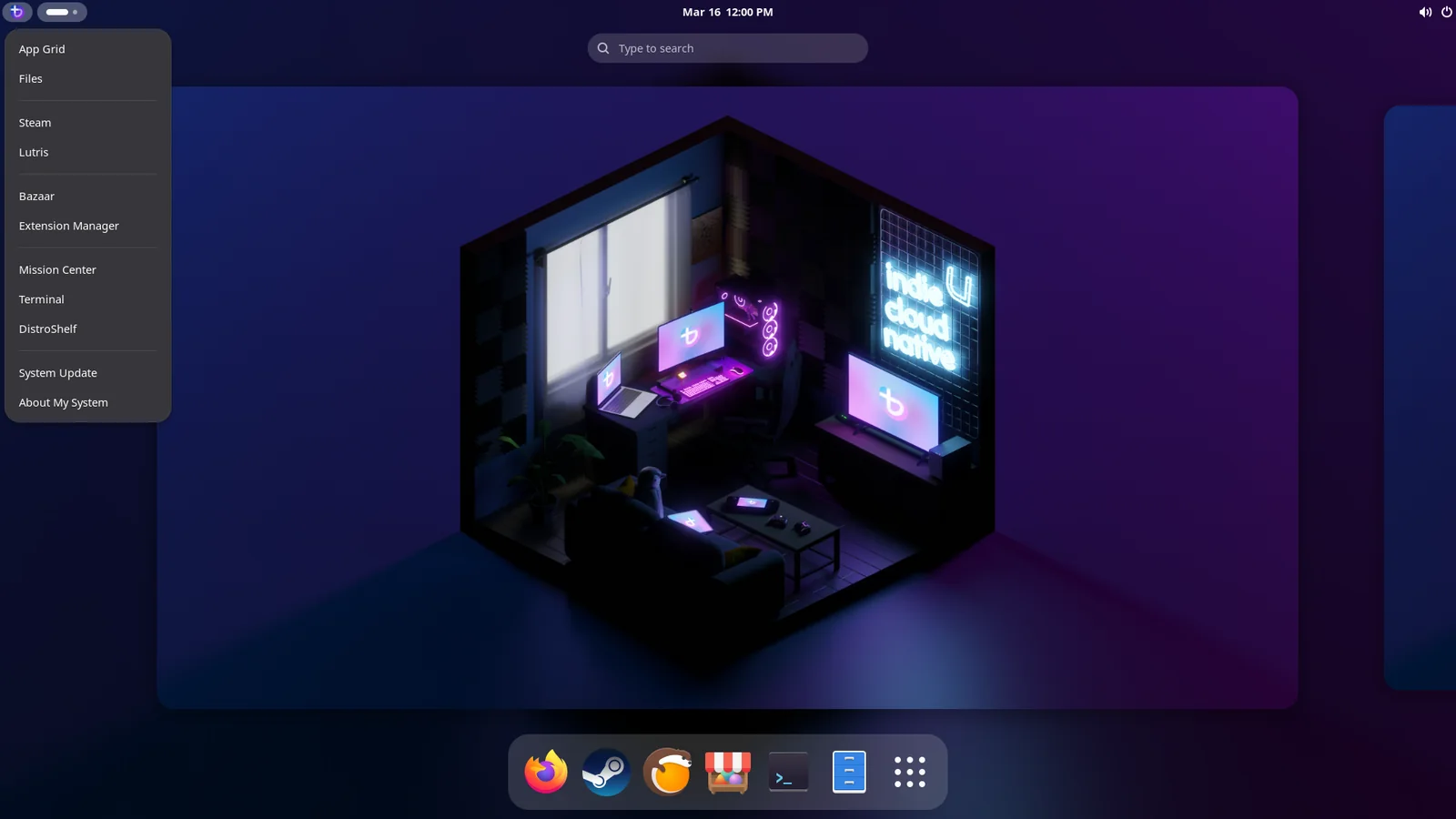
The new release builds on Fedora Linux 45's desktop and graphics improvements, adding Bazzite-specific features for gaming hardware.
One of the most significant changes is the arrival of stable support for the ROG Xbox Ally X20. The handheld had previously received preliminary Bazzite support through the testing branch, but compatibility has now been promoted to the stable release.
However, the development team acknowledges that a reported issue affecting custom thermal design power (TDP) settings remains unresolved in the stable version. A fix is still being prepared in the testing branch and is expected to reach stable builds later. This means Ally X20 owners who rely on custom power limits should be aware of the outstanding issue before upgrading.
Bazzite 45 also introduces initial support for the Acer Predator Atlas 8 gaming handheld. The implementation adds InputPlumber integration, a Quick Access Menu tap action and mappings for the device’s M1 and M2 rear buttons.
These additions are intended to improve handheld control integration, although the developers describe Predator Atlas 8 support as initial rather than complete.
Racing game enthusiasts also receive broader peripheral compatibility. Bazzite 45 adds Logitech TrueForce support, allowing additional compatible racing wheels to work out of the box. This expands the range of supported racing hardware without requiring users to configure the newly supported devices manually.
On the graphics side, the update moves to Mesa 26.2.6 and introduces updated OGC Linux kernels. The main kernel advances to version 7.2.15, while NVIDIA LTS images use kernel 6.18.60.
These updates refresh the underlying graphics and hardware compatibility components used by Linux gaming systems. However, Bazzite’s announcement does not provide gaming benchmarks demonstrating specific frame-rate improvements from the new Mesa or kernel versions.
The release also changes OpenCL support on non-NVIDIA images, replacing Mesa OpenCL with ROCm OpenCL. KDE editions no longer include XWaylandVideoBridge, with the developers stating that its removal addresses a group of existing issues.
Steam Input compatibility receives an adjustment through an updated extest library, which now supports the 64-bit Steam Beta client under Wayland. This is particularly relevant to users running the beta version of Steam on Bazzite systems.
Optional networking optimizations are available through the bpftune and bpfrag services. These additions provide further configuration options for gaming-related network behavior, although the developers have not published measurements showing reduced latency or improved online gaming performance.
Bazzite 45 also introduces a readiness checker for the forthcoming Easy Anti-Cheat Linux v2 requirements. The new `ujust check-anticheat` command examines security features including kernel and module signing, Secure Boot, TPM 2.0, measured boot, IOMMU and kernel lockdown.
The tool reports whether a system satisfies the published requirements and offers guidance on failed checks without automatically changing system settings. Its inclusion does not mean that games requiring Easy Anti-Cheat Linux v2 are already playable.
The developers specifically caution handheld users against enabling kernel lockdown for now and warn Steam Deck owners not to enable Secure Boot until further guidance is available.
Beyond gaming compatibility, Bazzite 45 brings changes to how system updates are built and distributed. Image chunks now use Zstandard compression, while the introduction of Chunkah and expanded image rechunking allows some updates to be as small as 100MB.
The developers also report that restructuring the build system has halved build times. These infrastructure improvements are designed to make releases easier to maintain while reducing download requirements for certain updates.
Additional changes include BTRFS maintenance controls through the BTRFS Assistant interface and an updated CoolerControl installation process that uses the project’s official Docker container instead of layering packages directly into the system.
Existing users who previously installed CoolerControl can rerun the installation command to switch methods or retain their existing layered installation.
Bazzite 45 is available through the stable release channel. Users currently running testing builds can return to stable using the `brh rebase stable` command provided by the development team.
Looking ahead, the project has begun testing Linux kernel 7.3.1 in its unstable branch, with particular attention to HDMI 2.1, variable refresh rate support and potential regressions following the Linux 7.2 series. These changes are still undergoing testing and are not part of the stable Bazzite 45 release.
For existing Bazzite users, the immediate benefits depend on their hardware and configuration. Ally X20 owners gain stable distribution support, Predator Atlas 8 users receive initial handheld controls, and desktop gamers receive refreshed graphics components and expanded peripheral compatibility without any confirmed across-the-board gaming performance gains.
