


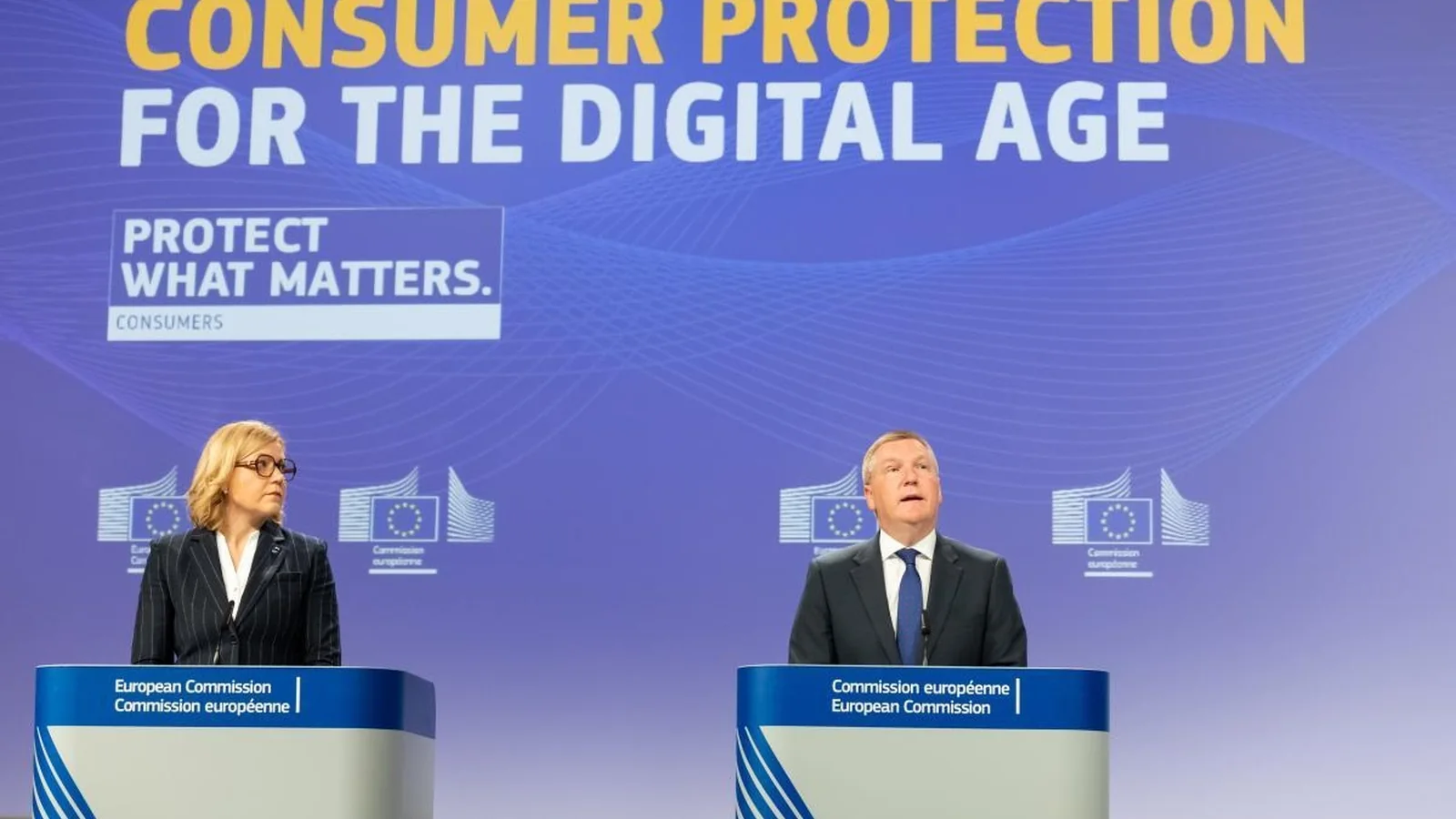
The European Commission has formally unveiled its Digital Fairness Act proposal, introducing potential EU-wide restrictions on video game loot boxes, premium virtual currencies, pay-to-win mechanics and features designed to encourage excessive spending. Presented on November 11, 2026, the proposed legislation would establish new consumer protection requirements affecting PC, console and mobile games offered to European players.
The proposal, officially designated COM(2026) 1100, includes requirements for developers and publishers to disclose loot-box probabilities, provide options to disable paid random rewards and restrict certain monetization systems for minors. It also addresses the real-money value of in-game currencies and design practices that encourage compulsive engagement.
The Digital Fairness Act is not yet law. The European Commission has adopted the legislative proposal, but it still requires approval through the European Parliament and Council legislative process. Its final provisions could change before implementation.
Article 15 specifically targets paid variable-reward systems, a category that includes loot boxes and similar mechanics where players spend money for randomized digital items. Under the proposed rules, companies would have to inform consumers about the types of items available and the probability of receiving them.
Developers would also need to provide easily accessible tools allowing consumers to disable paid variable-reward systems. For games directed at minors, or products that companies know with reasonable certainty are used by minors, those systems could no longer be offered to underage users.
These requirements go beyond simply displaying drop rates. They would give players the ability to switch off paid randomized reward mechanics while establishing separate restrictions intended to prevent minors from accessing them.
Article 14 introduces additional requirements for paid virtual currencies. Games that sell premium currency for purchasing digital items or other products would need to display the corresponding real-money value, or an estimated monetary equivalent, in the currency originally used by the consumer.
That provision could affect in-game stores where purchases are presented primarily through proprietary currencies rather than directly in euros or another real-world currency. The proposed requirement would make the monetary cost of those purchases more transparent.
Paid virtual currencies would also need to be disabled by default for minors in products covered by the provision. Parents or guardians would have to approve their activation.
The proposal separately addresses gameplay advantages sold through microtransactions. Article 16 would prohibit companies from offering pay-to-win and pay-to-progress mechanisms to minors when the relevant products are directed at children or are known with reasonable certainty to be used by them.
Unlike the restrictions concerning minors, the proposal does not establish a blanket prohibition on all paid loot boxes, virtual currencies or pay-to-win systems for adult players. Instead, it combines transparency requirements, consumer controls and stronger protections for younger users.
Another provision, Article 17, focuses on digital features that encourage compulsive or excessive engagement. Companies operating products with such features would have to provide accessible controls allowing consumers to disable them individually or together.
The proposal identifies several categories of potentially problematic design, including automatic content playback, notifications unrelated to a user’s activity and systems that reward frequent engagement or penalize users for failing to return regularly.
For gaming services, the latter category could be relevant to certain daily login rewards, recurring engagement incentives and systems that remove benefits when players miss scheduled activity. However, the legislation does not categorically ban every daily reward or login bonus. Its application would depend on whether a specific feature falls within the proposed criteria.
Article 13 also addresses personalized pricing. It would prohibit pricing based on consumer profiling where the practice is reasonably likely to harm minors or vulnerable consumers under the conditions specified in the proposal. This could affect digital storefronts and other services that personalize prices using information about individual users.
The Digital Fairness Act forms part of a broader European Commission initiative to modernize consumer protection rules. The proposed regulation would replace the existing Unfair Commercial Practices Directive with directly applicable EU legislation, reducing differences in how member states implement the common framework.
For game publishers operating across multiple European markets, this could establish a more consistent set of obligations for monetization systems, in-game purchasing and consumer-facing design.
The Commission has also proposed stronger enforcement arrangements through changes to the Consumer Protection Cooperation framework, including greater authority to investigate major cross-border consumer protection cases.
The potential gaming impact is significant because the proposed measures address monetization practices rather than particular platforms or game genres. Free-to-play titles, mobile games and premium releases containing paid randomized rewards or proprietary currencies could all be affected where their systems fall within the legislation’s scope.
However, developers are not currently required to implement these newly proposed measures solely because of the November 11 announcement. Existing EU and national consumer protection requirements remain applicable while the new legislation undergoes consideration.
No final implementation date has been established through the announcement. The precise obligations, exceptions and enforcement arrangements will depend on the legislation ultimately approved by EU lawmakers.
