


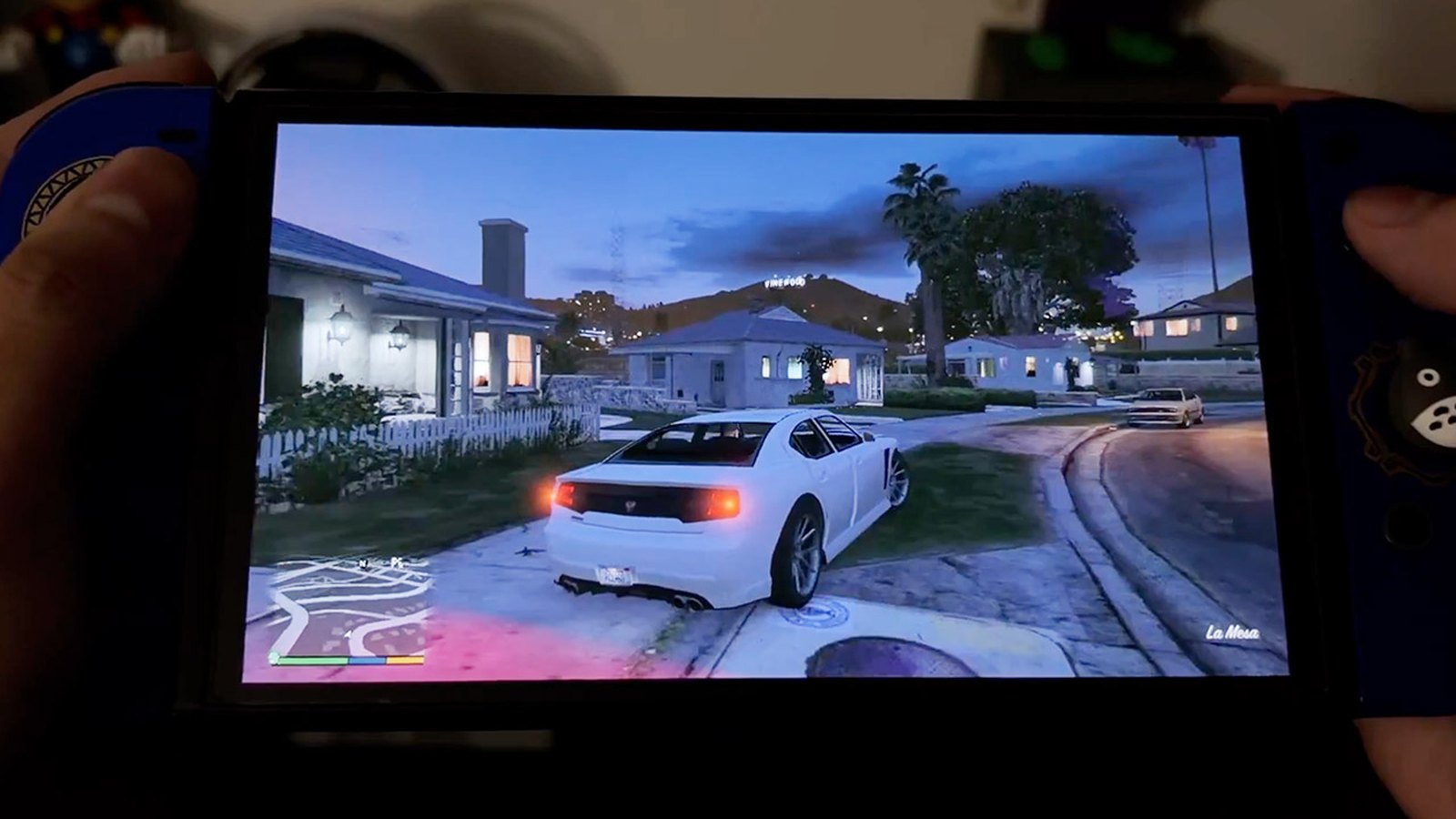
The unofficial native Nintendo Switch port of Grand Theft Auto V may be at heightened risk of enforcement after Rockstar Games surfaced dedicated mod guidelines that explicitly prohibit unauthorized ports of its games. Rockstar community researcher videotech highlighted the connection after the company’s policy language drew renewed attention, pointing to the recent Switch project as the kind of port covered by the restriction. Rockstar and Take-Two have not announced a takedown of the project, so any claim that removal is imminent remains speculation.
Rockstar’s policy on copyrighted material specifically identifies unauthorized ports as prohibited when they move existing game content to a platform or engine where that content is not officially available. That wording maps closely onto the community-built Switch version of GTA V, since Rockstar has never released the game for Nintendo Switch. The guidance also applies to the distribution or promotion of unauthorized modifications and ports that infringe Rockstar’s rights.
The Switch project emerged publicly in late August and early September 2026 from developer M0jso and the Paralympics Productions group. Unlike earlier attempts that relied on Linux, Android or remote streaming, the project runs GTA V natively on the original Switch by recompiling the game for the console’s ARM-based Tegra X1 processor. Reports on the project say it is derived from GTA V Legacy version 1.0.2699 and relies on source code that leaked from Rockstar several years ago.
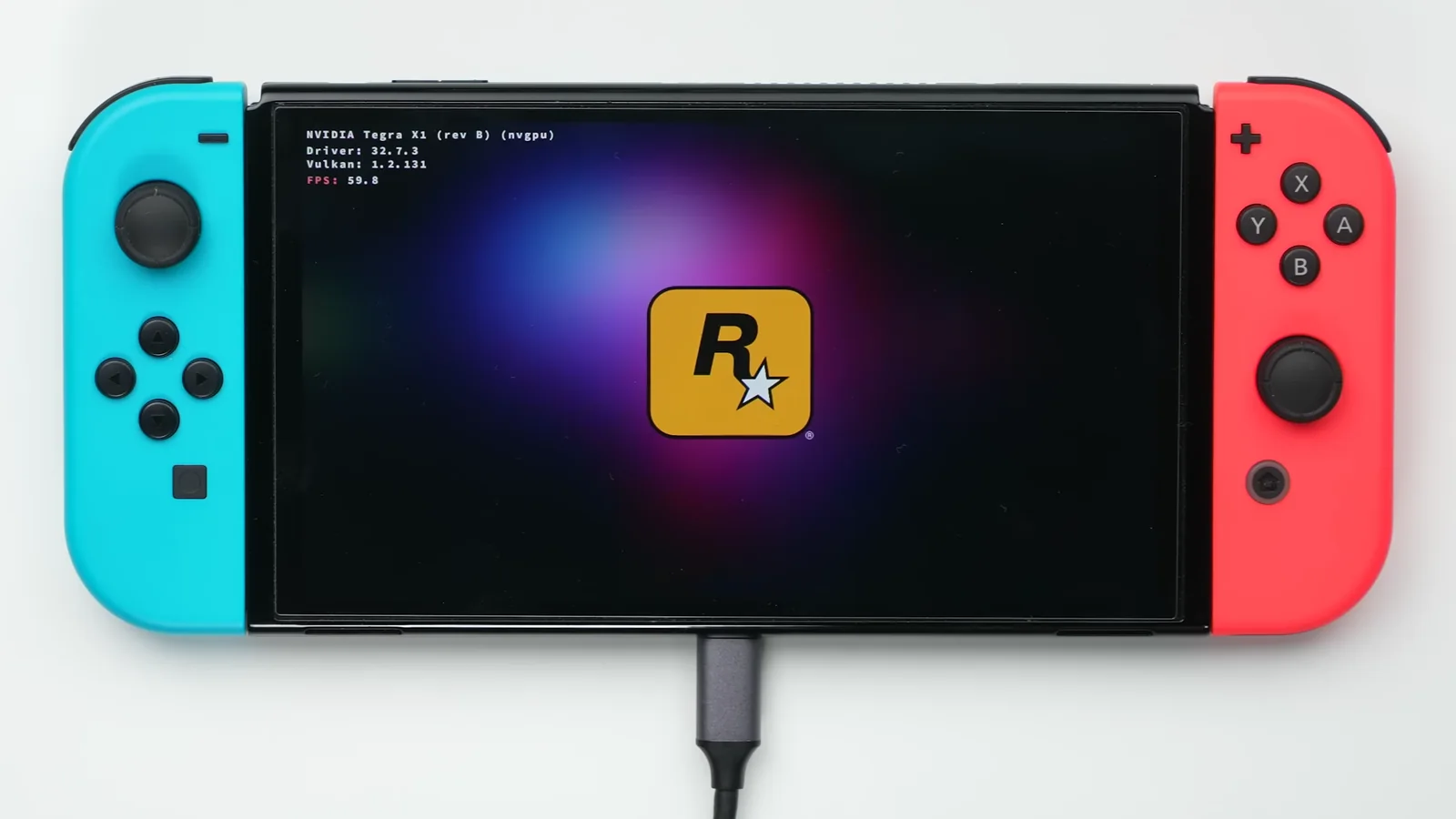
That origin creates a separate issue beyond ordinary fan-made modding. The leaked GTA V source code was never officially released for community development, and the Switch build is therefore not a clean-room recreation created solely from public interfaces or independently written code. Rockstar’s newly centralized guidance does not specifically name the Switch project, but its language around unauthorized ports makes the project’s status considerably clearer.
Performance demonstrations have shown the port running Story Mode and full missions on modified Switch hardware. On standard clocks, reported performance varies significantly depending on the scene, while overclocked systems can approach 30 frames per second. The build also requires a hacked console and is not something that can be installed through Nintendo’s official eShop or on an unmodified retail Switch.
Rockstar’s current policy does not mean every GTA V mod is prohibited. The company continues to tolerate certain non-commercial single-player PC modifications, provided they stay within its stated boundaries and do not interfere with online services, misuse third-party intellectual property or effectively recreate and distribute Rockstar content in prohibited ways. Moving an entire Rockstar game to a platform where no official version exists falls into a substantially different category from conventional gameplay, graphics or quality-of-life modifications.
Take-Two also has a history of enforcing its rights when leaked Rockstar material or unauthorized projects circulate publicly. More recently, the company has reportedly issued copyright complaints over images and footage derived from leaked early GTA VI map material, demonstrating that content originating from internal Rockstar data can attract direct enforcement. That does not establish that the Switch port has received a complaint, but it gives additional context to videotech’s warning.
The timing is particularly notable because a much larger Rockstar archive has surfaced online in recent days, containing GTA V development material and early GTA VI assets linked to the company’s earlier breach. The Switch port itself predates that newly circulated archive and has been associated with source code that became available following the earlier leak. Rockstar’s policy language nevertheless provides an explicit basis for challenging projects that use its game content to create unofficial platform ports.
M0jso has also been experimenting with bringing GTA V natively to Android using a similar ARM-focused approach. Rockstar’s rule is written broadly enough that an unofficial Android build would appear to raise the same underlying concern if it distributes or ports Rockstar game content to a platform where GTA V is not officially offered.
For now, the Nintendo Switch version remains an unofficial community project rather than a Rockstar-sanctioned release. Rockstar has not publicly named the project, issued an announced takedown or confirmed that enforcement action is coming. What has changed is that its published guidance now leaves little ambiguity about how the company categorizes unauthorized ports, putting the native GTA V Switch project firmly within an area Rockstar says it may act against.
