


Intel is reportedly developing a new entry-level processor called Arc G3 Play for affordable Windows gaming handhelds. The chip is expected to feature four Xe3 graphics cores, significantly fewer than Intel’s existing Arc G3 processors, with the company reportedly targeting handheld devices priced below $800.
The details come from a November 22 exclusive report by VideoCardz, which claims to have learned the branding and intended market positioning of Intel’s upcoming Panther Lake-based handheld processor. Intel has not officially announced Arc G3 Play, and its specifications, pricing targets and launch plans remain unconfirmed.
The reported processor would sit below the existing Arc G3 and Arc G3 Extreme models, which feature substantially larger integrated GPUs. The standard Arc G3 uses Intel Arc B370 graphics with 10 Xe3 cores, while the higher-end Arc G3 Extreme incorporates Arc B390 graphics with 12 Xe3 cores.
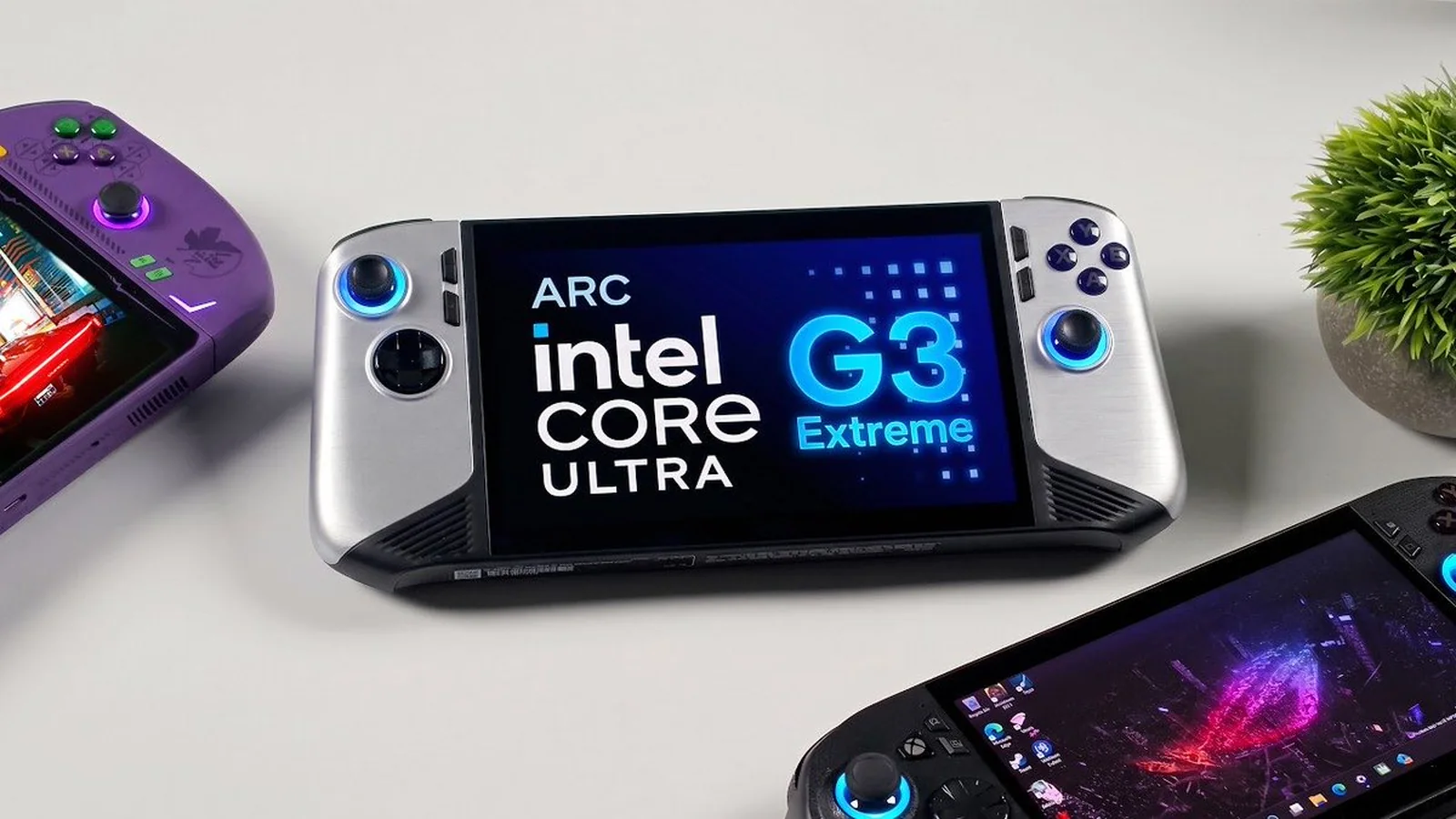
With just four Xe3 cores, Arc G3 Play would have 60% fewer graphics cores than the standard model and approximately 67% fewer than the Extreme variant. This represents a considerable reduction in graphics hardware, although actual gaming performance will also depend on clock speeds, memory bandwidth, power limits and other factors that have not been confirmed.
The processor’s CPU configuration remains uncertain. Earlier information from August suggested an eight-core design combining four Performance cores and four Low Power Efficient cores, alongside four Xe3 graphics cores.
More recent information from hardware leaker Jaykihn points toward a different configuration featuring eight Efficient cores without Performance cores or Low Power Efficient cores. VideoCardz suggests this newer arrangement is the more likely candidate, although Intel could still revise the design.
Power consumption is another unresolved detail. Previous reports indicated an operating range of approximately 8W to 25W for the lower-end chip, compared with maximum power limits of 30W and 35W for the Arc G3 and Arc G3 Extreme, respectively. However, those figures have not been confirmed for the newer eight-E-core configuration.
The reported sub-$800 positioning could make Arc G3 Play particularly relevant to manufacturers seeking less expensive alternatives to premium Windows handhelds. Intel’s current high-end platform already powers devices such as the GPD WIN Mini Ultra with Arc B390 graphics, which features a considerably more powerful GPU configuration.
That device also illustrates the substantial price difference Intel’s rumored entry-level processor could address. The GPD WIN Mini Ultra starts at $1,699, placing it well above the price segment reportedly being targeted by Arc G3 Play. However, the proposed $800 threshold is a target rather than a confirmed retail price for any upcoming product.
The smaller GPU configuration suggests Arc G3 Play would be better suited to less demanding games or reduced graphics settings than its higher-end counterparts. Intel’s XeSS upscaling technology could potentially help improve playable frame rates, but no independent gaming benchmarks are available to establish the chip’s capabilities.
Intel officially introduced the Arc G3 family for gaming handhelds earlier in 2026, using Panther Lake silicon and its Xe3 graphics architecture. The rumored Play variant would extend that family into a lower performance and potentially more affordable category.
For now, GPU clock speeds, memory support, final CPU specifications and compatible handheld devices remain unknown. Intel has also provided no official release date or confirmation that Arc G3 Play will reach commercial products.
