


Valve’s Steam Deck is being used to control a Mars rover prototype during testing at Airbus’ facility in Stevenage, England. The unusual setup appeared during a recent visit by science and technology presenter Tom Scott, who was given a Steam Deck running custom software and used it to drive one of Airbus’ rover test vehicles in real time. The handheld is being used as a terrestrial control interface rather than as hardware intended to travel to Mars.
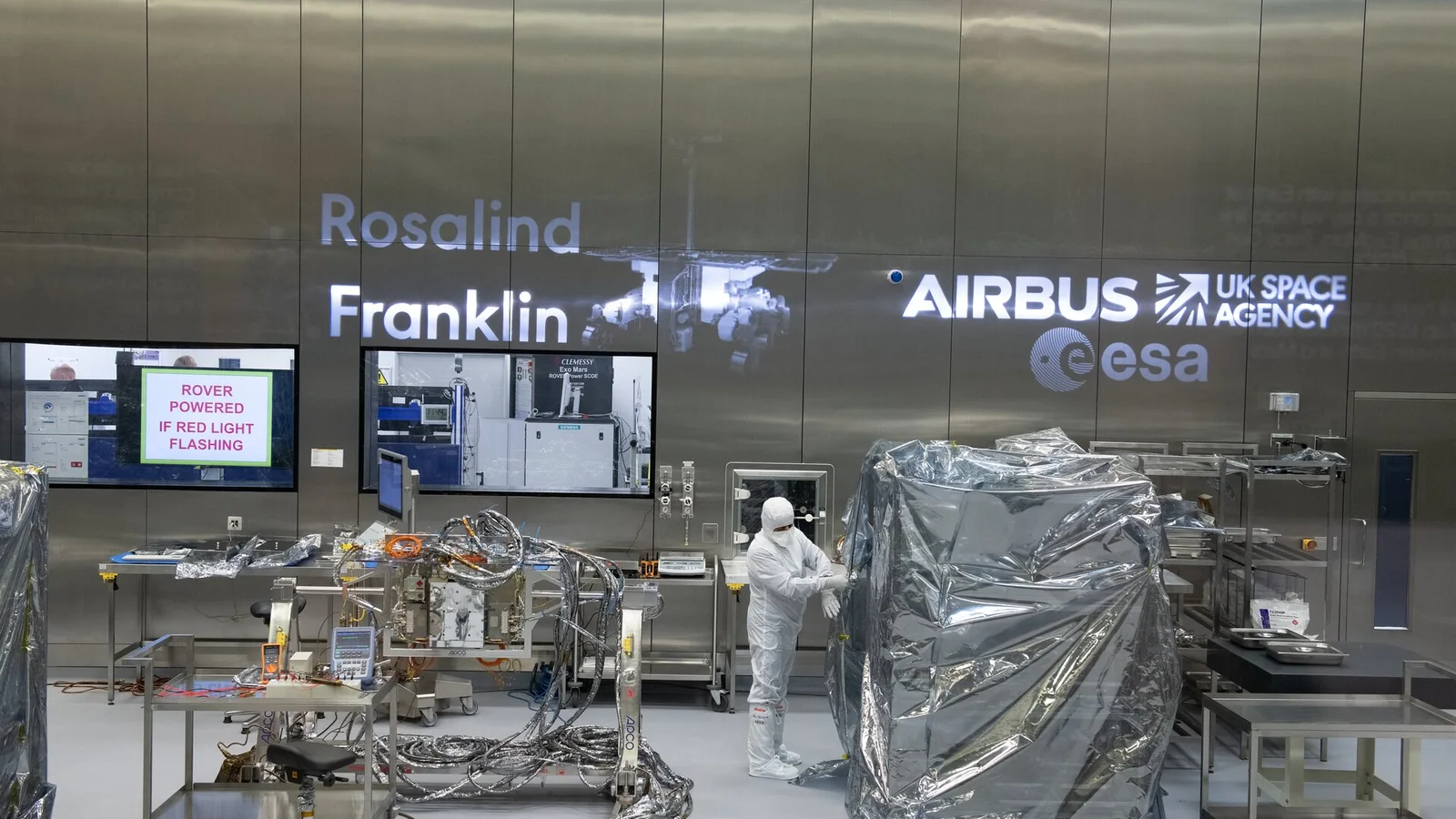
The rover work forms part of Airbus’ long-running involvement with the European Space Agency’s ExoMars Rosalind Franklin mission. Airbus built the Rosalind Franklin rover in the UK and is also developing systems for the European landing platform that will deliver it safely to the Martian surface. ESA currently plans to launch the mission in 2028, with the rover expected to arrive on Mars in 2030.
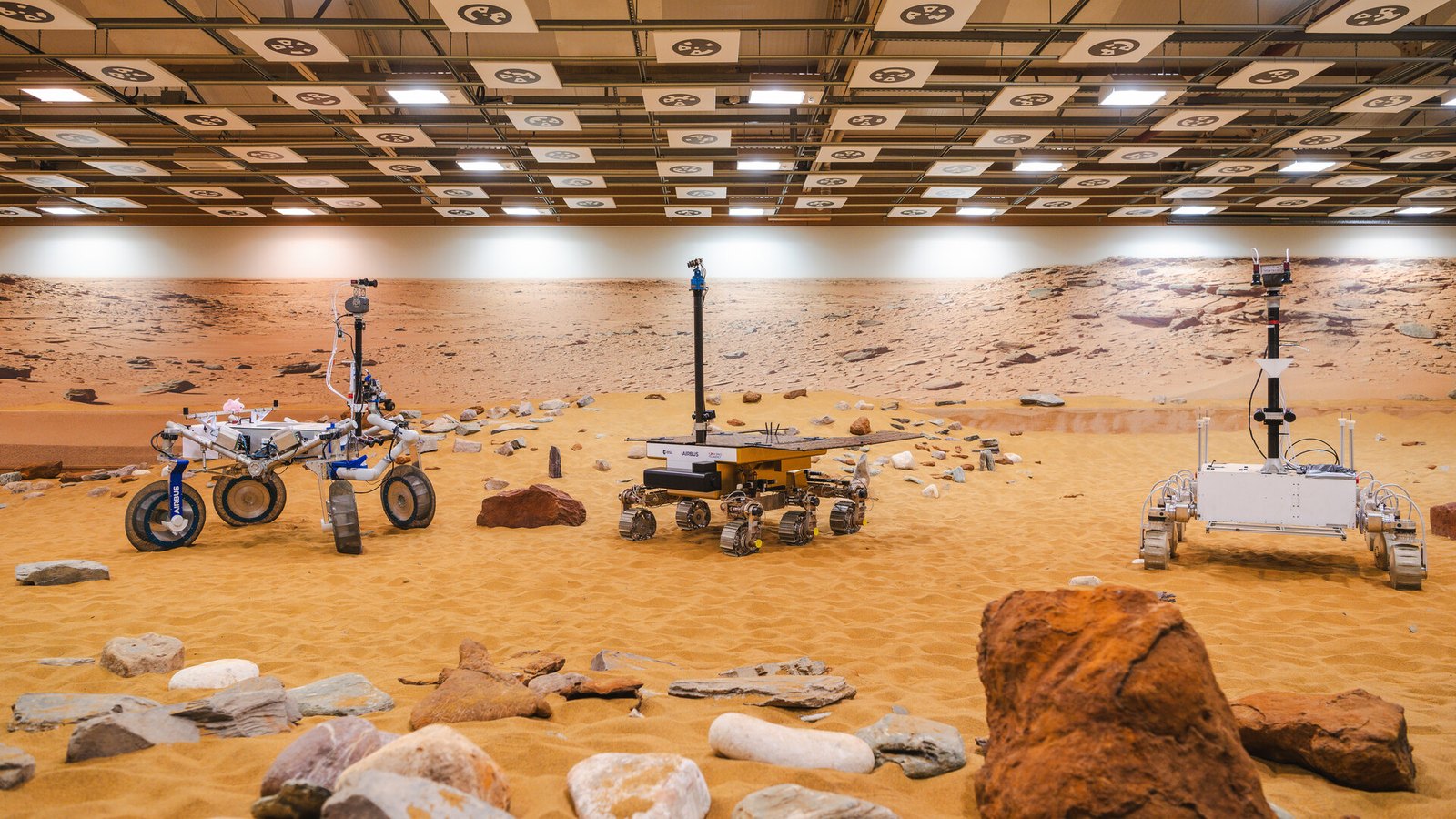
Scott’s video was filmed at Airbus’ Mars Yard, a purpose-built area containing terrain designed to replicate some of the conditions a rover could encounter on Mars. During the demonstration, an Airbus engineer initially controlled a prototype through a laptop before Scott was handed the Steam Deck and allowed to steer another test rover directly. The footage does not identify the software running on Valve’s handheld or explain the communication method used between the Deck and the vehicle.
The Steam Deck is particularly suited to this kind of experimental control setup because it is effectively a compact Linux PC with a screen and integrated gamepad. Its analog sticks, triggers, buttons, trackpads and touchscreen can provide the physical inputs needed to operate a robotic vehicle without requiring a separate laptop and controller. Valve also allows users considerably more freedom to install conventional software than would typically be available on a locked-down game console.
That flexibility is one of the defining characteristics of the handheld even as Valve considers future hardware. The company has said that its Steam Deck 2 plans remain focused on waiting for a substantial performance and efficiency improvement rather than releasing a minor upgrade. Airbus’ use demonstrates a different advantage of the current model: its combination of PC hardware and integrated controls can make it useful well outside conventional gaming.
The Steam Deck is not taking over the navigation duties that Rosalind Franklin will eventually perform on Mars. Directly steering a rover from Earth is impractical because of the communication delay across interplanetary distances, so Mars vehicles must be capable of making many navigation decisions without instantaneous instructions from human operators. Airbus has spent years testing autonomous navigation systems using rover prototypes at its Stevenage facility.
The production Rosalind Franklin rover will use cameras and onboard navigation systems to understand its surroundings and move across the Martian surface. Airbus says prototypes have been used for years to test locomotion and navigation technology before those systems are committed to the flight rover. Local manual control remains useful during Earth-based development because engineers need a practical way to position prototypes, test their movement and recover them while evaluating new software and hardware.
Rosalind Franklin’s scientific mission is considerably more ambitious than the Steam Deck demonstration might suggest. The rover is designed to search for evidence of past or present life and will be capable of drilling as deep as two meters below the Martian surface, where material is better protected from radiation and extreme environmental conditions. Samples collected by the drill will be examined using the rover’s onboard scientific instruments.
The appearance of a consumer handheld in a professional robotics environment also reflects the growing overlap between general-purpose computing hardware and specialized robot-development tools. Modern robotics platforms increasingly make use of familiar software environments and accelerated computing hardware, including frameworks such as NVIDIA’s Isaac ROS robotics platform, even when the finished machines themselves require highly specialized components.
Airbus has not indicated that the Steam Deck is an official component of the ExoMars mission or that it will have any role once Rosalind Franklin reaches Mars. Instead, the footage shows engineers using readily available hardware as a convenient interface during prototype testing on Earth. It is a small part of a much larger development program, but also a particularly visible example of how Valve’s gaming handheld can be repurposed as a general-purpose robotics controller.
