

Samsung Electronics and SK hynix have reportedly secured access to elements of Yangtze Memory Technologies’ (YMTC) proprietary Xtacking technology through patent cross-licensing agreements, as both South Korean memory manufacturers work toward higher-density 3D NAND flash.
According to November 25 reporting from Nikkei Asia, citing three people briefed on the matter, the agreements allow both manufacturers to incorporate aspects of the Chinese chipmaker’s technology into their NAND architectures. The full licensing terms and financial arrangements remain undisclosed.
Introduced by YMTC in August 2018, Xtacking separates NAND memory cells and peripheral logic circuitry onto independently manufactured silicon wafers. These wafers are subsequently joined through a bonding process that establishes electrical connections between the two components.
The architecture allows manufacturers to optimize memory cells and control circuitry independently, offering potential advantages in storage density, data transfer speeds and manufacturing flexibility. YMTC subsequently introduced its fourth-generation Xtacking technology, which received an innovation award at the Future of Memory and Storage conference in August 2025.
Conventional NAND architectures used by Samsung and SK hynix place memory cells above peripheral circuitry on the same wafer. As manufacturers approach and exceed 400-layer designs, increasing mechanical stress presents additional manufacturing challenges. Separating these components through wafer-to-wafer bonding provides an alternative approach.
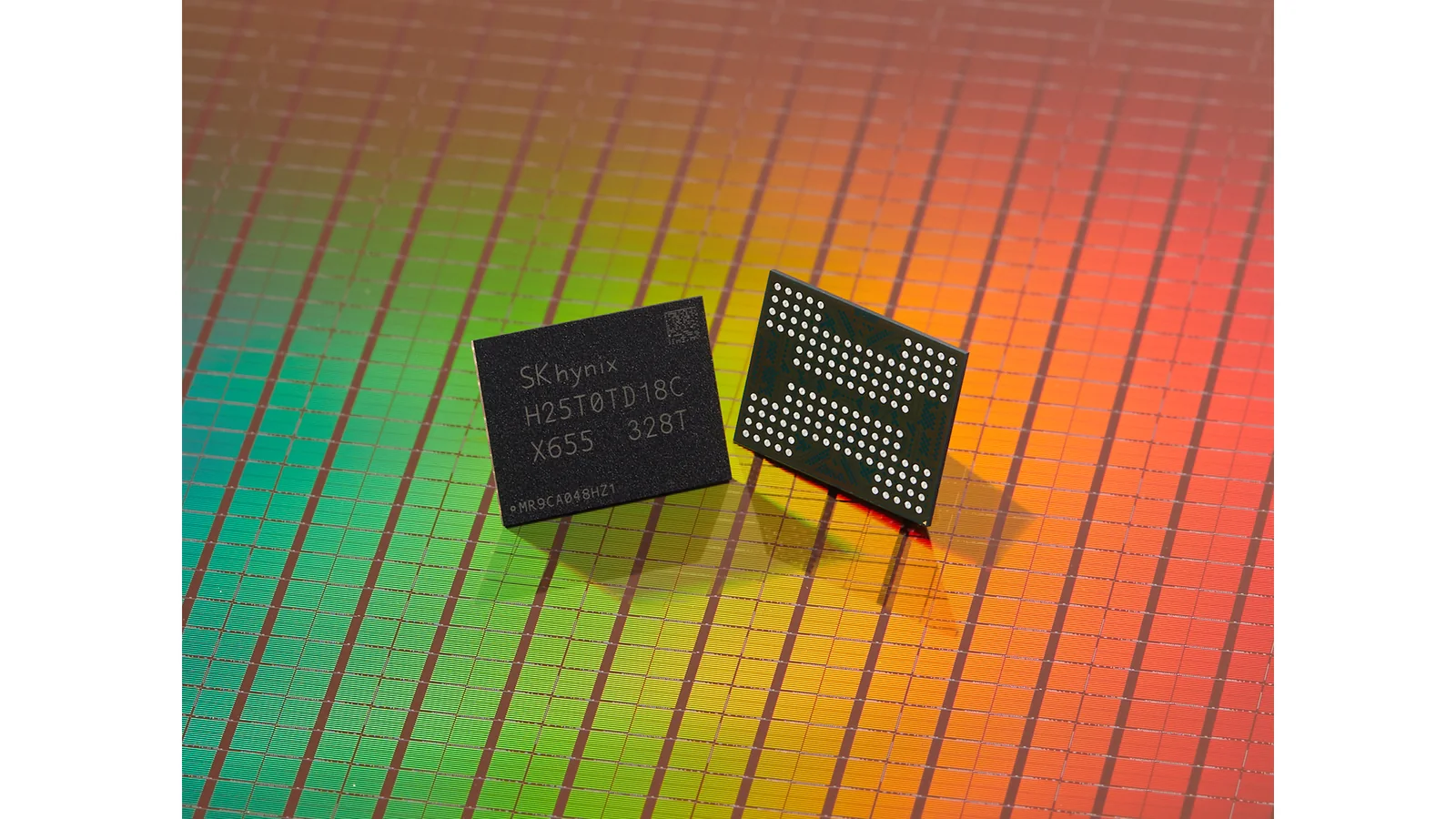
Samsung showcased its 400-plus-layer, tenth-generation V-NAND technology at FMS 2026, while SK hynix demonstrated its 375-layer, tenth-generation 4D NAND. Access to YMTC’s intellectual property could help both manufacturers advance their bonding techniques while reducing the risk of patent disputes.
The reported licensing agreements come as Samsung is also pursuing a major NAND flash production expansion.
For PC enthusiasts, higher-density NAND could eventually enable greater SSD storage capacities within existing physical form factors. However, the reported agreements do not establish when consumer SSDs incorporating the licensed technology will become available or whether they will deliver lower prices or measurable performance improvements.
