


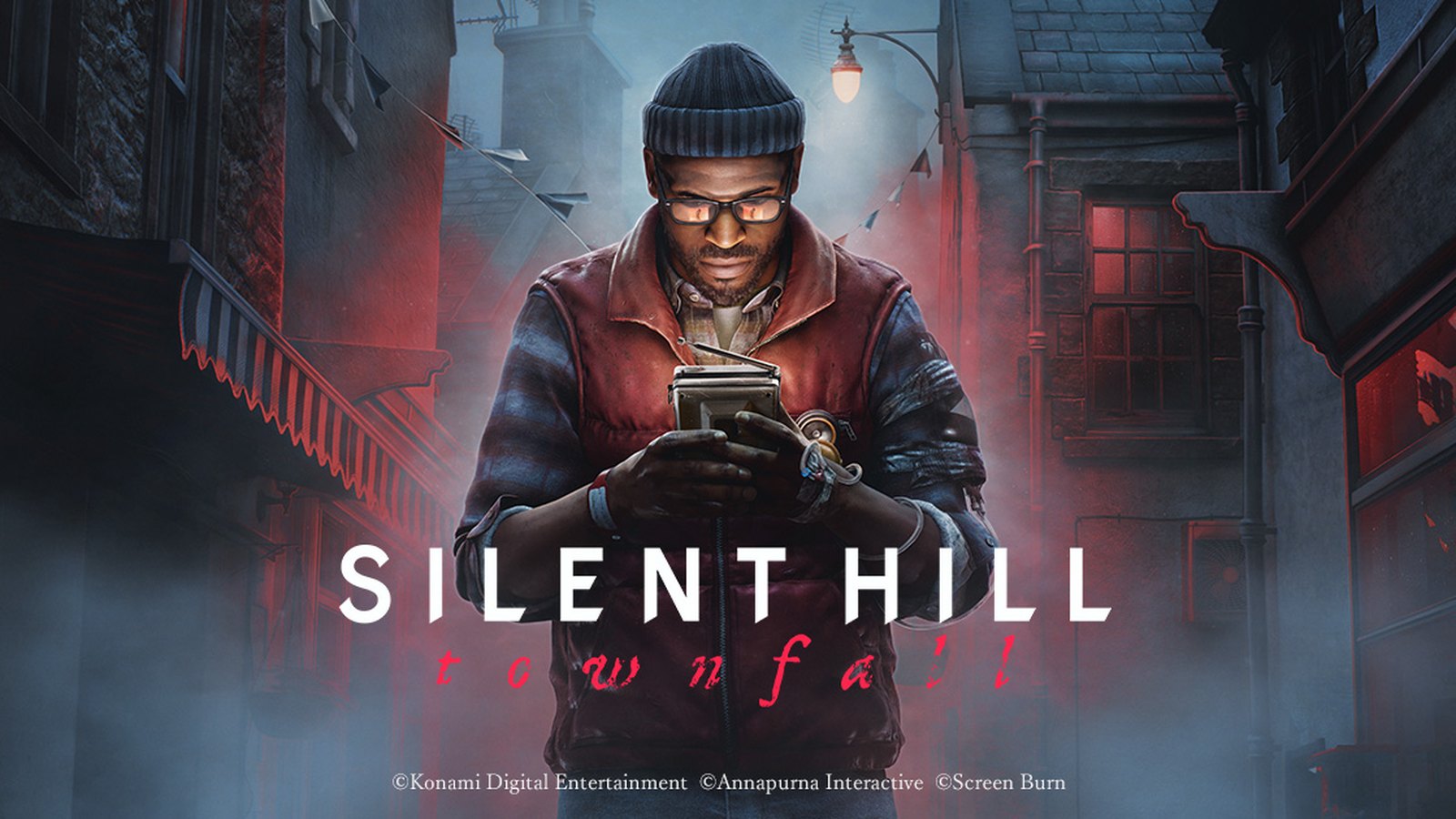
Silent Hill: Townfall reviews are now live ahead of the game’s September 24 release, and the first wave of criticism is broadly positive. Early aggregates place the game in the low-80s range, while individual scores span from perfect ratings to more mixed verdicts focused on its stealth systems. The overall picture is of a game widely praised for atmosphere, story and puzzle design, but with considerably less agreement around how well its first-person stealth mechanics work.
Noisy Pixel awarded Townfall a 10/10, describing it as a major reinvention of the series and praising its unpredictable narrative, first-person horror, puzzle design and lethal survival-horror combat. The outlet highlighted the CRTV as an especially useful evolution of Silent Hill’s traditional radio, allowing players to track monsters by tuning into their frequencies. Its main criticism centered on uneven resource balancing in later sections rather than the game’s broader structure.
Several other outlets also landed toward the upper end of the scale. Sirus Gaming gave Townfall a 9/10, praising its puzzles, exploration and immersive presentation while arguing that its heavier emphasis on stealth feels different from recent Silent Hill entries without abandoning the series’ core identity. Scores shared across the wider review round include 9s from GamingBible, GamingTrend, GamingBolt and others, along with an 8.5 from Game Rant.
The more divided reactions tend to focus on stealth. The Outerhaven awarded Townfall three out of five stars, praising its emotionally grounded story, atmosphere and integrated puzzle design while criticizing mandatory stealth sequences, restrictive encounters and stretches of passive hiding. That criticism closely mirrors one of the biggest questions surrounding Townfall’s design: whether its shift toward first-person evasion strengthens Silent Hill’s vulnerability or becomes too mechanically rigid.
That first-person structure is central to the game. Townfall uses the viewpoint to reshape combat, stealth, navigation and puzzles, with players able to lean around cover, hide inside environmental objects and use the CRTV to detect enemies through fog and scenery. Combat remains dangerous, encouraging avoidance rather than allowing players to simply overpower most threats.
The technical presentation has also received consistent attention. On PlayStation 5, Townfall supports ray-traced lighting, 3D audio and extensive DualSense functionality, including haptic feedback and adaptive trigger effects. Reviewers have generally praised the game’s fog-heavy environments, lighting and sound design, with several describing the audiovisual presentation as one of its strongest elements.
Story and puzzles appear to be another area of relative agreement. Reviews repeatedly point to the narrative, environmental storytelling and multi-stage puzzle design as strengths, with Townfall leaning heavily into investigation rather than constant combat. The game follows Simon Ordell as he returns to St. Amelia, with its story unfolding through multiple characters and perspectives as the island’s past becomes increasingly important.
Not every assessment is equally enthusiastic. UnGeek described the game as immersive and unsettling but inconsistent, arguing that some of its strongest ideas are not always developed as fully as they could be. Other reviews similarly suggest that Townfall’s experimentation produces both its most distinctive moments and some of its roughest mechanical sections.
The review embargo also arrives as major story spoilers are already beginning to circulate. A complete Townfall playthrough appeared online ahead of launch, meaning players planning to experience the narrative fresh may want to be cautious around video recommendations and social media.
Silent Hill: Townfall launches September 24 for PlayStation 5 and PC, with Deluxe Edition early access beginning beforehand. Early critical reception suggests Screen Burn Interactive’s first-person approach has largely worked, particularly in atmosphere, story and puzzle design, while its stealth-heavy structure is emerging as the clearest dividing point among reviewers.
