



Steam has already surpassed its previous annual record for game releases, with SteamDB tracking 27,286 games released in 2026 as of November 18. That exceeds the approximately 21,185 games recorded throughout 2025, even though more than six weeks remain in the current year.
The figures highlight the accelerating number of games arriving on Valve’s PC storefront, raising questions about game discovery and the challenges facing independent developers. The increase also comes as Valve acknowledges difficulties processing the growing number of games submitted for release.
SteamDB’s release statistics show that the number of new games appearing on Steam has increased substantially during 2026. The highest monthly total recorded so far this year reached approximately 3,738 releases, compared with a monthly peak of 2,415 in 2025.
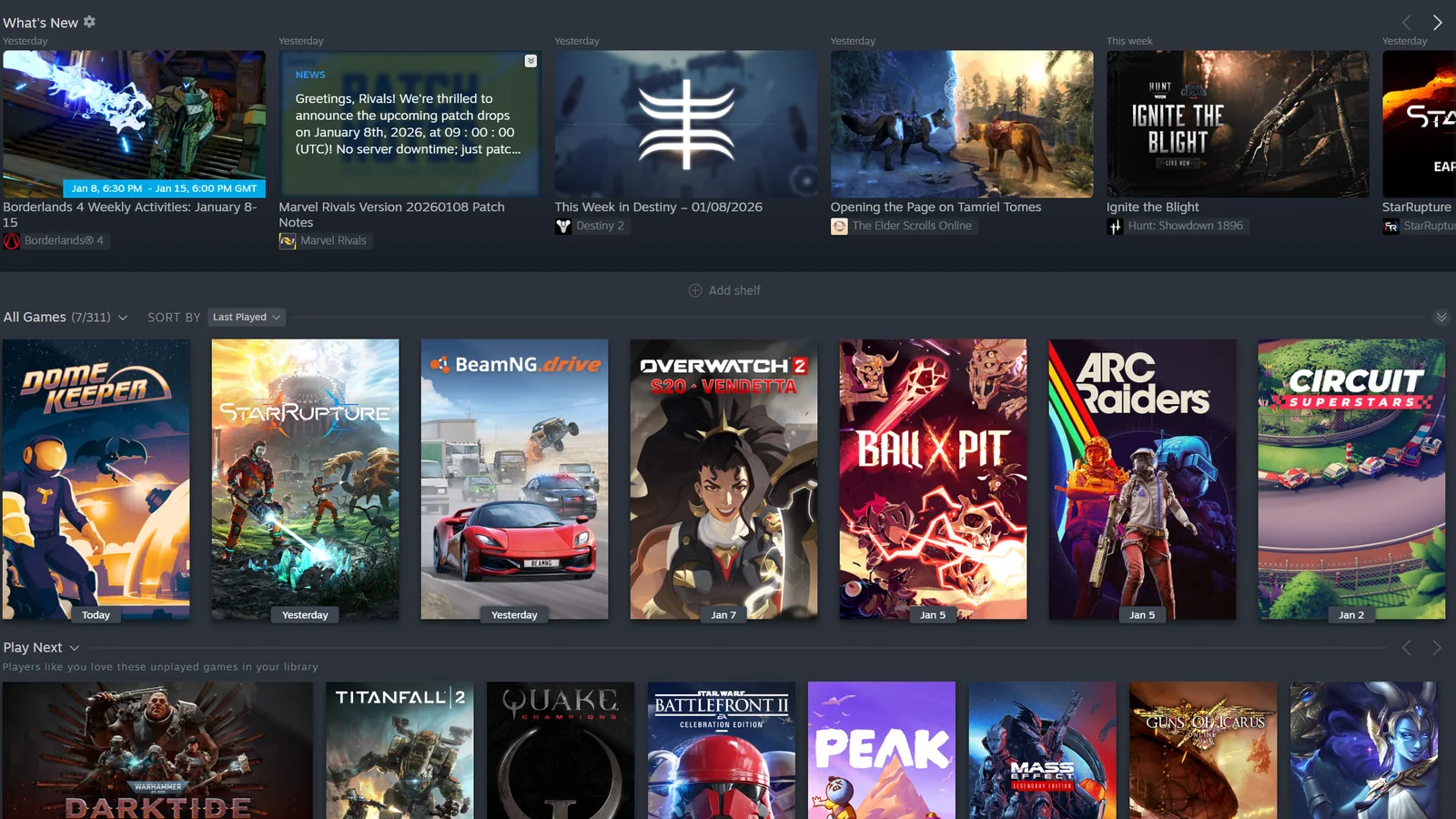
The annual figures represent an increase of roughly 29% over the entirety of last year’s releases, with November and December still contributing additional titles. SteamDB’s statistics are continually updated, meaning the totals may change as more games are added or existing records are revised.
Generative AI disclosures have also increased alongside the number of releases. SteamDB data highlighted in the November 18 analysis shows approximately 13,445 games released in 2026 carrying an AI-generated content disclosure, compared with 4,682 during 2025.
These disclosures indicate that developers have reported using generative AI somewhere in their projects, but they do not necessarily mean the entire game was AI-generated. Disclosed uses can include artwork, written content, development assets and other production elements.
The trend is consistent with a separate examination of generative AI disclosures among October 2026 Steam releases, which found that 49.9% of games released that month disclosed AI use.
However, the growing prevalence of AI disclosures does not establish that AI-generated content is responsible for the overall increase in releases or Valve’s processing delays. Steam’s expanding catalogue includes games developed using a variety of production methods, and Valve has not identified generative AI as the primary cause of its review backlog.
The rapid growth is already creating operational challenges for Steam. In a November 3 Steamworks announcement, Valve acknowledged a significant increase in submissions for store-page and game-build reviews during recent months.
Valve explained that game-build reviews, which typically take three to five business days, were taking as long as 12 business days. The company attributed much of the delay to games requiring additional reviews after their initial submissions.
To address the problem, Valve introduced changes to its pre-release review process, including additional checklist requirements designed to help developers identify problems before submitting builds. The changes are intended to reduce repeated reviews and improve approval efficiency.
The longer Steam build-review times have practical consequences for developers preparing launches, particularly smaller studios working toward announced release dates. Games awaiting approval may need additional scheduling flexibility if their initial submissions require corrections.
For players, the growing catalogue presents a different challenge: finding worthwhile new releases among thousands of games arriving each month. More releases provide a wider selection of titles, but also increase competition for attention across Steam’s discovery and recommendation systems.
For independent developers, that competition can make visibility increasingly important. Games launching during particularly crowded periods must compete with both established publishers and numerous smaller releases for storefront exposure and potential customers.
The increasing number of AI-disclosed titles adds another dimension to the debate over Steam’s expanding catalogue, although disclosure statistics alone cannot determine a game’s quality, originality or commercial prospects.
With 2026 already ahead of last year’s total and additional releases scheduled before December ends, Steam is on course to establish another annual release record. The longer-term challenge for Valve will be accommodating the growing volume of submissions while maintaining an effective approval process and helping players discover games across an increasingly crowded storefront.
