


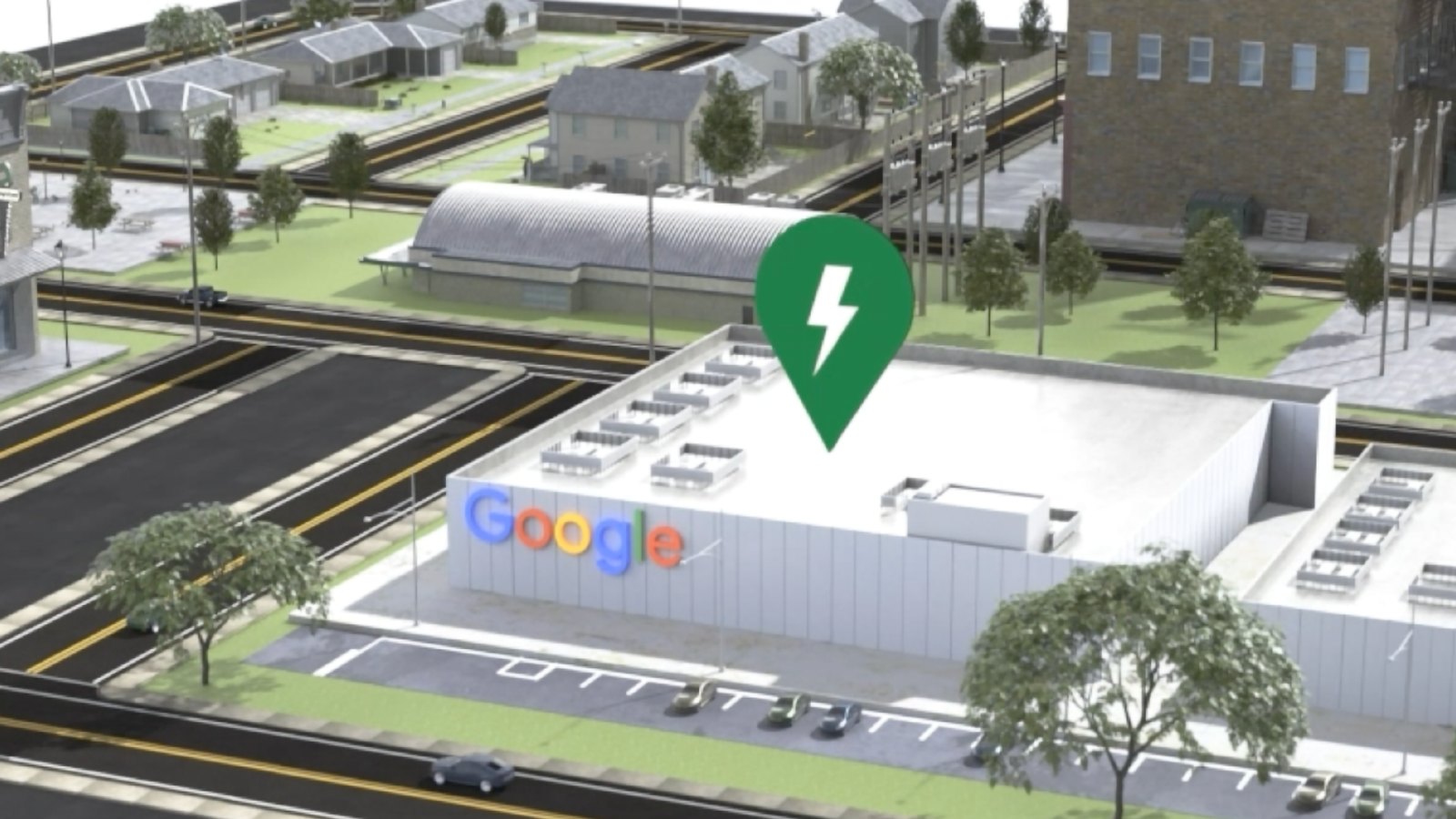
Google, NVIDIA and Emerald AI have launched the AI Energy Management Alliance, a new industry coalition focused on making large AI data centers more flexible in how they consume electricity. Announced on September 16, the group aims to help AI facilities dynamically reduce or shift power consumption when electricity grids are under stress, potentially allowing new data centers to connect faster while limiting pressure on utility infrastructure and consumer energy costs.
The alliance brings together companies from across the AI and energy industries, including AI developers, data center operators, utilities and power producers. Members and participants include Anthropic, National Grid, AES, Constellation, NRG and RWE alongside founding companies Google, NVIDIA and Emerald AI. Rather than promoting a particular hardware or software platform, the organization says its approach will be technology-neutral and based on measurable performance.
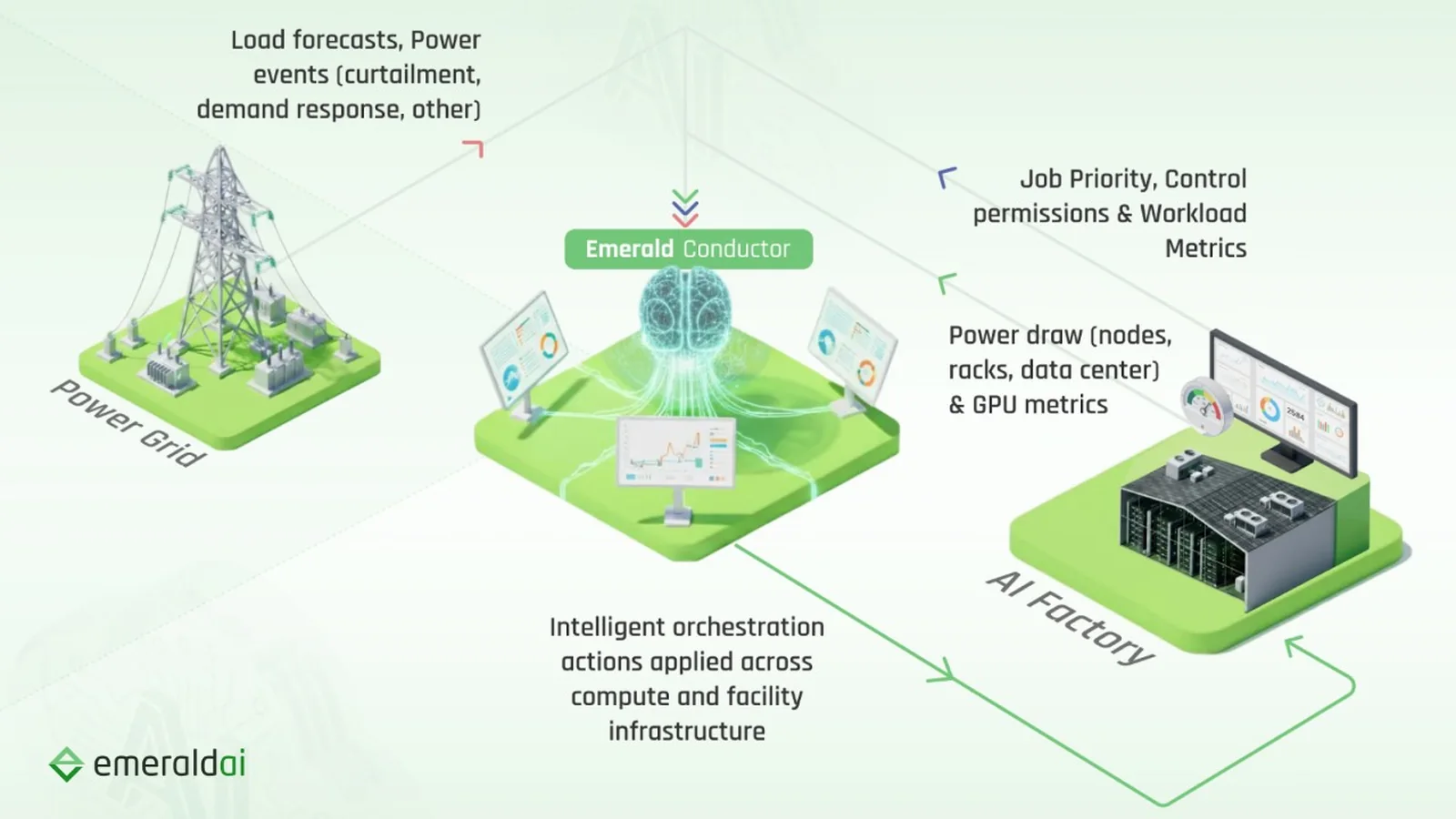
The underlying idea is to treat AI data centers as controllable electricity loads instead of facilities that continuously require their maximum grid connection. During periods of high demand, a flexible site could temporarily move or slow less urgent computing workloads, discharge energy storage, use local generation or otherwise reduce how much electricity it draws from the grid. Critical computing jobs could continue operating while workloads capable of waiting are deferred until more capacity becomes available.
AEMA plans to develop standards around how those commitments are measured and enforced. NVIDIA says the framework will examine factors including response speed, how long a facility can sustain reduced demand, predictability and behavior during grid emergencies. The coalition also wants standardized operational data sharing and clearly defined requirements covering curtailment, contingency responses and the ability of facilities to remain connected during brief disturbances.
Those commitments could eventually influence how utilities decide which data centers receive grid connections. AEMA is advocating for faster, risk-adjusted interconnection pathways for operators that can demonstrate reliable flexibility, while also arguing that connection costs should reflect the actual burden or benefit a facility places on the electricity system. The objective is to avoid designing every grid connection around the assumption that a data center will require its maximum possible power at all times.
Power availability has become one of the main constraints on the rapid expansion of AI infrastructure. AEMA says some major U.S. markets can currently require five to seven years to connect large new AI data centers to the grid. The organization argues that moderate flexibility could unlock substantial capacity already available within existing infrastructure because electricity systems are designed around relatively rare periods of peak demand rather than operating at maximum capacity throughout the year.
The alliance cites research suggesting flexible data centers could unlock as much as 100 gigawatts of capacity on the existing U.S. grid. Its website also points to demonstrations in which AI infrastructure reduced electricity consumption by roughly a third in under a minute during emergency scenarios. Those figures illustrate the scale of the opportunity being targeted, although translating experimental results into widespread commercial grid agreements will require cooperation from utilities and regulators.
Emerald AI and NVIDIA have already tested similar technology in operational environments. Emerald’s Conductor platform can receive signals from utilities and automatically adjust lower-priority AI workloads while preserving more important jobs. In one recent deployment involving Silicon Valley Power, an AI facility responded automatically to hundreds of demand signals, demonstrating the type of grid-responsive operation the alliance wants to make easier to deploy commercially.
NVIDIA is simultaneously building this flexibility into its broader AI infrastructure strategy. Its DSX Flex work is designed to coordinate computing workloads with changing grid conditions, complementing the company’s wider push around new NVIDIA AI computing platforms and software. Google has also been developing demand-response agreements that allow some of its data center electricity consumption to be reduced when utilities face unusually high demand.
AEMA will also have a policy role. The organization says it intends to work with the Federal Energy Regulatory Commission, the Department of Energy, state regulators and utilities on rules governing large electricity users, interconnection and transmission. Those discussions are becoming increasingly important as AI companies plan facilities requiring hundreds of megawatts or even gigawatts of power.
The AI Energy Management Alliance is therefore less about reducing the overall computing ambitions of AI companies than changing when and how that electricity is consumed. Google, NVIDIA and Emerald AI are betting that making AI workloads flexible could help data centers expand without requiring every new project to wait for years of grid construction. Whether utilities and regulators ultimately adopt those models at scale will determine how much additional AI infrastructure the approach can actually unlock.
