


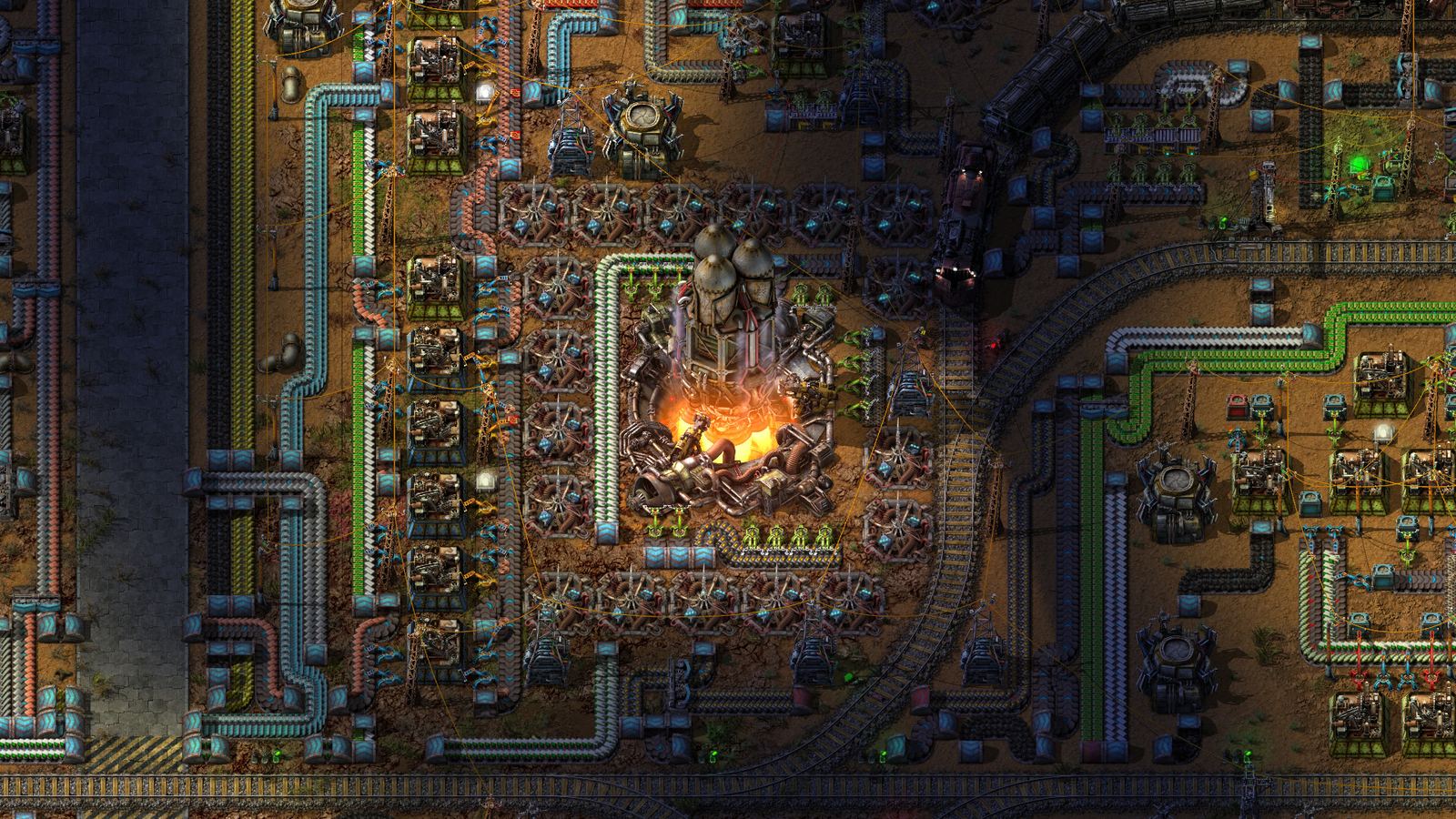
Wube Software has officially released Factorio 2.1 into the stable update channel, bringing extensive improvements to factory automation, Space Age logistics and circuit networks. The update became stable on October 23, 2026, following several months of experimental testing. It also marks what the developer expects to be the game’s final major feature update after more than 14 years of development.
The announcement came through the studio’s Friday Facts #449 development blog, published on the second anniversary of the Space Age expansion. Unlike Factorio 2.0, which introduced new planets and interplanetary production systems, version 2.1 focuses on improving existing mechanics, expanding automation options and addressing longstanding limitations.
For players who remained on the 2.0 stable branch, the release makes these changes available without opting into experimental versions.
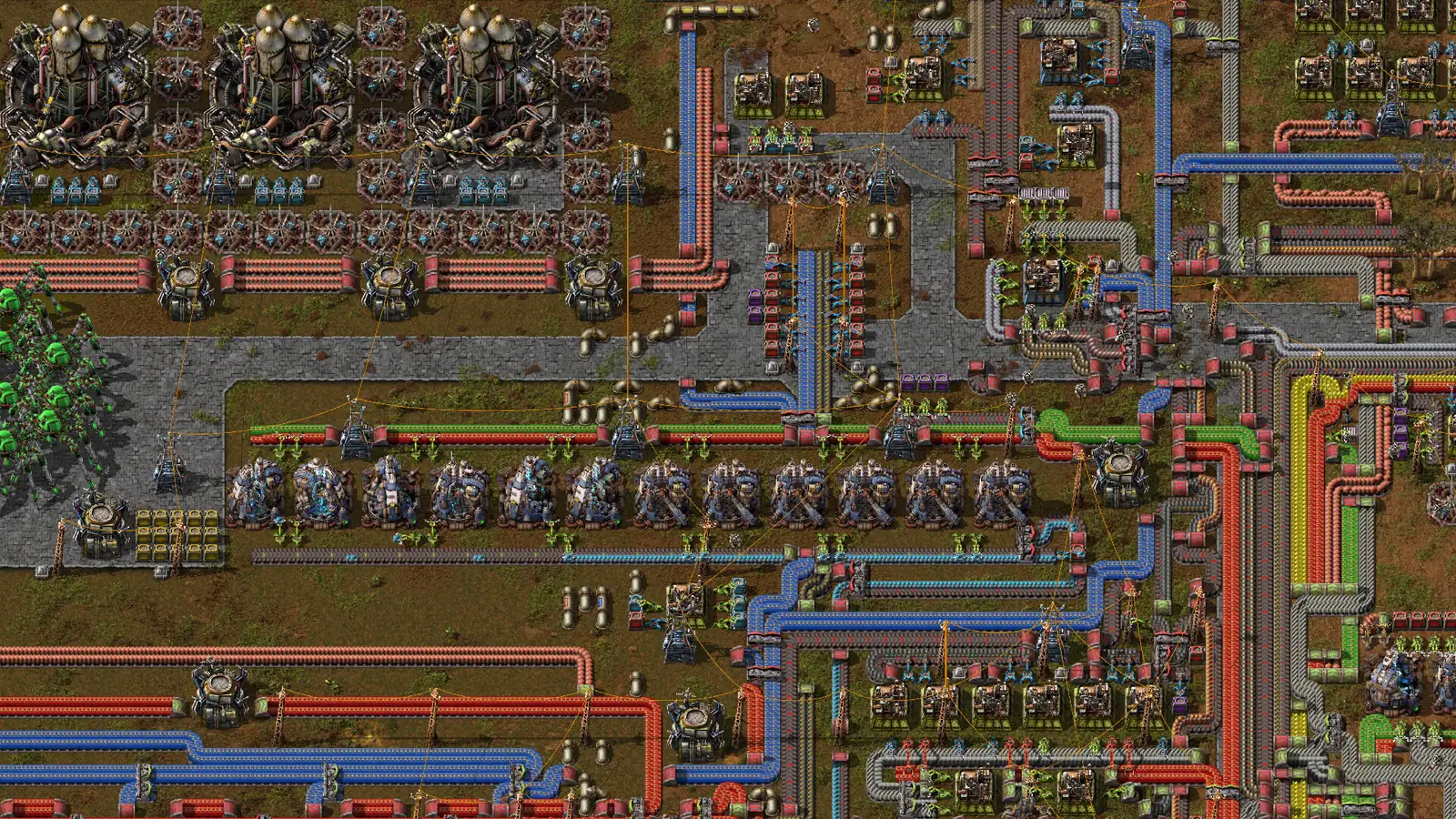
One of the largest improvements concerns space logistics. Rockets can now transport multiple types of items in a single launch, eliminating the need to send separate shipments for small quantities of different materials. Space platforms can also transfer resources directly between one another while in orbit, rather than routing every shipment through a planetary surface.
Platforms gain more flexible import settings, allowing them to request supplies from any available location. Their cargo requests can also be controlled through the circuit network, while a new Radar Universe mode enables circuit signals to travel between planets and space platforms through shared channels.
Space platform movement and durability have received balancing changes. Drag now depends on a platform’s mass rather than its width, reducing the advantage of extremely narrow designs. Asteroid collision damage is calculated using the asteroid’s remaining health instead of its speed, and platform hubs have increased health and resistance.
Planetary logistics have also been expanded with new landing pad unloading bays. These structures allow inserters to remove delivered cargo directly into trains, storage chests and conveyor belts, giving players additional options for integrating interplanetary shipments into automated production lines. Elevated railway tracks can also pass over cargo bays.
The circuit network receives several significant changes. A new input and output separation system allows circuit signals to be read and written through different wire colors. Laboratories can select research based on circuit conditions, while boilers, heat exchangers and pipes gain additional circuit connectivity.
These changes provide more control over automated research, backup power systems and fluid management. Land mines can also function as tripwires and enemy detectors, creating new possibilities for defensive automation.
Fluid handling has received further adjustments. Pipes carrying different fluids can no longer accidentally merge, with the game displaying a warning instead. High-throughput fluid flow has also been improved, particularly for factories using high-quality production equipment.
Factorio 2.1 additionally changes how the Quality system interacts with Space Age. Players can now use the expansion without enabling Quality, which remains a recommended dependency activated by default. The Recycler has been separated into its own mod.
Higher-quality locomotives and railway wagons also receive improvements, including faster trains and increased cargo and fluid capacity. However, Quality modules can no longer be used during asteroid reprocessing.
Beyond automation, Wube Software has updated the appearance of assembling machines, oil refineries, rocket silos and heat exchangers. The update introduces revised pump visuals, diagonal flamethrower turrets and visible planets in the backgrounds of space platforms.
Enemy expansion behavior has also been reworked. Biter expansion groups now scale with evolution, while adjustments to base placement and exploration-related behavior aim to make enemy expansion more consistent.
On the technical side, Factorio now supports ARM64 Linux natively. Wube specifically identifies Steam Frame, Raspberry Pi headless servers and Apple Silicon MacBooks running Asahi Linux as supported use cases.
The addition is particularly notable given Valve's lack of official Steam for Linux support on general Arm PCs. Factorio’s native ARM64 implementation provides an alternative way to run the game on compatible Linux hardware without relying on x86 emulation, although platform-specific installation and software requirements still apply.
Existing players should take precautions before updating. Wube confirms that Factorio 2.0 save files can be loaded in version 2.1, but changes to circuit network inputs and outputs may cause previously functioning factory designs to behave differently.
More importantly, save files and blueprints updated to version 2.1 cannot be downgraded to 2.0. The developer recommends backing up important saves and blueprints before installing the update. Although many popular mods were updated during the experimental period, compatibility with individual mods is not guaranteed.
The stable release also establishes the next phase of Factorio’s development. In May 2026, Wube Software announced that it envisioned version 2.1 as the game’s final major update, with future development shifting toward bug fixes, platform compatibility, long-term maintenance and modding improvements.
The studio said it considered the underlying gameplay design of Factorio and Space Age largely complete, with no major missing systems requiring another substantial expansion of the existing mechanics.
That does not mean Factorio will stop receiving updates. Wube intends to continue supporting the game, but players should not expect another major content update under its current development plans.
The studio has also begun working on other game prototypes and experiments, although it has not announced a new project or release schedule.
Factorio 2.1 is available through the stable release channel, with its changes affecting the base game and Space Age systems where applicable.
