


Developer NTDEV has demonstrated a heavily modified Windows 11 installation image small enough to fit on a standard 700MB CD-ROM. Created using an experimental tool called Pico11, the ISO measures just 699,811,840 bytes while retaining a functional Windows desktop and several familiar applications.
The demonstration, published on October 26, 2026, shows how extensively Windows 11 can be reduced without completely removing its graphical interface. However, the unusually small installation comes with significant compromises, including the removal of Windows Update and system servicing capabilities.
NTDEV, known for developing Tiny11 and other lightweight Windows modifications, showcased the experimental build in a video titled “I made Windows 11 fit on a CD – pico11.” The project is described as a proof of concept intended to explore how much of Windows 11 can be removed while preserving basic desktop functionality.
Despite the reduced installation image, the modified operating system boots into a recognizable Windows 11 desktop. NTDEV demonstrated that Settings and Calculator still launch, Notepad can save files, and Paint remains functional.
Task Manager is also present, although it uses an older-looking interface rather than the modern Windows 11 version. The exact origin of this replacement was not established in the demonstration.
The developer tested Pico11 inside a virtual machine configured with 4GB of RAM. During the demonstration, the operating system reportedly consumed approximately 883MB of memory.
That figure is notable given the continuing attention surrounding Windows 11’s resource requirements. Microsoft has also made reducing Windows 11 memory usage a priority for 2026, although Pico11 achieves its smaller footprint through extensive component removal rather than Microsoft’s official optimization efforts.
The distinction between installation size and installed storage usage is important. The reported 699,811,840-byte figure refers to Pico11’s compressed installation ISO, not necessarily the amount of disk space occupied after Windows has been installed. NTDEV’s demonstration therefore does not establish that a complete, usable Windows 11 installation requires less than 700MB of SSD space.
Pico11 also sacrifices functionality that would normally be essential for everyday computing. Windows Update and general servicing support have been removed to achieve the reduced image size. As a result, the experimental build cannot be maintained through the normal Windows update process.
NTDEV explicitly describes the project as an experiment rather than a replacement for a standard Windows installation. Without regular security updates and servicing, the build is unsuitable as a conventional daily-use operating system, particularly on an internet-connected PC.
The developer intends to incorporate Pico11 capabilities into Tiny11 Builder, an existing utility for generating customized Windows installation images.
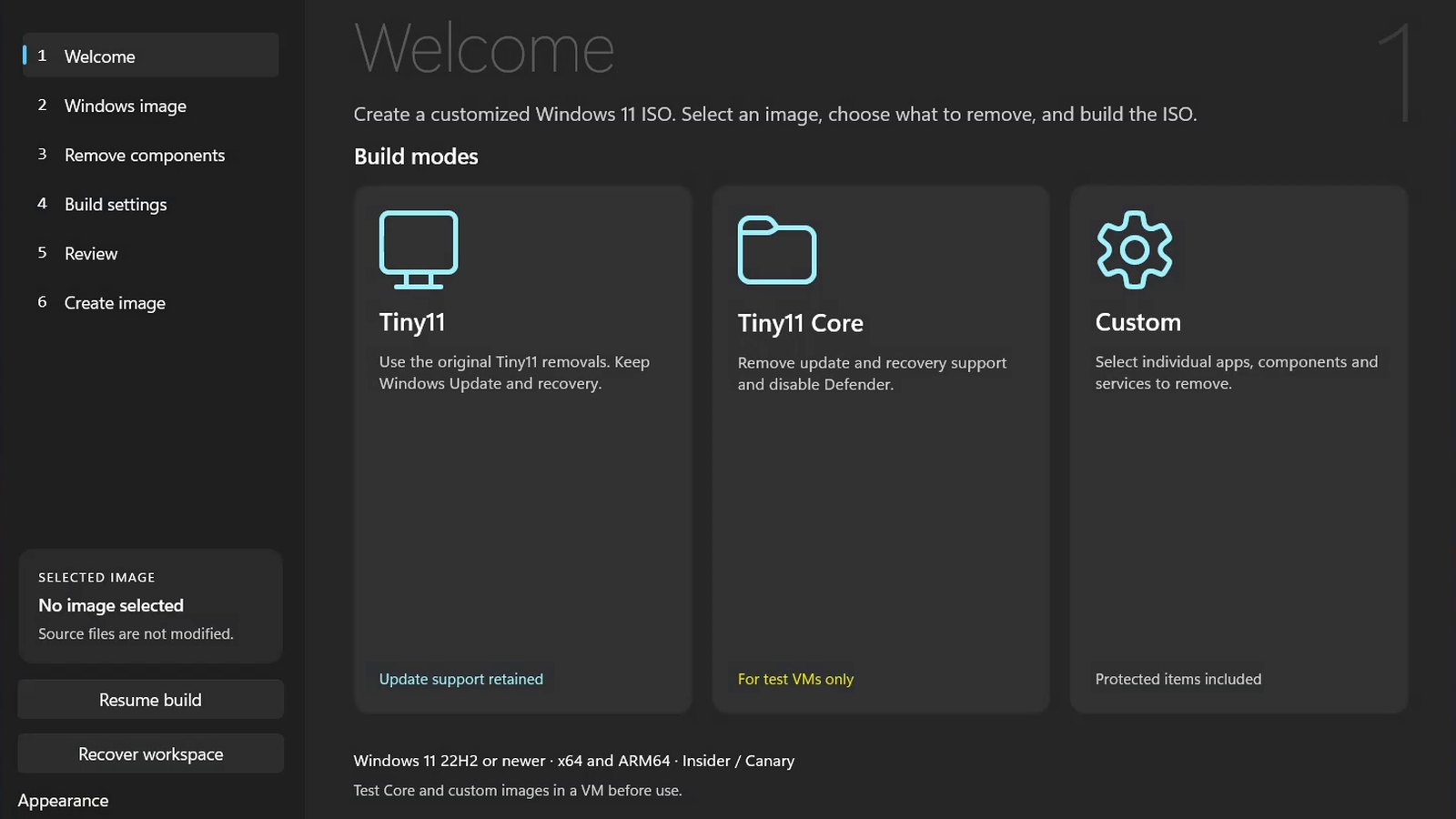
Tiny11 Builder currently provides three configuration options. Its standard Tiny11 mode removes bundled applications and unnecessary components while retaining Windows Update, Microsoft Defender and recovery functionality. Tiny11 Core takes a more aggressive approach by removing servicing and recovery support and disabling Defender. A separate Custom mode allows users to select individual components for removal.
The project’s official GitHub documentation also warns that Tiny11 Core cannot be updated or serviced and recommends testing customized installation images inside virtual machines before deploying them on physical hardware.
Pico11 extends NTDEV’s experimentation with increasingly compact Windows configurations, but it is not yet available as a finished feature in the publicly released Tiny11 Builder.
For PC enthusiasts, the demonstration illustrates the difference between the components necessary to launch a Windows desktop and those required to maintain a fully functional operating system. It could also be useful as a reference for experimental virtual machines and highly constrained computing environments, although compatibility with modern games, graphics drivers and gaming platforms has not been demonstrated.
The project arrives as Windows 11 continues evolving through official changes to resource management, interface components and system features. Microsoft’s ongoing Windows 11 Search redesign represents a different approach to improving the operating system without removing its standard maintenance infrastructure.
NTDEV has not announced a release date for Pico11 or confirmed when its capabilities will become available through Tiny11 Builder.
