


VKD3D-Proton 3.1 was officially released on October 28, 2026, introducing Shader Model 6.9 support, DirectX Raytracing (DXR) 1.2 features, ray tracing performance optimizations and compatibility fixes for Windows games running on Linux and SteamOS. The stable update also expands support for AMD, NVIDIA and Qualcomm hardware, while preparing the project for more substantial architectural changes planned for version 3.2.
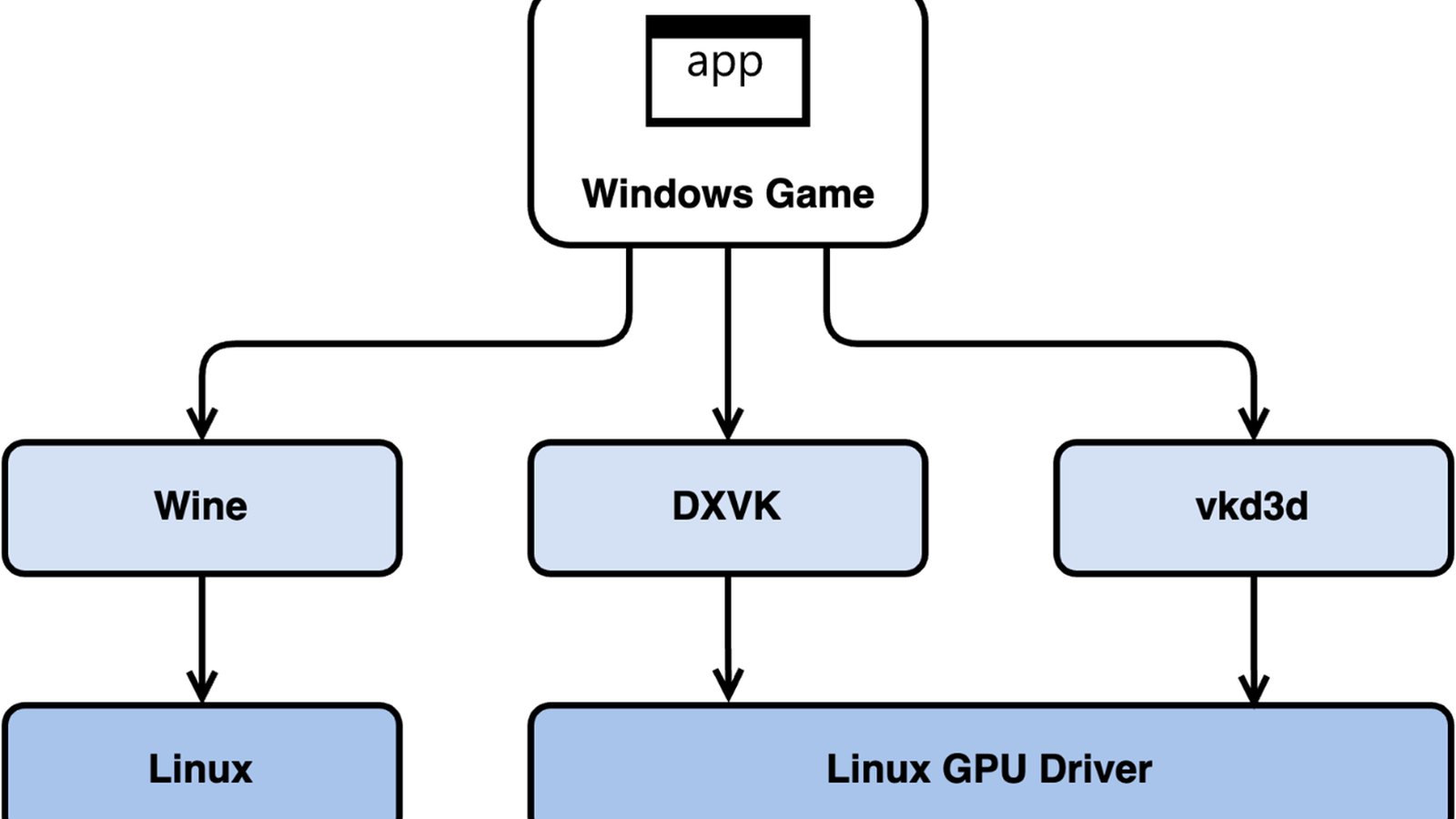
The release was published through the project’s official GitHub repository by maintainer Hans-Kristian Arntzen. VKD3D-Proton is a Direct3D 12-to-Vulkan translation layer used by Valve’s Proton compatibility software, allowing Windows games built around Microsoft’s graphics API to run on Linux without native Linux versions.
Version 3.1 introduces support for Shader Model 6.9, including Shader Execution Reordering and long-vector capabilities. According to the release notes, these features are currently exposed only on NVIDIA hardware because Shader Model 6.9 primarily targets ray tracing and machine-learning workloads.

The update also adds support for the VK_KHR_opacity_micromap Vulkan extension, replacing an older implementation and allowing DXR 1.2 functionality to be exposed when supported by the underlying graphics hardware and drivers. Additional improvements include support for several NVIDIA API intrinsics through the project’s DXIL-to-SPIR-V translator and features from Microsoft’s Agility SDK 619.
Another significant addition is VK_EXT_descriptor_heap support, which has been available experimentally for several months and extensively tested on NVIDIA hardware. However, the feature remains disabled by default in version 3.1 because of driver reliability concerns. The developer intends to enable it in the project’s development branch as work progresses toward the next release.
Performance improvements focus on several parts of the Direct3D 12 translation process. VKD3D-Proton can now use Vulkan image-clearing and buffer-filling commands for certain ClearUAV operations, potentially allowing drivers to execute those operations more efficiently.
The update also optimizes resource barrier patterns and reduces some compositor interactions during swapchain presentation. The latter change is expected to help workloads limited by CPU processing on the main rendering thread.
Ray tracing receives another optimization through improved batching of acceleration-structure build commands before synchronization barriers are inserted. The developer reports substantial ray tracing performance improvements in certain scenarios, although no game-specific benchmark results or universal performance gains were provided.
Compatibility fixes cover multiple GPU architectures and individual game issues. On AMD hardware, the update corrects certain depth-buffer copying operations that previously caused rendering problems in the Metal Gear Solid 4 remaster. It also simplifies the AMD Anti-Lag implementation and addresses several bugs involving frame attribution.
NVIDIA users receive fixes for Vulkan low-latency functionality, including changes contributed by NVIDIA to align with the third revision of the relevant specification. Additional corrections address shader operations and resource-binding behavior that could previously cause graphical glitches or crashes.
Older AMD GCN graphics cards and Qualcomm GPUs benefit from new workarounds for games that incorrectly assume support for Wave32 shader execution. These changes are intended to improve compatibility with titles that otherwise fail or behave incorrectly on affected hardware.
VKD3D-Proton 3.1 also improves detection of Unreal Engine 5 and Capcom’s RE Engine, helping Mesa graphics drivers apply engine-specific workarounds. Separately, rewritten use-after-free workarounds address problems associated with AMD’s FSR 4 Unreal Engine plugin.
Valve’s Steam Frame is now explicitly supported, with additional fixes for Qualcomm hardware and support for AArch64 builds. The changes complement Valve’s broader SteamOS 3.9.5 gaming and platform improvements, which also include Steam Frame-related updates.
The release comes as Linux gaming continues to receive graphics-driver and hardware improvements, including changes introduced with Linux kernel 7.3's gaming and GPU updates. VKD3D-Proton operates at a different layer, translating Direct3D 12 commands into Vulkan operations rather than providing kernel-level graphics functionality.
For regular SteamOS and Linux users running games through Valve’s Proton, the standalone VKD3D-Proton release does not require an immediate manual update. Valve incorporates VKD3D-Proton changes into its own Proton releases, meaning availability through the standard Steam compatibility environment depends on subsequent integration.
The developer describes version 3.1 as the final stable release before more extensive changes begin in version 3.2. Its timing is primarily intended to establish a stable baseline ahead of that development work, rather than introduce an entirely new translation architecture.
While the release contains optimizations that could improve performance and compatibility in affected games, actual results will depend on GPU hardware, graphics drivers, individual titles and the Proton version being used.
