



NVIDIA has announced new software and gaming updates for its RTX Spark Windows laptops, including GPU resource management controls, expanded local AI model support, and enhancements for games such as Phantom Blade Zero and Minecraft. The company detailed the developments on October 28, highlighting how RTX Spark systems can handle demanding applications and background AI agents on the same hardware.
RTX Spark laptops are available from ASUS, Dell, HP, Lenovo, Microsoft, and MSI. The platform combines an NVIDIA Blackwell RTX GPU and Grace CPU in a single superchip, delivering up to 128GB of unified memory and 1 petaflop of FP4 AI performance. Although RTX Spark laptops launched earlier in October, NVIDIA is continuing to expand their software capabilities.
One of the most practical additions is GPU resource management through the NVIDIA App. The feature allows users to control how GPU computing resources are divided between foreground applications and AI agents running in the background.
Users can prioritize a foreground application when performance matters most or allocate additional resources to a background agent to accelerate its work. The controls are accessible through System > Advanced in the NVIDIA App and require hardware-accelerated GPU scheduling to be enabled in Windows Settings.
This gives RTX Spark owners more direct control over competing workloads, particularly when running local AI applications alongside games, creative software, or other GPU-intensive tasks. NVIDIA has not provided specific gaming performance benchmarks demonstrating the impact of these settings.
NVIDIA also introduced Nemotron 3.5 Transcribe, an open-weight speech model designed to handle transcription, speaker identification, translation, and questions about recorded audio. The model supports transcription across 40 languages and is available in BF16, FP8, and NVFP4 formats.
Additional local AI support comes from Liquid AI’s LFM3 model family, which covers text, vision, audio, and decision-making workloads. These models can run on RTX Spark through llama.cpp and vLLM, with support for local fine-tuning.
On the gaming side, NVIDIA confirmed that Phantom Blade Zero launches on October 28 at 7 p.m. Pacific Time with ray-traced effects and DLSS 4.5 support. NVIDIA worked with S-GAME to implement enhanced lighting, reflections, and shadows.
The game also supports DLSS Dynamic Multi Frame Generation, which can generate additional frames using a multiplier of up to 6x or dynamically adjust the multiplier to target a selected frame rate. These features are supported on compatible RTX Spark laptops and GeForce RTX-powered PCs.
The enhancements arrive alongside the game’s PC launch, for which early Radeon and GeForce benchmarks have highlighted differences in rendering performance and ray-tracing workloads.
NVIDIA also highlighted RTX Remix 1.6, released the previous week, which introduces support for Minecraft Java Edition 1.21.1 with path tracing and DLSS. The update enables compatible Minecraft content to use RTX Remix’s enhanced lighting and material rendering capabilities.
RTX Remix 1.6 additionally brings DLSS 5 with 3D-Guided Neural Rendering, up to 6x Multi Frame Generation, and native RTX Spark support. Starting October 28, Portal with RTX and the Half-Life 2 RTX demo receive these enhancements, including updated frame generation options and path-tracing performance improvements.
For modders, the latest RTX Remix version simplifies AI-assisted material creation through a redesigned ComfyUI workflow. It supports generating physically based materials directly within RTX Remix, batch processing, and presets that reduce the need for manual configuration.
The October 28 announcement also reinforces NVIDIA’s broader push into premium Windows laptops. RTX Spark systems are available in multiple designs, including touch-enabled and convertible configurations, with some models measuring just 14mm thick and weighing approximately three pounds.
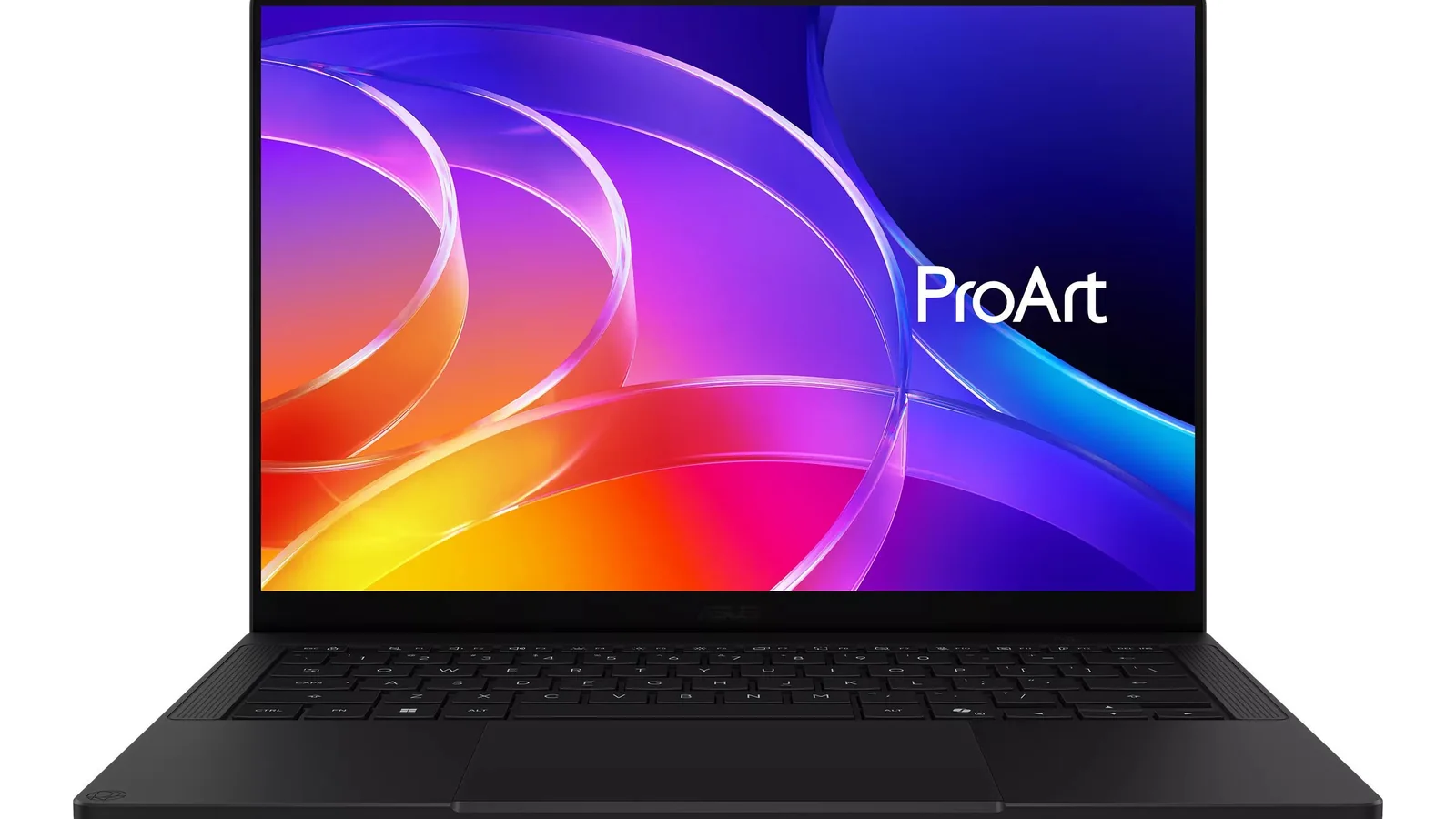
Pricing starts at $2,599, according to NVIDIA’s latest announcement, with configurations featuring 128GB of unified memory already available. The range includes systems such as ASUS's RTX Spark-powered ProArt lineup, targeting users who want portable gaming, creative performance, and local AI capabilities in a single Windows PC.
NVIDIA’s latest updates primarily expand software functionality rather than introduce a new generation of RTX Spark hardware. The new GPU prioritization controls are particularly relevant to users running multiple demanding workloads, while the gaming updates extend support for NVIDIA’s rendering technologies across newer releases and RTX Remix projects.
