


Intel shares plunged 28.58% on October 30, 2026, after the chipmaker issued a weaker-than-expected fourth-quarter outlook despite reporting a 78% surge in its Data Center and AI revenue. The company also warned that high memory prices and component shortages are weakening demand for desktop and laptop PCs, with the downturn expected to continue into 2027.
Intel stock closed Friday at $65.76, down from $92.07 the previous day. The selloff followed the company’s October 29 earnings announcement, which showed sharply contrasting performance between its server processor business and the consumer PC market.
Intel reported third-quarter revenue of $16.5 billion, an increase of 21% year over year. Non-GAAP earnings reached $0.52 per share, exceeding analysts’ expectations of approximately $0.40. However, investors focused on the company’s weaker outlook for the final quarter of 2026.
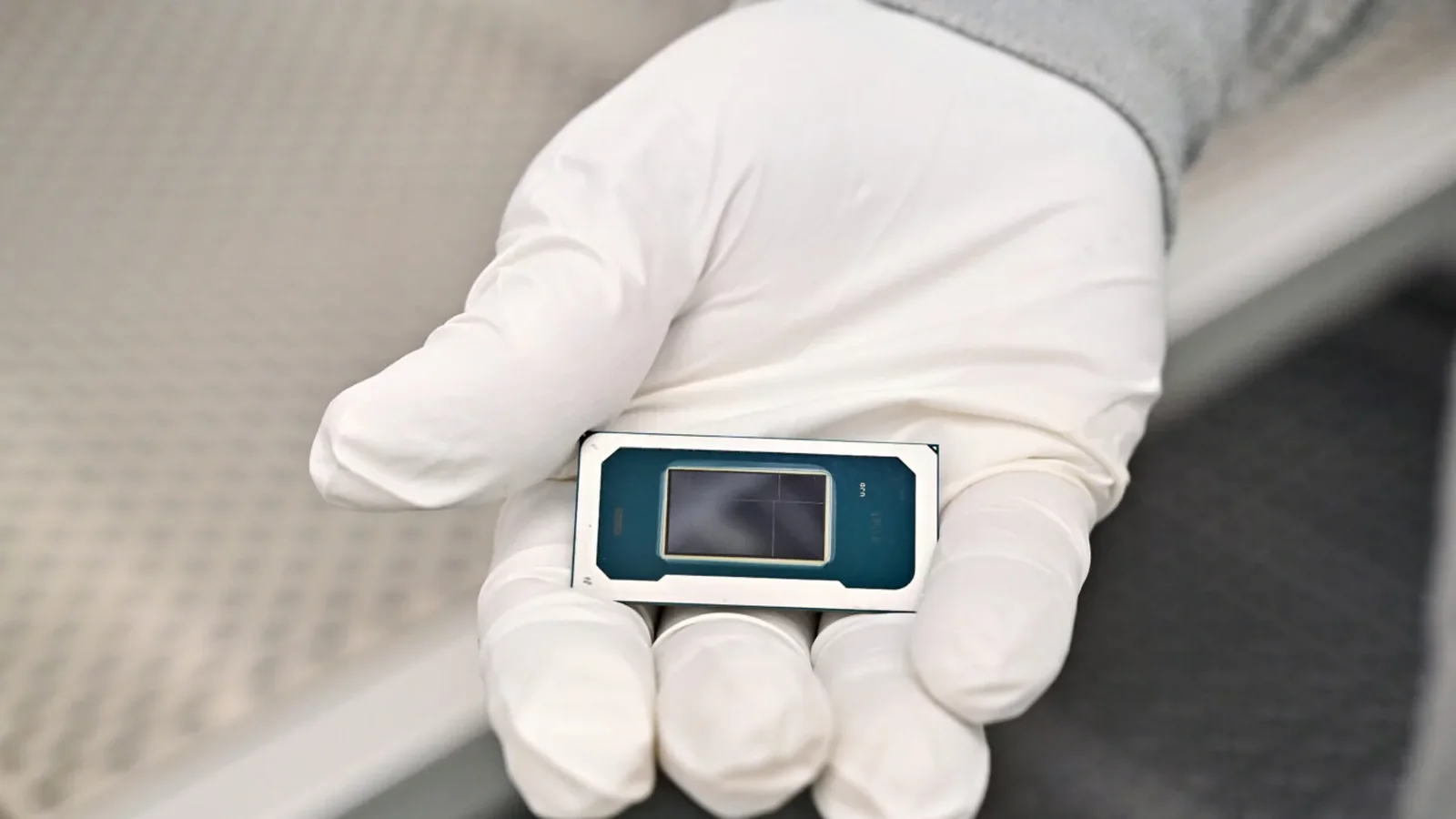
Intel expects fourth-quarter revenue between $15 billion and $16 billion, below Wall Street expectations of approximately $17 billion. The company also forecasts non-GAAP earnings of $0.25 per share and a non-GAAP gross margin of 38%, down from 44.1% in the third quarter.
The weakness comes despite substantial growth in Intel’s Data Center and AI division, which generated $7.3 billion in third-quarter revenue, up 78% from the same period in 2025.
Intel attributed that growth primarily to stronger sales of premium server processors, higher average selling prices and demand from hyperscale data center operators. Server processor shipments increased 10% year over year, while average selling prices climbed 54%, largely because customers purchased a greater proportion of higher-end products.
The consumer computing business moved in the opposite direction. Intel’s Client Computing and Physical AI Group generated $8.1 billion in revenue, a 5% annual decline.
Within that division, desktop and notebook processor revenue totaled $6.9 billion, down $424 million from the previous year. Intel disclosed that client processor sales volumes declined 14%, partially offset by a 9% increase in average selling prices.
The company attributed lower client shipments to weakening demand and competitive market conditions. Higher selling prices reflected a greater proportion of premium processors alongside pricing adjustments intended partly to offset rising input costs.
Memory shortages are becoming an increasingly significant factor in the PC market’s slowdown.
In its third-quarter regulatory filing, Intel explicitly identified elevated memory prices as a contributor to weaker demand in price-sensitive consumer markets. The company also warned that industry-wide shortages of memory, substrates and other essential components could persist throughout 2027.
These pressures extend beyond Intel’s own manufacturing operations. SK hynix has warned that memory supply constraints could continue through 2030, reflecting sustained demand from AI infrastructure and limited production capacity.
For consumers assembling or purchasing gaming PCs, expensive RAM adds to the overall cost of a complete system. Intel’s disclosure indicates that these higher component costs are already affecting demand, although the company did not provide specific forecasts for gaming PC prices.
The broader hardware industry is also facing rising PCB material costs and supply constraints, creating additional uncertainty for motherboard manufacturers and other PC component suppliers.
Intel Chief Financial Officer David Zinsner outlined a particularly weak outlook for the consumer PC market during the company’s October 29 earnings call.
Intel expects worldwide PC unit demand to decline approximately 12% in 2026, including a drop of more than 20% during the second half of the year. For 2027, the company is planning around another 10% contraction in PC units.
These figures represent Intel’s forecasts rather than confirmed industry-wide shipment results. The company expects the steepest year-over-year declines during the first half of 2027, with a possible improvement later in the year.
Zinsner also indicated that a sustained PC market recovery would depend on memory availability improving and prices beginning to normalize.
The contrast with server demand is substantial. Intel expects industry-wide server CPU shipments to grow by more than 30% in both 2026 and 2027, although supply limitations are preventing manufacturers from fully satisfying demand.
The divergence reflects the broader competition for semiconductor manufacturing capacity and memory supplies as AI infrastructure investment accelerates. SK hynix has indicated that DRAM and high-bandwidth memory supplies are heavily committed through 2029, highlighting the longer-term pressure on memory availability.
Intel’s near-term guidance is also affected by manufacturing disruptions. An October incident at its Kiryat Gat facility in Israel forced a temporary production shutdown, constraining output and contributing to the company’s lower fourth-quarter expectations.
Despite these setbacks, Intel CEO Lip-Bu Tan maintained that demand for the company’s processors remains strong, particularly in data centers. The company is working to increase manufacturing capacity and secure critical components through longer-term supply agreements.
For PC enthusiasts, Intel’s latest results provide a measurable indication of how component shortages and elevated memory prices are affecting the consumer computing market. While demand for AI server processors continues to rise, Intel expects PC shipments to remain under pressure through at least the first half of 2027, with any subsequent recovery dependent partly on improvements in memory supply and pricing.
