


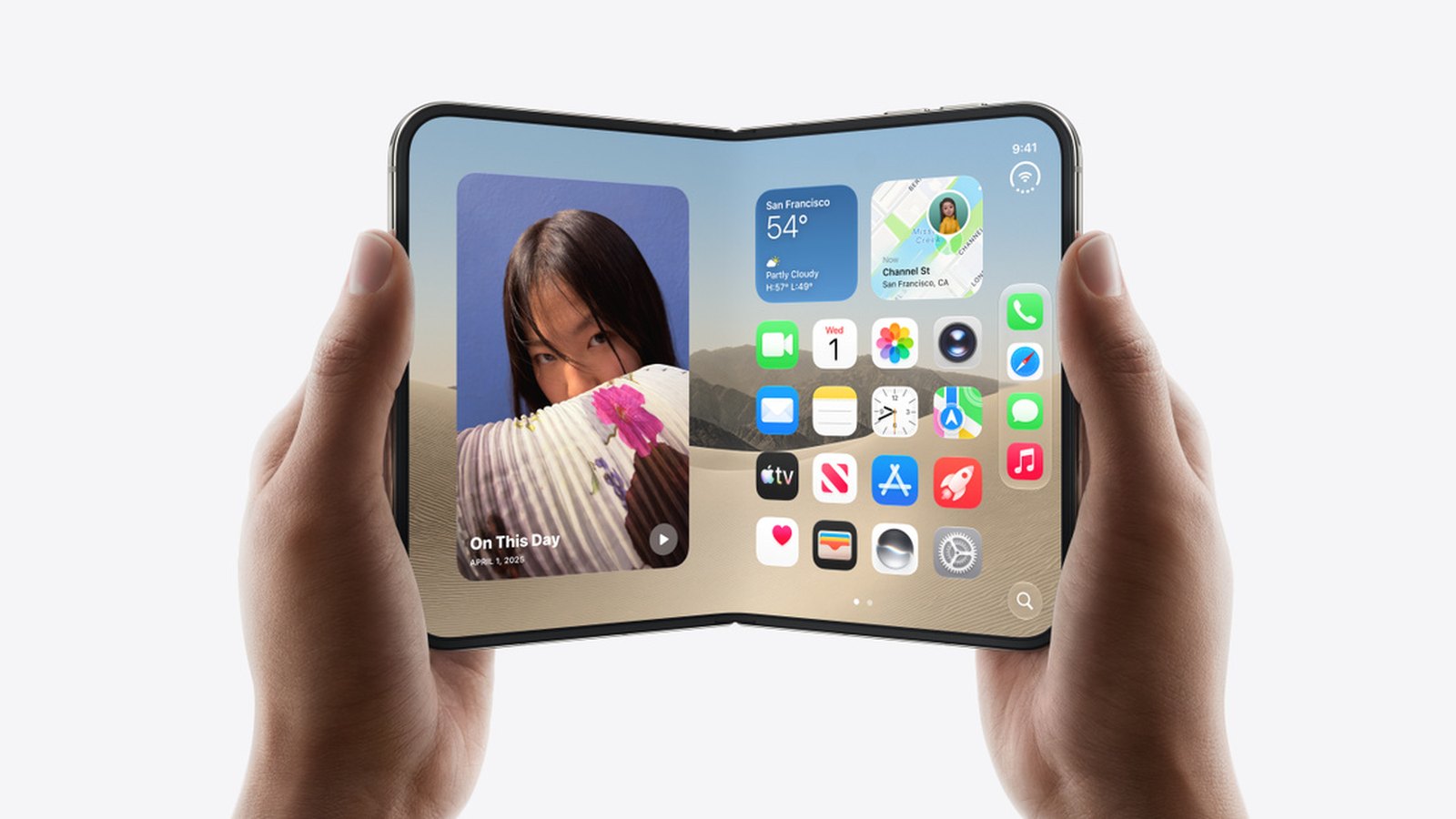
Apple has officially unveiled the iPhone Duo, its first foldable iPhone and one of the biggest changes to the company’s smartphone lineup in years. Announced during Apple’s September hardware event, the device uses a book-style design with a compact outer screen that opens into a much larger tablet-like display. It is scheduled to open for pre-orders on October 16 before launching on October 23, with U.S. pricing starting at $1,999 for the 256GB model.
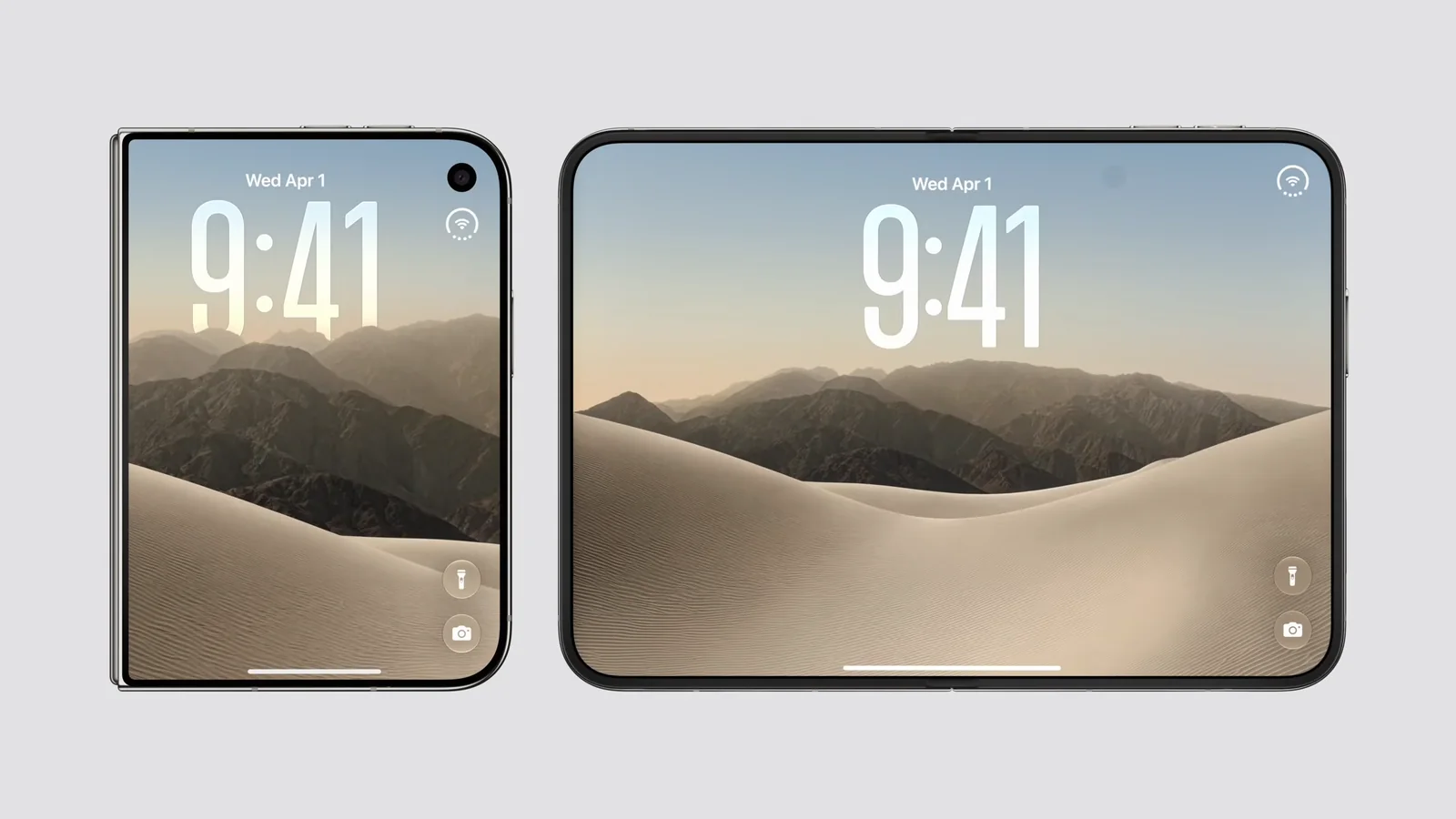
When closed, the iPhone Duo uses a 5.4-inch outer display designed for normal phone use. Opening the device reveals a 7.6-inch internal screen, giving it the largest display ever offered on an iPhone. The wider inner canvas supports side-by-side apps and expanded multitasking, positioning the Duo as a hybrid between a traditional iPhone and a smaller iPad.
The hardware is built around a titanium frame reinforced with ceramic fibers, while Ceramic Shield glass is used across the exterior. Apple has also given the Duo an IP68 rating for dust and water resistance, an unusual specification for a foldable device where the hinge normally creates additional durability challenges. The phone will be available in two finishes, Star White and Night Sky.
Inside, the iPhone Duo uses Apple’s new A20 Pro chip, the same generation of silicon powering the iPhone 18 Pro and Pro Max. Apple is pairing the processor with a redesigned thermal system intended to handle the additional demands of the larger internal display and multitasking. Storage starts at 256GB, with higher-capacity configurations available up to 2TB.
Apple has made several significant changes to authentication and camera placement to accommodate the foldable design. Rather than using Face ID, the iPhone Duo brings back Touch ID through a sensor integrated into the side button. The outer display includes a conventional front-facing camera, while the internal display uses a camera positioned beneath the screen to avoid taking up space with a traditional cutout.
The rear camera system uses two 48-megapixel cameras rather than the triple-camera arrangement found on the Pro models. Apple has opted for wide and ultra-wide lenses, leaving out a dedicated telephoto camera in order to keep the foldable chassis thinner. The company is positioning the Duo primarily around its new form factor and display flexibility rather than as the most advanced photography-focused iPhone.
Another first for the iPhone lineup is Apple Pencil support. The larger internal display can be used with Apple’s stylus for drawing, handwriting, document markup and more precise navigation. That feature further blurs the line between the iPhone Duo and Apple’s tablets, particularly when combined with the expanded multitasking interface available while the device is unfolded.
The arrival of the iPhone Duo puts Apple directly into competition with established foldable devices from Samsung, Google, Huawei and other manufacturers. Apple is entering the category years after the first Galaxy Fold, but foldables have continued to account for only a relatively small share of overall smartphone sales. The company appears to be betting that tighter integration between iOS, Apple silicon and its existing ecosystem can make the form factor more appealing to mainstream iPhone users.
Pricing makes the Duo significantly more expensive than Apple’s conventional flagship models. The $1,999 starting price sits well above the $1,199 iPhone 18 Pro and $1,299 iPhone 18 Pro Max, reflecting the additional cost of the folding display, hinge and more complex internal design. Higher-storage versions push the price considerably further, making the Duo the most expensive mainstream iPhone Apple has released.
The iPhone Duo will launch on October 23 after pre-orders begin October 16. With its 7.6-inch foldable display, Touch ID, Apple Pencil support, A20 Pro chip and tablet-style multitasking, the device represents Apple’s first serious attempt to move the iPhone beyond the traditional single-screen slab design.
