


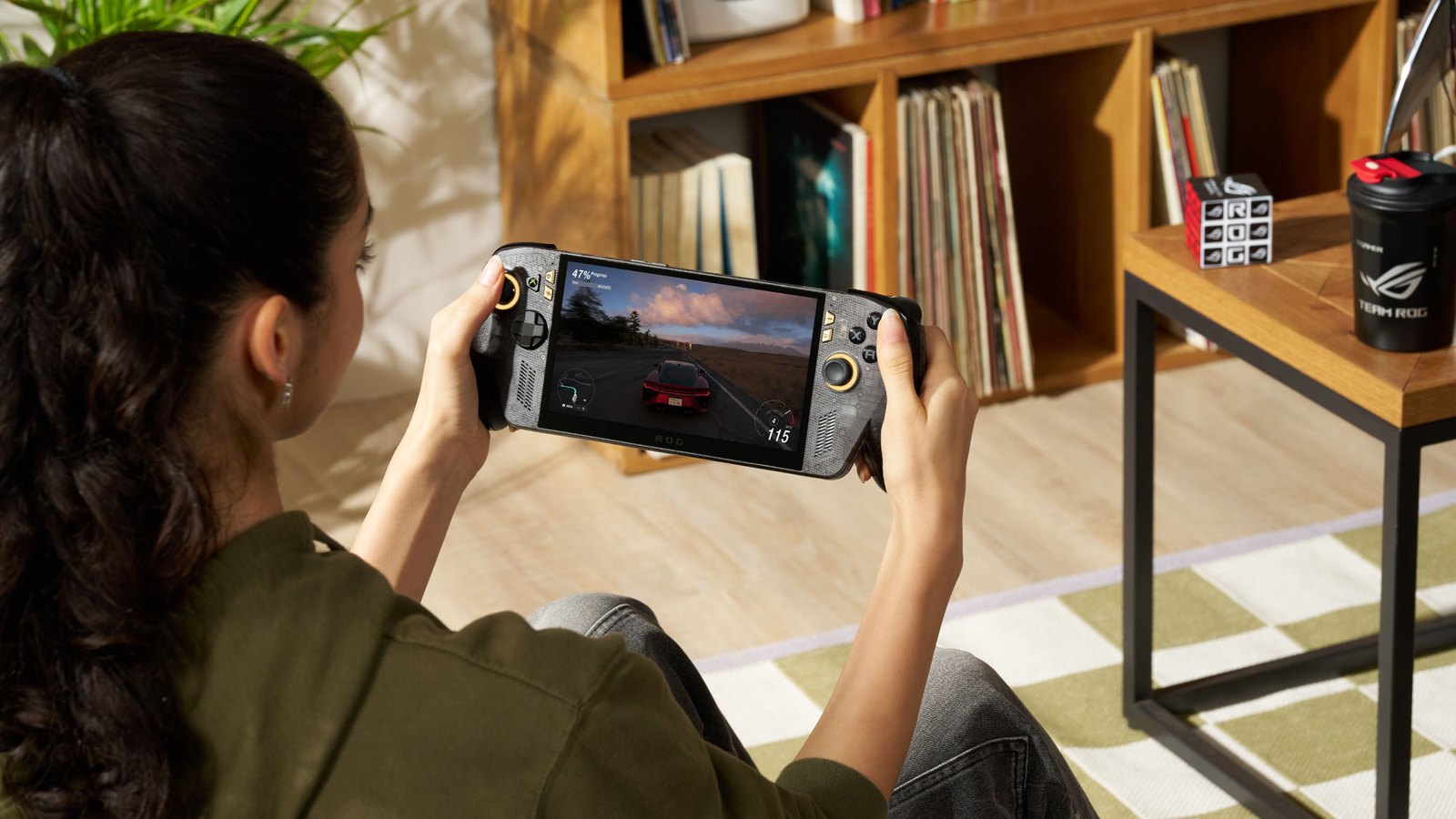
The ASUS ROG Xbox Ally X20 delivers a noticeably improved display, more comfortable grips and upgraded controls, but independent testing shows that gaming performance remains largely unchanged from the original ROG Xbox Ally X. The premium Windows gaming handheld retains the same AMD Ryzen AI Z2 Extreme processor while introducing a larger OLED screen and several refinements aimed at improving the portable gaming experience.
In testing published on October 26, 2026, Tom’s Hardware evaluated the X20’s display, controls, ergonomics and battery performance. The results suggest that ASUS has focused on improving how the handheld feels and looks rather than increasing frame rates. At $1,299.99, the X20 costs $300 more than the standard ROG Xbox Ally X, making those improvements the primary justification for its higher price.
The most significant upgrade is the 7.4-inch OLED touchscreen, replacing the original model’s 7-inch IPS panel. Both displays maintain a 1920 x 1080 resolution and 120Hz refresh rate, but the new panel offers improved contrast, deeper blacks and higher brightness.
Tom’s Hardware found the OLED display noticeably brighter, although measured improvements in color reproduction were relatively modest. The publication highlighted Forza Horizon 6 for its colorful environments and God of War Ragnarök for its darker scenes, where OLED’s deeper blacks helped distinguish illuminated details.
ASUS specifies support for Dolby Vision HDR, FreeSync Premium Pro and variable refresh rates. The company rates the display for up to 600 nits of SDR brightness and 1,400 nits of peak HDR brightness. These capabilities make the screen a substantial upgrade for players who prioritize image quality, even though the resolution and maximum refresh rate remain unchanged.
The X20 also introduces tunneling magnetoresistance (TMR) joysticks, replacing the earlier model’s conventional thumbsticks. TMR technology uses magnetic sensing to detect stick movement without relying on the same contact-based position measurement found in traditional potentiometer designs, potentially reducing wear-related drift.
Tom’s Hardware described the new sticks as feeling tighter during use. The redesigned controls also include a directional pad that can rotate between four-way and eight-way configurations. Four-way input provides more distinct directional movement, while eight-way operation can be useful for fighting games and other titles requiring diagonal inputs.
However, the reviewer found switching between the D-pad’s two configurations somewhat awkward.
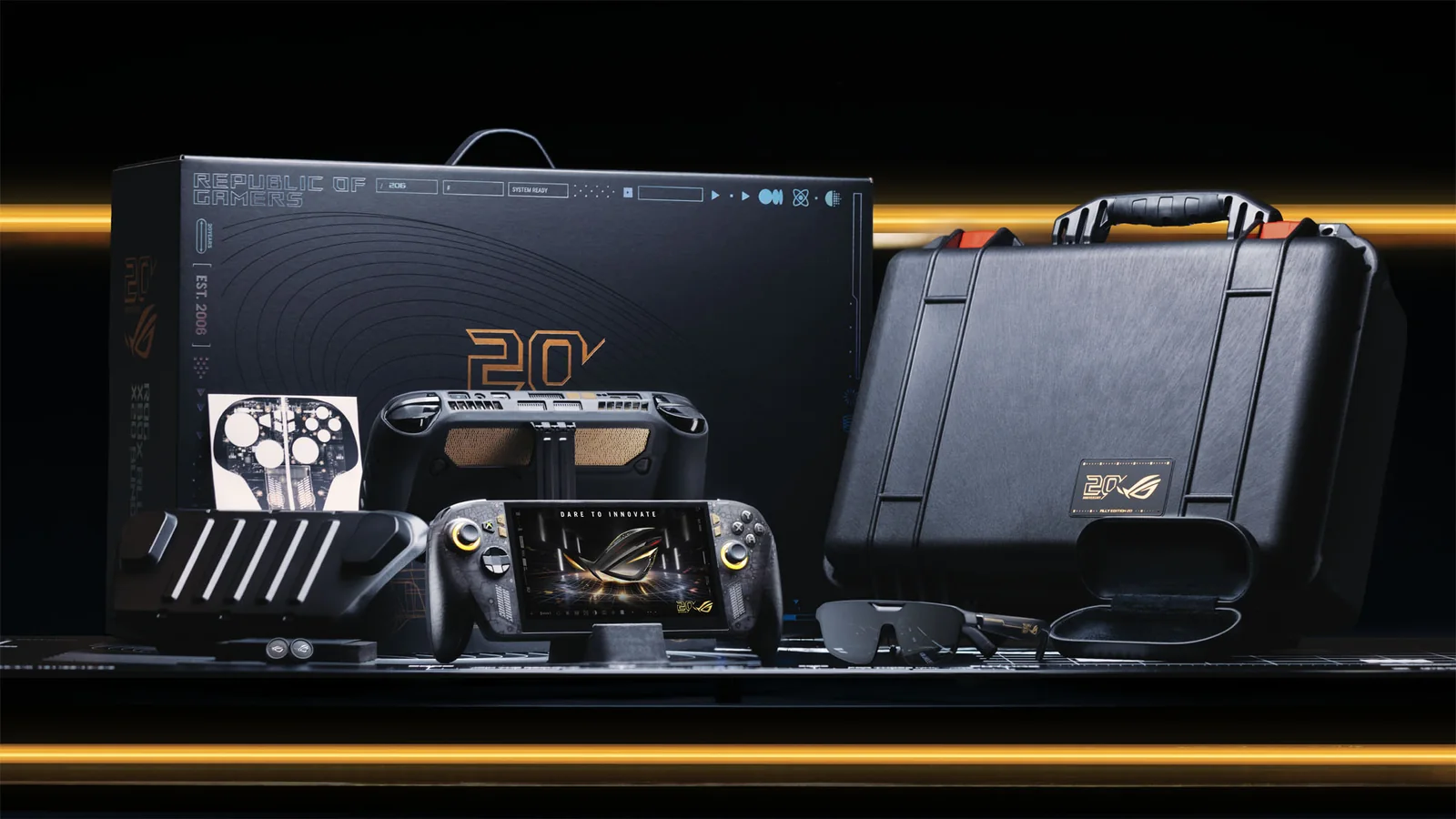
Physical comfort has also received attention. ASUS added rubberized grips to the rear of the handheld’s controller-style handles, giving the device a more substantial feel in the hands. The X20 features a translucent black chassis with gold accents celebrating the Republic of Gamers brand’s 20th anniversary.
Despite these changes, the gaming hardware remains familiar.
The ROG Xbox Ally X20 uses AMD’s Ryzen AI Z2 Extreme processor with integrated Radeon RDNA 3.5 graphics featuring 16 compute units. It also retains 24GB of LPDDR5X-8000 memory, a 1TB PCIe 4.0 NVMe SSD and an 80Wh battery.
Since the processor and graphics architecture are unchanged, buyers should not expect a meaningful increase in gaming performance compared with the existing Ally X.
Independent testing from Notebookcheck reinforces this conclusion. Its gaming performance comparison placed the X20 at 77.5 points against 75.9 points for the standard Ally X, indicating only a small difference rather than a substantial performance improvement.
In Notebookcheck’s Cyberpunk 2077 test at 1920 x 1080 using the Ultra preset without FSR, the X20 averaged 29.3 FPS, compared with 28 FPS on the original Ally X. The small difference is consistent with the two systems using the same underlying processing hardware.
Notebookcheck also found that Intel’s newer Arc G3 Extreme graphics delivered higher gaming performance in its comparative tests, highlighting the competitive pressure on AMD-powered handhelds.
Battery life remains another important consideration. The X20 retains its predecessor’s 80Wh battery, but the larger OLED display introduces different power characteristics.
During Tom’s Hardware’s God of War Ragnarök battery test, the handheld operated in its 17W performance mode with the display set to 50% brightness. The game ran at 720p using low settings and AMD FSR 3.1.4.
After one hour and 15 minutes, the battery had 47% charge remaining. The reviewer estimated approximately two and a half hours of total gameplay under those conditions.
Although that was below the roughly three hours observed on the original Ally X, the tests used different games, so the results cannot establish a direct battery-life disadvantage for the OLED model.
Notebookcheck’s separate testing recorded approximately two hours and 13 minutes of gaming in its 25W battery-powered Turbo mode and just over three hours in its 17W Performance mode, demonstrating how significantly operating power affects endurance.
On the software side, the X20 continues to run Windows 11 with the Xbox Full Screen Experience. ASUS Armoury Crate SE remains available for adjusting power profiles, lighting, joystick calibration and other handheld-specific settings.
The device is also gaining alternative operating-system support. Bazzite Linux testing support for the ROG Xbox Ally X20 includes preliminary HDR, VRR and power-management functionality, although some hardware features remain unfinished.
The broader ROG Xbox Ally platform is also set to benefit from AMD FSR 4.1 support for Xbox handhelds, potentially expanding the available image-upscaling options for supported games.
For existing ROG Xbox Ally X owners, the new testing provides little reason to upgrade solely for performance. Both devices use the same processor and deliver broadly comparable frame rates.
The decision is more complicated for first-time buyers. The X20’s OLED display, TMR sticks and improved ergonomics provide tangible advantages, but the $300 premium does not translate into faster gaming.
With the standard ROG Xbox Ally X remaining available at $999.99, buyers must decide whether the upgraded screen and controls justify spending approximately 30% more for essentially the same gaming performance.
