


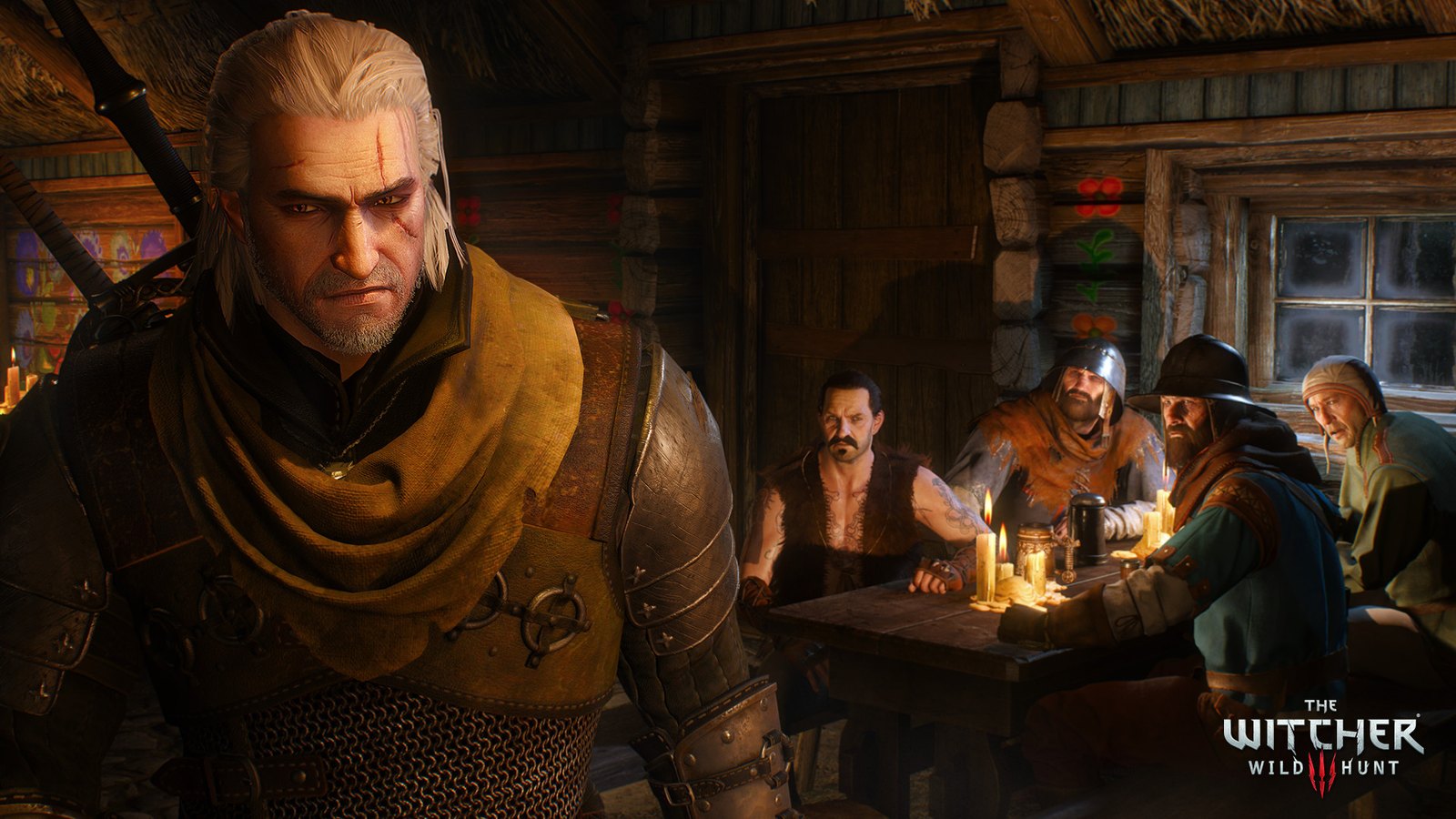
Modders have extracted Nvidia’s latest DLSS 5 Neural Rendering model from NBA 2K27 and are testing it in games without official support. Early community benchmarks suggest substantial improvements over the previous model, with Gaming Optimized reporting performance gains of up to 90% in The Witcher 3 under specific test conditions.
The updated model, distributed as DLSS Neural Rendering build 310.9.16.0, was extracted by modder Renan Maniero following its October 16 release in NBA 2K27. The extraction allows other enthusiasts to experiment with Nvidia’s optimized neural rendering technology outside its officially supported games.
Gaming Optimized shared comparisons on October 16 showing the newer model performing considerably faster than its predecessor. The largest reported improvement reached 90% in The Witcher 3, although results varied between tested games. These figures come from community testing rather than Nvidia’s official benchmarks and should not be interpreted as guaranteed performance improvements across all DLSS 5 implementations.

The improvement concerns the performance of DLSS 5’s Neural Rendering workload, not a universal 90% increase in a game’s frame rate. Neural Rendering uses AI to enhance lighting and material appearance, introducing additional GPU processing requirements beyond conventional game rendering.
Nvidia officially announced the optimized model on October 13, confirming that it had reduced the model’s footprint by 24% to approximately 118 million parameters. The company also reported a 20% reduction in VRAM consumption at 4K resolution and a twofold improvement in neural rendering processing performance.
According to Nvidia, the optimizations reduce GPU overhead by approximately half compared with the September release while maintaining comparable visual quality. The company claims the updated model can improve frame rates by up to 1.4 times in NBA 2K27 on supported hardware.
The community experiments provide additional evidence of how these optimizations perform beyond Nvidia’s officially supported game selection.
The extracted DLSS Neural Rendering library includes two selectable configurations. Preset A retains the older model, while Preset B uses the updated implementation. Having both available in the same build makes direct comparisons easier without repeatedly replacing the rendering library.
Modders are also experimenting with tools such as RenoDX and OptiScaler to inject Neural Rendering into unsupported games and modify its settings. These methods are unofficial and do not provide the same compatibility guarantees as developer-integrated DLSS 5 support.
Community modifications have additionally enabled experimental Neural Rendering functionality on older GeForce RTX hardware, including RTX 20-series GPUs. Nvidia’s official DLSS 5 rollout currently focuses on RTX 50-series graphics cards, with RTX 40-series support planned separately. The unofficial modifications should not be mistaken for expanded manufacturer support, particularly when considering performance, stability and VRAM requirements on older cards.
The updated model also extends beyond desktop GeForce graphics cards. Nvidia introduced support for RTX Spark laptops with Blackwell graphics as part of the October 16 rollout, bringing the optimized Neural Rendering implementation to additional supported hardware.
Further official integrations are scheduled for Hogwarts Legacy on November 5 and Where Winds Meet, while Nvidia plans to bring DLSS 5 functionality to RTX Remix on October 23.
For now, the community benchmarks suggest that Nvidia’s smaller model can significantly reduce Neural Rendering’s performance cost in certain games. However, the reported 90% improvement remains a result from unofficial testing, and broader comparisons will be needed to establish how consistently the updated model performs across different games and GPU configurations.
