


Canadian video game retailer Video Games Plus (VGP) claims that a Nintendo policy currently prevents publishers from reprinting existing Nintendo Switch 2 Game-Key Card releases as traditional cartridges containing the full game. The retailer made the allegation in a social media post on October 26, 2026, before deleting its statements. Nintendo has not publicly confirmed the reported restriction.
VGP said it has repeatedly encouraged publishers to produce complete physical editions of games already released as Game-Key Cards. However, the retailer claimed that an existing Nintendo policy prevents those titles from receiving conventional full-cartridge reprints.
In its original statement, VGP explained that publishers were aware of its preference for traditional physical releases. The retailer added that it would continue pushing for changes despite expecting limited movement from major publishers.
The company subsequently clarified its position in another deleted response, stating that the alleged restriction had legitimate reasons and that Nintendo was not necessarily preventing publishers from changing formats arbitrarily.
Neither statement explained the precise terms of the reported policy, when it was introduced, or whether exceptions are available.
The distinction matters because VGP’s allegation concerns games that have already been released using Game-Key Cards. It does not establish that Nintendo prohibits publishers from launching new games on traditional cartridges.
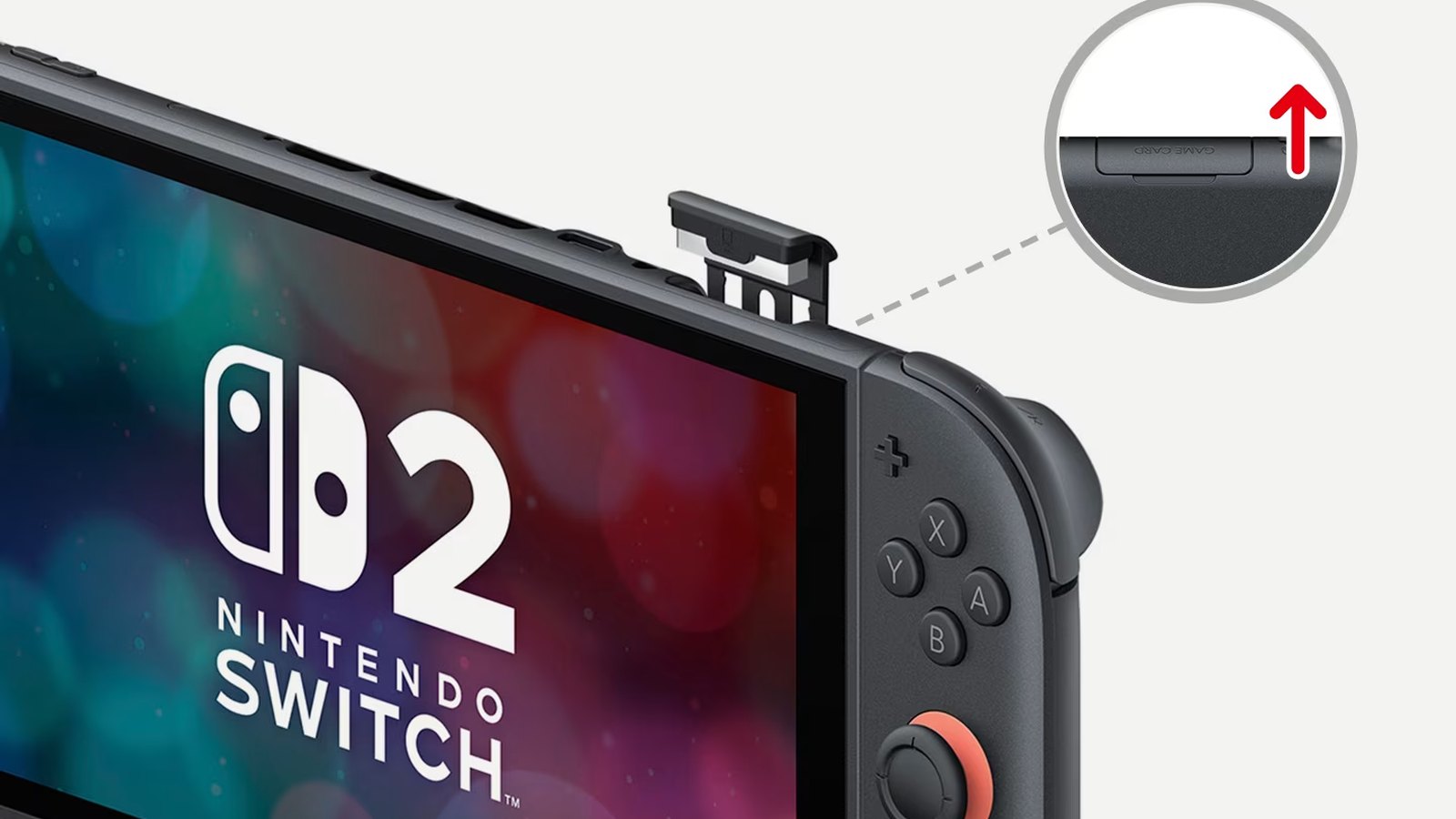
Nintendo Switch 2 supports both conventional game cartridges and Game-Key Cards, which function differently.
A traditional cartridge stores game data directly on the physical media, although some releases may still require additional downloads or updates. A Game-Key Card, meanwhile, contains the key needed to access a game rather than the game data itself.
According to Nintendo’s official documentation, players must connect to the internet and download the game to their Switch 2’s internal storage or a compatible microSD Express card before playing.
Once the initial download and first launch are completed, Game-Key Card titles can generally be started offline, provided the physical card remains inserted. The card can also be used on another Switch 2, although that console must download the game separately.
For physical game collectors, the difference has implications beyond storage requirements. A conventional cartridge containing a complete playable game can potentially remain usable without needing to retrieve its core data from an online service.
A Game-Key Card instead depends on the required download being available when the game is first installed. This distinction has made the format controversial among players concerned about long-term accessibility and game preservation.
The reported restriction is particularly relevant because publishers have gained additional cartridge capacity options for Switch 2 releases.
Earlier in October, publisher ININ Games announced that it was replacing the planned Game-Key Card edition of R-Type Dimensions III with a conventional cartridge following developments involving smaller-capacity Switch 2 cartridges. The publisher also confirmed that the change would increase the game’s retail price by €10.
However, that decision was made before the game’s physical release, making it different from replacing an already published Game-Key Card edition.
There may also be a route for publishers to introduce separately submitted editions. Nintendeal suggested on social media that a publisher seeking to change the physical distribution format might need to submit an entirely new game build. That interpretation has not been verified as an official Nintendo requirement.
It remains unclear whether a differently named release, such as a Complete Edition, could qualify for a new cartridge submission under the alleged policy. No universal exception or formal approval process has been established publicly.
The retailer’s claims therefore raise questions about whether existing Switch 2 Game-Key Card releases can later receive full-cartridge editions, but they do not establish a confirmed Nintendo-wide ban.
For now, collectors hoping to replace download-dependent physical releases with complete cartridges have no verified assurance that publishers can make that transition after launch. Nintendo would need to clarify its distribution requirements before the scope of the alleged restriction can be determined.
