


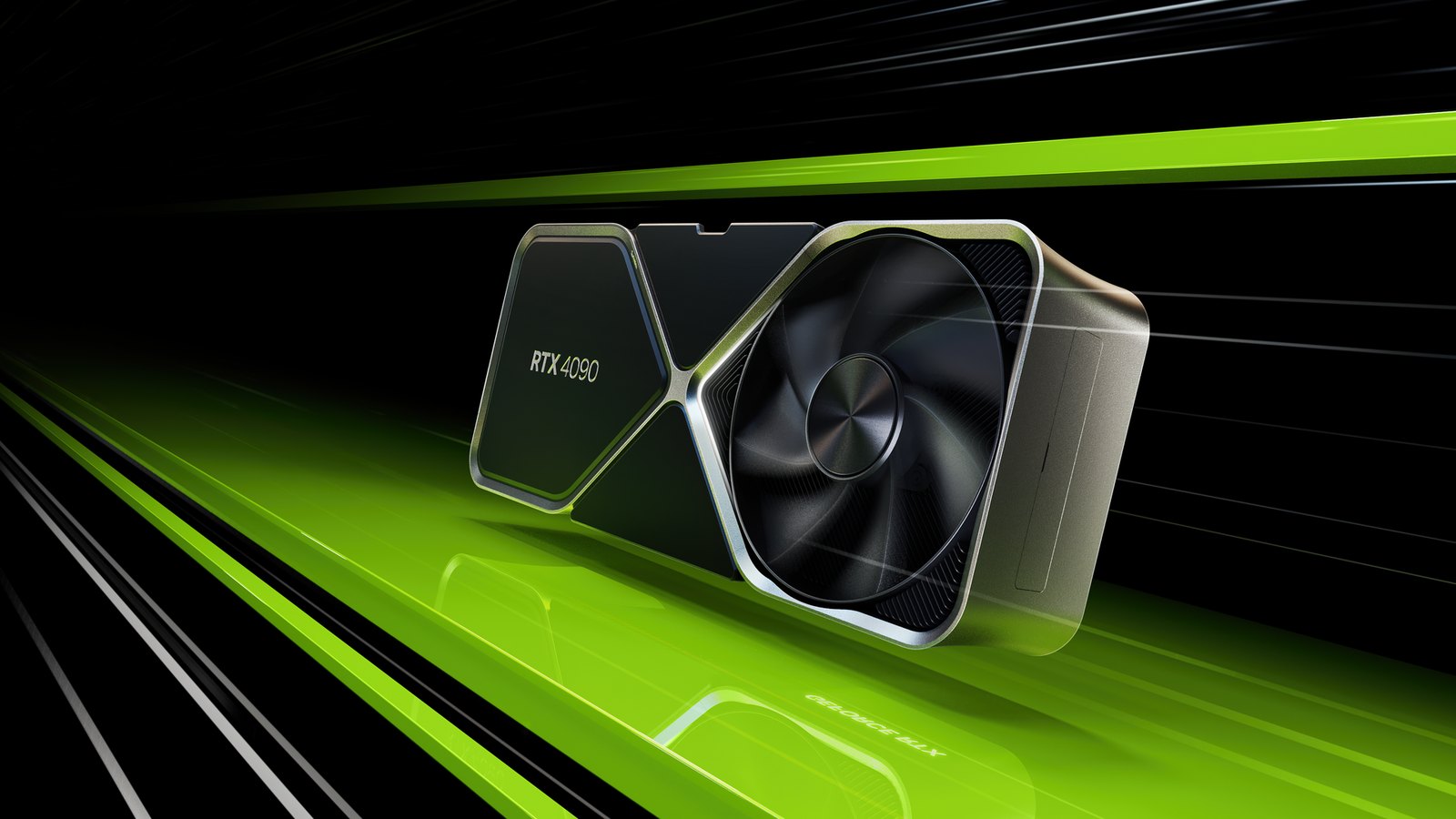
Modders have developed experimental tools that unlock restricted Tensor Core performance on NVIDIA GeForce RTX 20, RTX 30 and RTX 40 series graphics cards. The modifications remove hardware-level throughput restrictions affecting certain AI calculations, with an RTX 4090 demonstrating nearly twice its original FP16 and BF16 Tensor Core instruction throughput in developer benchmarks.
The projects target NVIDIA’s Turing, Ampere and Ada Lovelace architectures, allowing supported consumer GPUs to approach the computational capabilities normally associated with professional workstation cards. Unlike conventional GPU modifications, these tools do not require flashing the graphics card’s VBIOS or installing modified NVIDIA drivers.
The performance improvements apply specifically to supported compute operations, including calculations used in local AI workloads. They do not translate into higher frame rates in games.
The modifications address restrictions on Tensor Core operations that use FP16 or BF16 inputs with FP32 accumulation. Tensor Cores are specialized GPU units designed to accelerate matrix calculations used in machine learning and other computational tasks.
NVIDIA’s consumer GeForce cards have historically operated certain Tensor Core instructions at reduced throughput compared with professional GPUs. For example, the RTX 4090 can deliver approximately 330 TFLOPS of FP16 Tensor performance under favorable accumulation conditions, but its throughput is roughly halved when using FP32 accumulation.
Developers have found ways to modify the GPU’s speed-selection configuration before the standard NVIDIA driver initializes. This allows previously restricted instructions to operate at higher throughput without changing the card’s power limit or enabling additional processing units.
One implementation, gpu-unlock-ada, maintained by GitHub developer JustAResearcher, demonstrates the technique on an RTX 4090 using a Linux kernel module. The project builds on earlier work by Zagitta and firmware research involving TOTORONG.
In the developer’s original RTX 4090 tests, FP16 throughput with FP32 accumulation increased from 165.6 TFLOPS to 331.6 TFLOPS. BF16 throughput under the same accumulation conditions rose from 165.5 TFLOPS to 330.6 TFLOPS.
The project also reports experimental results from an RTX 4070 Ti SUPER, where FP16 throughput increased from 95.0 TFLOPS to 189.9 TFLOPS. BF16 performance similarly rose from 95.0 TFLOPS to 189.7 TFLOPS.
These measurements represent approximately doubled Tensor Core instruction throughput in the tested operations, rather than a doubling of overall GPU performance.
An independent RTX 4090 owner subsequently reproduced the instruction-level improvement. That test recorded FP16 throughput increasing from 160.4 to 320.4 TFLOPS and BF16 throughput rising from 159.7 to 320.2 TFLOPS.
However, actual matrix multiplication performance improved by smaller amounts. In the same independent tests, FP16 cuBLAS workloads gained approximately 12% to 34%, depending on matrix dimensions. BF16 workloads improved by around 16% to 20% in two tested configurations, while another showed practically no improvement.
The difference illustrates why doubling a GPU’s theoretical instruction throughput does not necessarily double the speed of an AI application. Memory bandwidth, workload characteristics and other processing limitations can prevent software from fully utilizing the additional computational capacity.
Earlier GeForce generations have also received experimental implementations.
Zagitta’s gpu-unlock project targets selected Ampere graphics cards, including models based on NVIDIA’s GA102, GA103, GA104 and GA106 chips. Developer benchmarks on an RTX 3090 Ti recorded BF16 matrix multiplication throughput increasing from 87.5 TFLOPS to 157.4 TFLOPS, an improvement of approximately 80%.
The same RTX 3090 Ti tests measured FP16 performance increasing from 87.5 TFLOPS to 118.4 TFLOPS, demonstrating that the benefits can vary substantially between instruction types.
For Turing GPUs, the Turing-unlock project maintained by haohervchb documents a successful experimental implementation on an ASUS RTX 2080 Ti. Its October 22 measurements showed FP16 instruction throughput with FP32 accumulation increasing from 46.94 to 93.66 TFLOPS.
The developer also measured an improvement from 48.15 TFLOPS to 85.17 TFLOPS in an 8192-dimension cuBLAS matrix multiplication test. However, the implementation remains specific to the tested hardware configuration and is not presented as a universal RTX 20-series solution.
These projects use a different approach from GPU power and voltage limit modifications. Rather than adjusting operating limits, the Tensor Core unlocks change low-level configuration settings that determine the permitted execution rate of particular instructions.
The Linux implementations perform these changes early in the boot process, before the NVIDIA graphics driver takes control of the GPU. The Ada implementation then performs a PCIe function-level reset and allows the unmodified driver to initialize the card normally.
The modifications are experimental and hardware-dependent. Successfully testing one GPU model does not establish compatibility with every graphics card using the same architecture. The changes are also temporary rather than permanent firmware modifications.
Linux is currently the primary platform for the publicly documented implementations, although a separate experimental Windows UEFI implementation has demonstrated improvements on a specific RTX 4070 Ti configuration. That Windows work is not a general-purpose installer.
The low-level process carries risks, including unsuccessful driver initialization, display problems or boot failures. Developers recommend retaining an unmodified boot configuration, and the available tests do not establish long-term stability across all supported hardware.
For gaming PC owners, the practical benefit depends on how their graphics cards are used. Running local language models, image-generation software or other Tensor-heavy applications could benefit when the workload uses the affected computation paths.
Other workloads may see little improvement. The RTX 4090 tests showed that INT8 operations and conventional scalar FP32 calculations remained close to their original performance levels.
The distinction is particularly relevant as consumer GeForce cards are increasingly used for AI computation alongside gaming. Interest in repurposing gaming hardware for AI workloads has also extended to newer products, including RTX 5090 cards being converted for AI servers.
For now, the available modifications demonstrate that selected GeForce GPUs can execute certain Tensor Core operations substantially faster than their default configurations allow. Their usefulness for everyday AI applications will depend on workload-specific performance, compatibility and further testing.
