


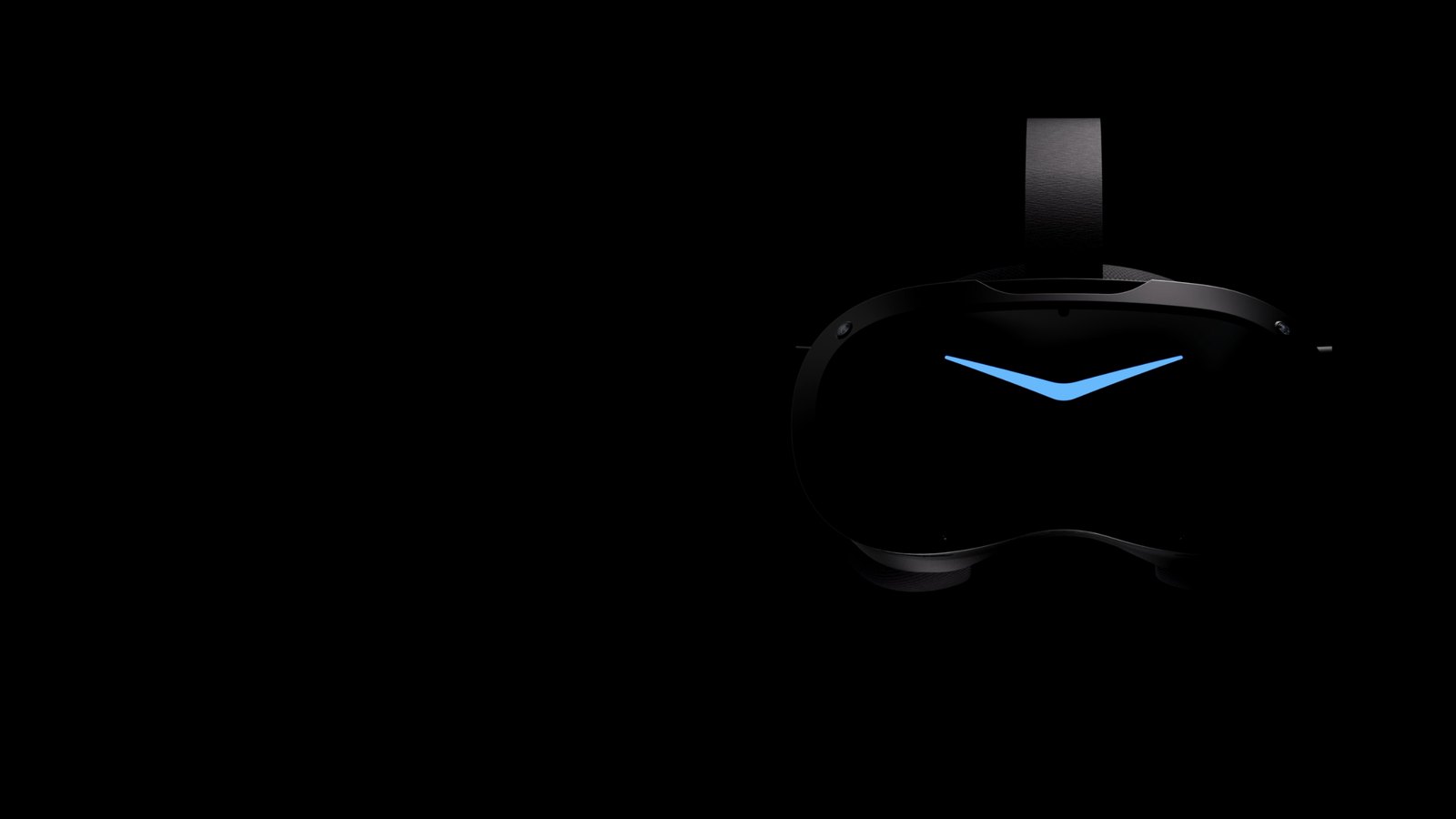
Pimax has unveiled the Crystal Pro, a $1,399 wireless PC VR headset built around a new eye-tracked technology the company calls Native Foveated Streaming. Announced during its Frontier 2026 event, the headset supports standard Wi-Fi streaming out of the box while offering an optional third-generation 60G AirLink system for higher-bandwidth wireless play. Hands-on demonstrations are scheduled to begin in the fourth quarter of 2026, with shipping planned for 2027.
The Crystal Pro uses 2880 x 2880 QLED panels for each eye, giving the headset roughly 17 million pixels in total. Pimax pairs them with aspheric glass lenses, Mini-LED local dimming with 576 zones per eye and a claimed 110-degree horizontal field of view. Refresh rates include 72Hz, 90Hz and 120Hz, with the full 120Hz mode available when the headset is connected to a PC through DisplayPort.
Its headline feature is the optional 60G AirLink, which uses eye tracking to determine where the user is looking and sends the GPU’s native image directly to that focused region without conventional video encoding. Areas outside the user’s focal point can be transmitted more efficiently, reducing the amount of bandwidth required to maintain high image quality where it matters most. Pimax says the system can deliver the equivalent of 2880 x 2880 per eye at up to 90Hz within the focus area.
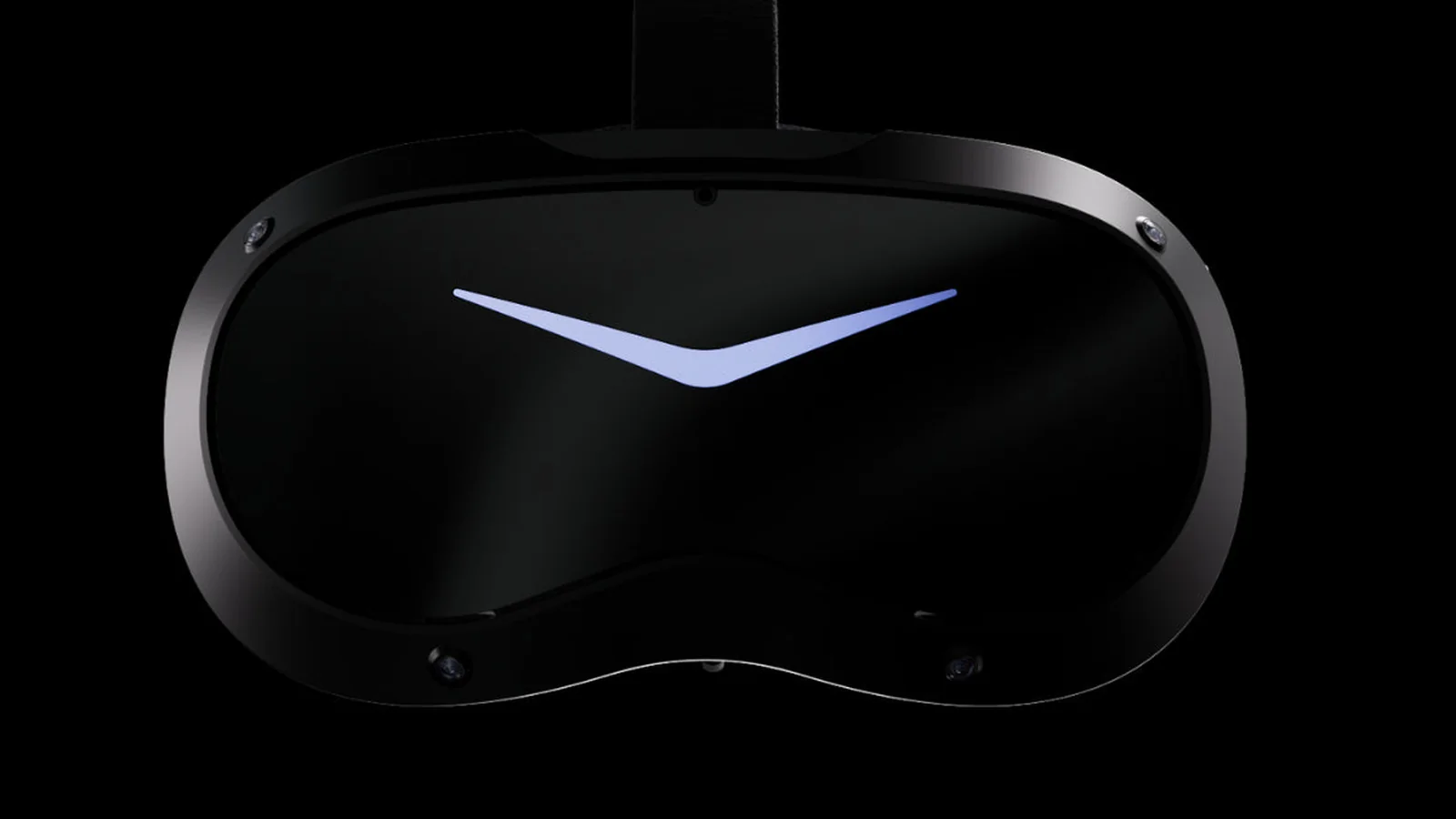
The third-generation AirLink kit uses two Room Antennas operating in a 2×2 MIMO configuration. Pimax claims this is the first 60GHz 2×2 MIMO wireless connection used by a VR headset, providing up to 6 Gbps of combined throughput and adding less than 2 milliseconds of latency. The dual-antenna arrangement is also intended to maintain the connection when one signal path is briefly obstructed by a player’s body or movement.
Standard wireless play does not require the 60GHz kit. Every Crystal Pro includes built-in Wi-Fi streaming and a dedicated Wi-Fi 6E adapter, while the optional AirLink is intended for users seeking substantially higher image quality without a wired DisplayPort connection. Because 60GHz signals do not pass effectively through walls, Pimax still positions the technology as a room-scale solution rather than general home networking.
Integrated eye tracking runs at 120Hz and uses ten infrared emitters per eye. Beyond enabling Native Foveated Streaming, the system can also support dynamic foveated rendering, allowing compatible software to concentrate rendering resources where the player is looking. Tracking is handled through Pimax’s SLAM 2.0 inside-out system using four cameras, motion sensing and infrared illumination for low-light operation.
Pimax is also retaining support for enthusiasts who prefer external tracking. A swappable faceplate allows the Crystal Pro to work with Lighthouse tracking even while the headset is being used wirelessly. An optional mixed-reality cover adds LiDAR and full-color passthrough, while other hardware features include active cooling, adjustable eye relief, three customizable buttons and a hard rear strap.
The headset ships with two ringed SLAM controllers, an external 16,000mAh battery and the Wi-Fi adapter. Pimax says the battery is designed to be carried in a pocket rather than mounted directly to the headset, reducing weight on the user’s head. The company also announced new Ringless VR Controllers at the same event, though pricing and release timing for those have not yet been finalized.
The Crystal Pro costs $1,399 on its own, while a bundle with the third-generation 60G AirLink is priced at $1,899. The AirLink kit will also be sold separately for $599. Pimax is currently accepting $1 reservations, while exact shipping dates beyond the broader 2027 window have not yet been announced.
Pimax also used Frontier 2026 to introduce the Spation mini-PC and a new Stratosphere Blue brand identity. The Crystal Pro is the most gaming-focused announcement of the group, combining high-resolution PC VR with multiple wireless options rather than requiring users to choose between image quality and mobility. Its eventual appeal will depend heavily on whether the 60GHz system can deliver the promised visual clarity and latency once the headset reaches customers next year.
