


Stellar Blade Complete Edition runs at approximately 540p internally in docked mode on Nintendo Switch 2, relying on NVIDIA DLSS upscaling and AMD FSR 3.1 frame generation to target 60 FPS. Digital Foundry’s latest technical analysis reveals the compromises behind the game’s performance, including reduced environmental detail, lower rendering resolutions and frame-rate drops during demanding sequences.
The independent analysis follows the November 5 launch of Stellar Blade Complete Edition on Nintendo Switch 2. While developer Shift Up had previously confirmed the use of DLSS and frame generation, Digital Foundry’s testing provides a closer examination of the actual rendering resolution, performance consistency and visual differences compared with the PlayStation 5 version.
By default, Stellar Blade uses FSR 3.1 frame generation to convert a base frame rate of approximately 30 FPS into a 60 FPS output. Rather than rendering all 60 frames conventionally, the technology generates intermediate frames between those produced by the game engine. DLSS handles image upscaling separately, allowing the console to reconstruct a higher-resolution output from a substantially lower internal rendering resolution.
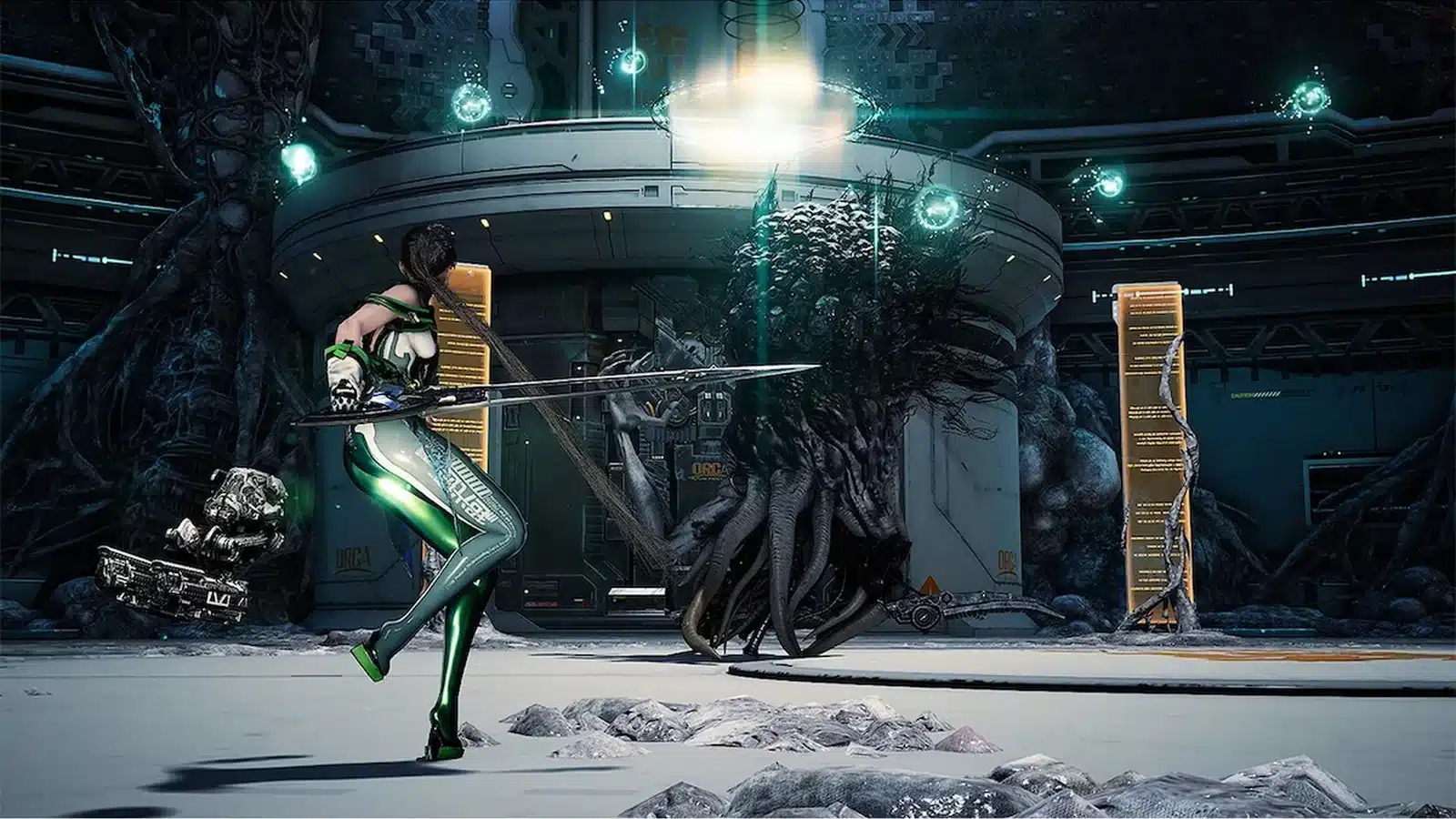
Digital Foundry measured an internal resolution of approximately 540p in docked mode with frame generation enabled. Despite that relatively low starting point, the analysis found that DLSS provides a stable presentation, helping preserve image quality while reducing the GPU workload.
Performance varies depending on the scene. Exploration generally maintains the 60 FPS output for extended periods, but combat encounters and cutscenes are more likely to experience dropped frames. Sustained performance declines are relatively uncommon, although the results demonstrate that frame generation cannot guarantee a consistent 60 FPS experience throughout the game.
Players can also disable frame generation, a feature Shift Up added to the final release following feedback about the Switch 2 demo. With the technology switched off, Digital Foundry recorded frame rates generally ranging from approximately 35 to 45 FPS, while docked internal resolution increased to around 648p.
The visual presentation remains broadly similar between the two settings, making the choice primarily a matter of frame-rate output and responsiveness. Digital Foundry suggested that a dedicated 40 FPS target could potentially have offered a better balance than the default frame-generated 60 FPS mode.
Handheld mode introduces further resolution compromises. Digital Foundry’s analysis identified an internal rendering resolution of approximately 360p, with upscaling used to produce the final image. Performance remains broadly comparable to docked mode despite the lower resolution.
When frame generation is disabled during handheld play, the Switch 2’s variable refresh rate functionality helps accommodate fluctuating frame rates. This makes the unlocked performance mode a potentially useful alternative for players who prefer conventionally rendered frames over the higher output frame rate provided by interpolation.
Beyond resolution and performance, the Switch 2 version includes several graphical reductions compared with PlayStation 5. Environmental density has been lowered, object pop-in is more noticeable, and lighting quality has been reduced. These differences become particularly apparent in larger environments and direct comparisons, although some scenes retain much of the original game’s visual appearance.
Digital Foundry found that the port preserves the overall artistic presentation despite these changes. The analysis characterized the conversion as better than expected, noting that the game’s Unreal Engine 4 technology allows it to scale down without losing many of its defining visual characteristics.
Shift Up had previously explained its technical approach in an interview with Nintendo Everything. Technical director DongKi Lee confirmed that the development team combined NVIDIA DLSS with AMD FSR 3.1 frame interpolation because the Switch 2’s DLSS implementation does not provide frame generation. The developers targeted 60 FPS in both docked and handheld modes using a 30 FPS rendering baseline.
The new measurements clarify the difference between the game’s upscaled output resolution and the substantially lower internal resolution used to generate each frame.
Digital Foundry’s findings also illustrate how Switch 2 developers are combining upscaling and performance-oriented rendering techniques to bring demanding games to Nintendo’s hybrid hardware. Similar technical trade-offs have been examined in other releases, including Modern Warfare 4's Switch 2 performance analysis, although individual games use different rendering and frame-rate strategies.
Overall, Digital Foundry considers Stellar Blade a playable Switch 2 conversion, with the strongest results occurring in less demanding gameplay sequences. The default frame-generation mode offers a higher displayed frame rate, while disabling it provides approximately 35–45 FPS without interpolated frames. Players can choose between the two approaches depending on their preference for visual smoothness and responsiveness.
