



Intel’s upcoming Nova Lake-S desktop processors could deliver up to 33% higher gaming performance than the Core Ultra 9 285K, according to newly reported internal performance projections. The figures cover two 28-core configurations, with a standard model projected to achieve up to 16% higher gaming performance and a higher-power, large-cache variant potentially reaching a 33% improvement.
VideoCardz reports obtaining internal Intel performance projections dated August 2026, following separate claims shared by hardware leaker Haze on October 29. The documents reportedly compare the upcoming Nova Lake-S processors against Intel’s Arrow Lake-based Core Ultra 9 285K using an internal Gaming Index. Intel has not publicly confirmed the figures, and neither result represents an independently verified gaming benchmark.
The standard 28-core Nova Lake-S configuration reportedly operates at a 285W PL1 power limit, compared with 250W for the Core Ultra 9 285K reference system. Under those conditions, Intel’s internal projection suggests gaming performance reaching 1.16 times that of the Arrow Lake processor, equivalent to a maximum improvement of 16%.
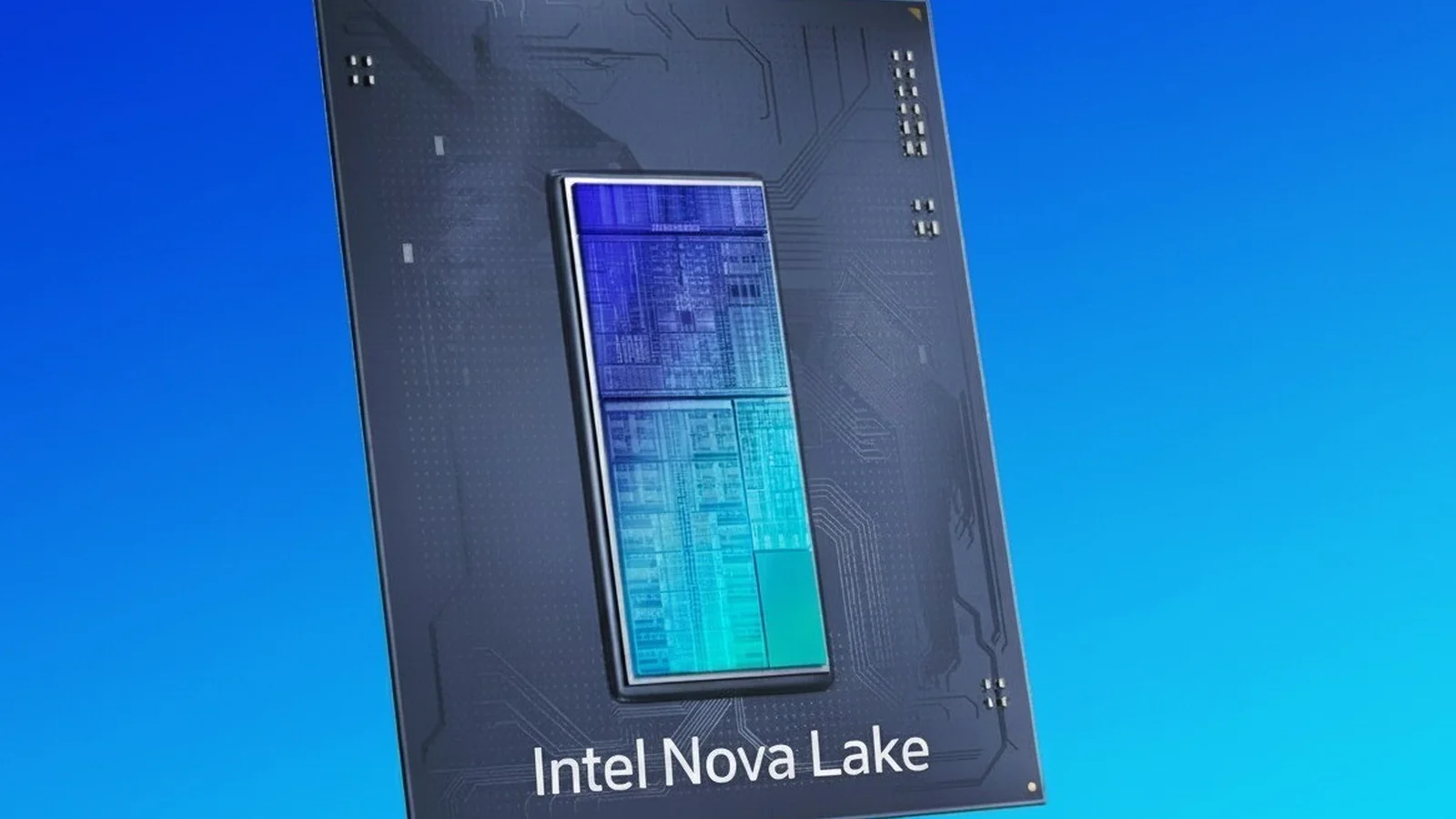
A second configuration, identified as Nova Lake-S 28C DS, reportedly uses a 296W PL1 limit and is associated with Intel’s larger last-level cache design. The leaked projection places its gaming performance at up to 1.33 times that of the Core Ultra 9 285K, representing a potential 33% improvement.
The distinction between the two configurations is important because the larger-cache variant is expected to target gaming workloads that benefit from additional on-chip cache. However, the leaked figures do not establish how much of the projected advantage comes from cache capacity, architectural changes, memory bandwidth or higher power limits.
Memory configurations also differ between the projected systems. VideoCardz states that the Nova Lake-S reference configuration uses DDR5-8000 XMP memory, while the Core Ultra 9 285K comparison system uses DDR5-6400 XMP. The 25% increase in memory transfer rate could contribute to performance differences in memory-sensitive games, making the results unsuitable for interpreting as a direct measure of architectural improvements alone.
The power limits introduce another variable. The standard Nova Lake-S configuration is listed at 35W above the Core Ultra 9 285K reference, while the DS configuration is 46W higher. These figures describe the reported PL1 settings rather than measured gaming power consumption, and they do not establish the efficiency of either upcoming processor.
Separately, hardware leaker Haze has shared additional Nova Lake performance claims, suggesting an 8% raw single-threaded improvement for configurations without Intel’s large additional cache and a 17% improvement for variants equipped with it. The leaker also referenced approximately 20% higher overall gaming performance and a potential 15% gain associated with Intel Advanced Performance Extensions (APX).
Those figures originate from claims attributed to unspecified slides, and the underlying test conditions have not been disclosed. They should therefore be treated separately from the internal Gaming Index projections described by VideoCardz rather than as independently corroborating results.
Intel’s APX instruction-set extension is another anticipated part of the platform. APX support has already appeared in a Windows 11 preview build, although its presence does not confirm the performance improvements claimed in the leak. Benefits from the additional architectural capabilities will depend on software support and the workloads being executed.
Nova Lake-S is also expected to introduce Intel’s next desktop processor generation, with AIDA64 beta references identifying the lineup as Core Ultra 4xxx across Core Ultra 5, 7 and 9 families. The processors are widely expected to arrive in early 2027, although their final specifications, pricing and launch schedule remain unconfirmed.
The reported projections provide an early indication of Intel’s possible gaming performance targets, particularly for processors equipped with additional last-level cache. However, the August 2026 estimates may have changed during development, and they do not establish performance against competing gaming processors.
Independent testing of production hardware, using comparable memory configurations, defined power settings and a representative selection of games, will be necessary to determine whether Nova Lake-S delivers the claimed improvements.
