



New details about BioWare’s canceled Mass Effect game have surfaced, describing a sequel set more than 600 years after the Reaper War, with a customizable N7 protagonist, a galaxy divided by political tensions and missions designed around player freedom. The project, reportedly called Mass Effect Universe, would also have featured experimental cybernetic abilities, close-quarters combat and the return of Liara T’Soni.
The information comes from Australian YouTuber Dantics, who shared the claims on October 23, 2026. He says he was part of a private Mass Effect Council that reviewed development material and provided feedback to BioWare. Although BioWare has used community advisory groups on previous projects, Dantics’ involvement with this particular game has not been independently established. The reported design details have not been officially confirmed by Electronic Arts or BioWare.
The disclosures follow EA’s October 21 decision to close BioWare and cancel the next Mass Effect game as part of a wider restructuring. A purported development trailer also surfaced after the announcement, offering an early look at the canceled project.
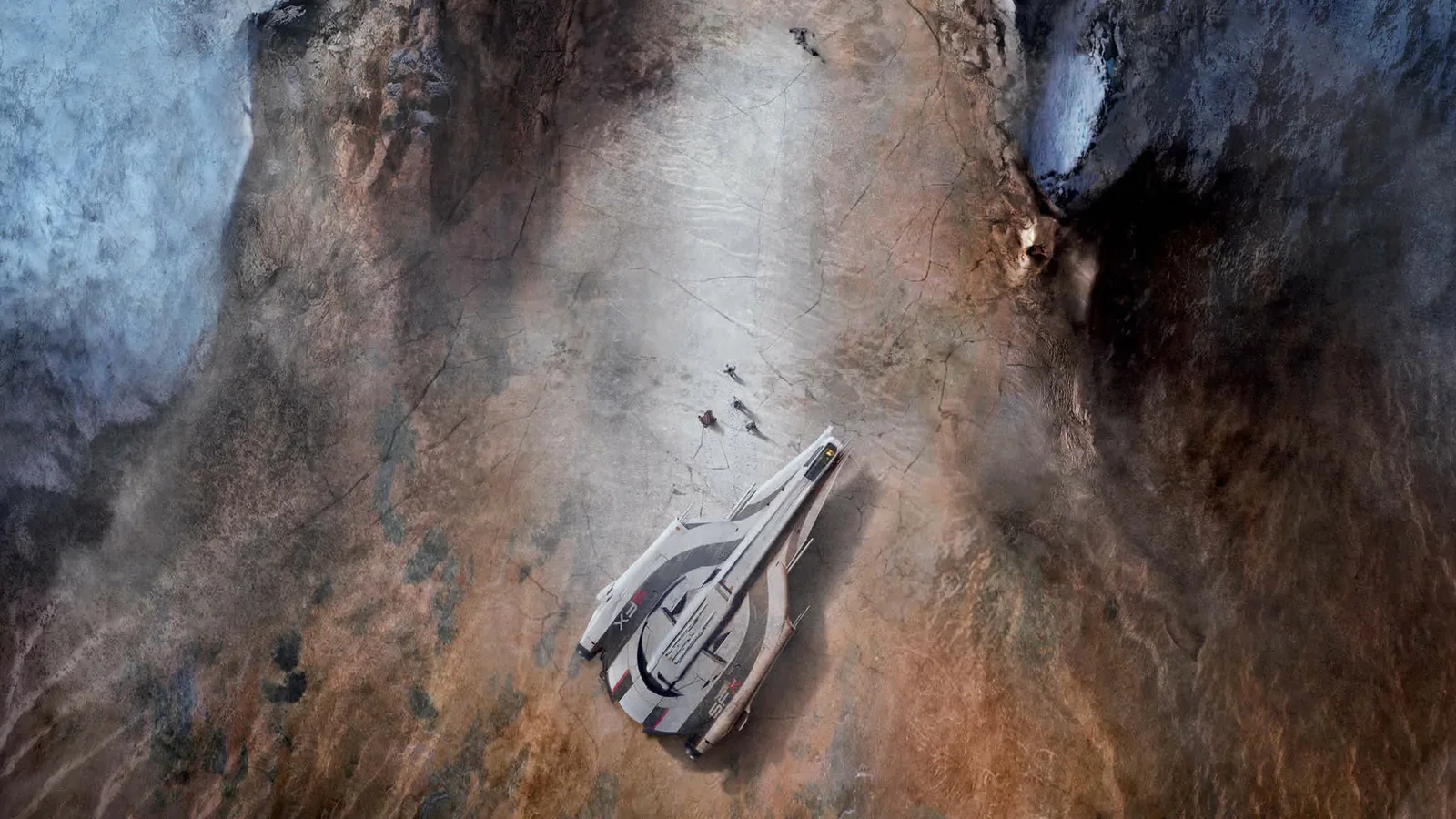
According to Dantics, Mass Effect Universe would have moved the franchise centuries beyond Commander Shepard’s original trilogy. Rather than introducing another galaxy-threatening invasion similar to the Reaper War, the story reportedly centered on a political standoff between three powerful factions.
One alliance would have united humanity with the Krogan, Batarians and other species. A second would have consisted of the traditional Council races, including the Asari, Salarians and Turians. The Geth, meanwhile, would have emerged as an independent galactic superpower capable of constructing enormous megastructures.
These competing powers were reportedly locked in a galactic Cold War, with an unidentified adversary operating behind the conflict. The setting would also have explored connections between the Milky Way and Andromeda galaxies, potentially bringing together storylines from the original trilogy and Mass Effect: Andromeda.
Players would have controlled a customizable N7 operative rather than Commander Shepard. Dantics described the protagonist as combining elements of John Wick and James Bond, suggesting an emphasis on espionage, tactical combat and specialized abilities rather than conventional firefights alone.
One of the proposed gameplay systems involved experimental technology implanted in the protagonist. These enhancements reportedly allowed players to see through walls, identify environmental systems and remotely trigger hazards. Hacking and environmental manipulation would have provided additional ways to approach encounters.
Mission design was another major departure. Dantics claims BioWare planned to retain the handcrafted mission structure associated with the original Mass Effect trilogy while introducing the flexibility of Hitman. Players would have been able to pursue objectives through different approaches, using their abilities and surroundings rather than following a single prescribed route.
Combat reportedly included brutal close-range executions alongside the series’ established shooting mechanics. The proposed squad system would also have retained interpersonal tensions, with companions capable of clashing over their beliefs and relationships. Romance was another element Dantics said the developers intended to preserve.
The story would have brought back Liara T’Soni, now portrayed as a powerful Asari Matriarch. Her return would have provided a direct connection to Shepard’s era despite the substantial time jump.
A particularly significant part of the reported narrative design concerned the three major endings of Mass Effect 3. Rather than selecting one outcome as definitive, BioWare was allegedly developing the sequel to accommodate the Destroy, Control and Synthesis endings.
Dantics explained in a separate video that the 600-year gap would have helped reconcile their consequences. Reapers surviving under the Control ending could have become technologically outdated, while widespread advancements in cybernetics could have accounted for the changes introduced by Synthesis. Shepard’s legacy would have remained relevant regardless of the player’s original decision.
Kotaku separately reported that a source familiar with the project corroborated the information discussed in Dantics’ video, although the publication could not independently verify his claimed council membership. This lends support to the account without establishing that every proposed feature had reached a playable or finalized state.
The distinction matters because Mass Effect Universe was still in development when EA canceled the project. Story concepts, combat mechanics and mission systems described during development are not necessarily representative of what would have appeared in a finished game.
For now, the disclosures provide a more detailed picture of the direction BioWare was reportedly pursuing: a politically divided galaxy, an N7 operative equipped for espionage and missions emphasizing player choice. With the studio closed and the project canceled, none of those proposed features is currently scheduled for release.
