


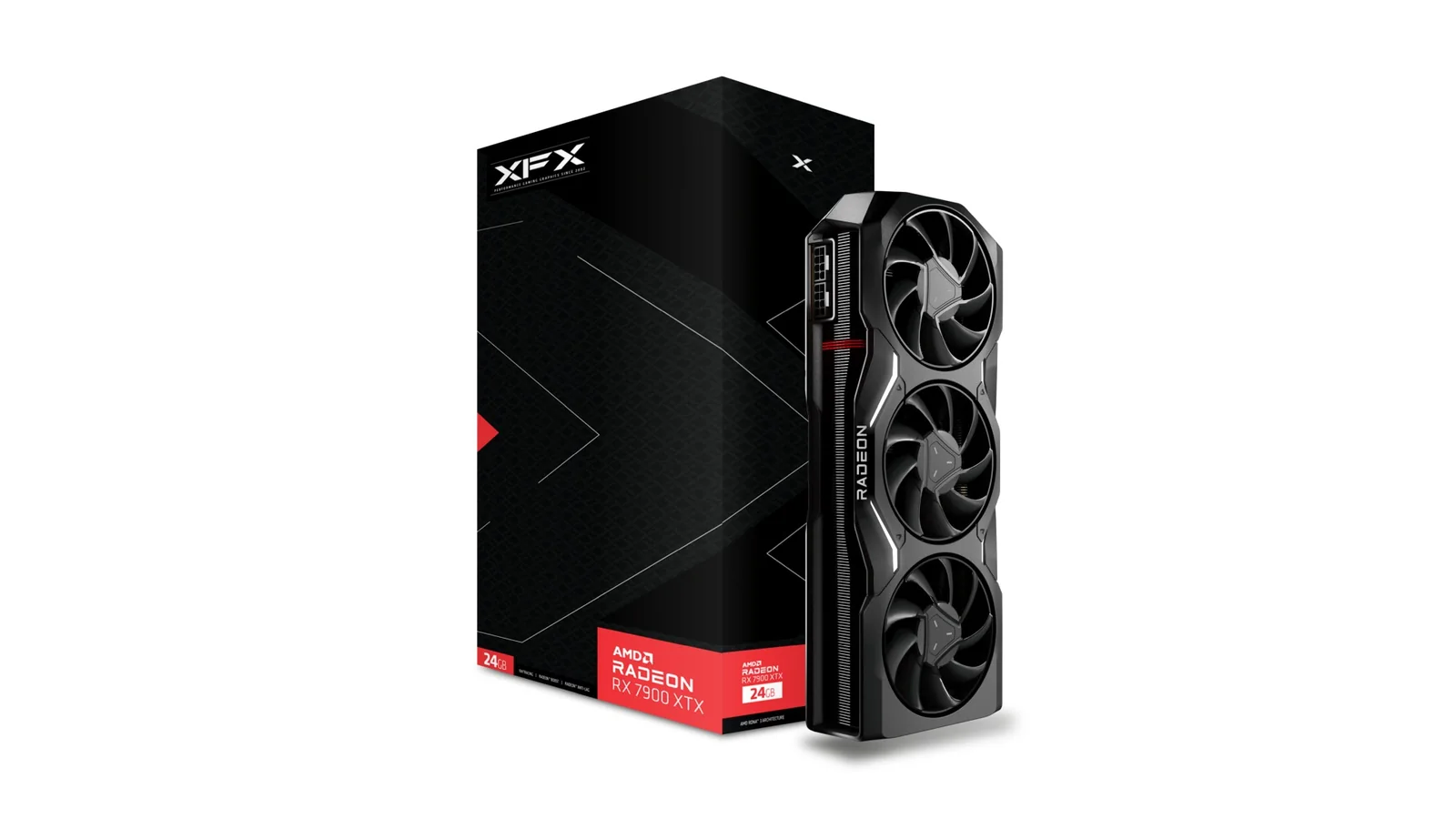
OpenAI has revealed that its AI models achieved up to 14% improvements in power, performance, and area (PPA) metrics while optimizing AMD’s flagship GPU designs. The collaboration also produced measurable improvements in components of AMD’s upcoming flagship CPU, with some AI-generated circuit optimizations already incorporated into a chip design submitted for manufacturing.
The results were disclosed in an OpenAI technical publication dated November 18, 2026. According to the company, its models achieved roughly a year’s worth of conventional chip-design optimization in less than five months by rewriting parts of AMD’s hardware description code.
The improvements were measured against designs that AMD engineers had already extensively optimized, rather than against early or unrefined hardware implementations.
OpenAI’s approach involved modifying SystemVerilog register-transfer-level (RTL) code, which describes how digital circuits perform calculations, control operations, and transfer data. The AI models examined existing circuit implementations and generated alternative designs intended to improve their efficiency.
The resulting changes were evaluated using Synopsys electronic design automation tools. These tools helped verify that the rewritten circuits preserved their intended behavior while measuring trade-offs involving power consumption, computational performance, and silicon area.
OpenAI reported PPA improvements reaching 14% across the selected flagship GPU intellectual property. However, the company did not disclose how those gains were distributed between power efficiency, processing performance, and physical circuit area.
That distinction matters for PC hardware enthusiasts. A 14% improvement in PPA does not mean a graphics card delivers 14% higher gaming frame rates. The figure represents improvements in hardware design metrics for particular circuit implementations, not an overall increase in GPU performance.
Reducing circuit area can potentially allow more efficient silicon layouts, while improvements in power consumption or timing can provide additional flexibility during chip development. Whether these optimizations translate into higher gaming performance, lower power consumption, or other product-level benefits depends on how AMD incorporates them into complete processors.
OpenAI confirmed that AMD has already integrated some of the AI-generated optimizations into a recent design submitted for manufacturing. Other changes have been added to AMD’s production design files for potential use in future implementations.
The companies have not identified the exact GPU architecture, product family, or manufacturing schedule associated with these changes. Consequently, there is no confirmation that a particular future Radeon graphics card will incorporate the reported improvements.
The collaboration also extends beyond graphics processors. OpenAI stated that AMD verified single-digit percentage PPA improvements across important blocks of its upcoming next-generation flagship CPU using circuit designs produced by the models.
Although AMD’s Zen 6 architecture and its reported IPC improvements provide broader context for the company’s next-generation processor development, OpenAI has not identified which CPU architecture incorporates the newly disclosed circuit optimizations.
The reported gains build on OpenAI’s earlier work developing its own AI inference accelerator, codenamed Jalapeño. During that project, AI-generated design changes reduced standard-cell area by approximately 13% in the accelerator’s vector unit and 10% in its matrix unit.
One multiplier redesign reduced synthesized cell area by approximately 15% while cutting operation latency from two clock cycles to one. OpenAI stated that the broader Jalapeño optimizations were subsequently validated on actual silicon.
These results provide additional context for the AMD collaboration, demonstrating how similar optimization techniques have been applied to both internal accelerator development and established commercial processor designs.
OpenAI is also working with Synopsys to integrate its models more closely with professional electronic design automation and verification workflows. The partnership aims to make AI-assisted circuit design compatible with tools engineers already use to develop and validate semiconductor products.
For AMD, the immediate significance is the ability to identify additional engineering improvements in designs that have already undergone extensive optimization. The company’s adoption of some changes into manufacturing-bound hardware indicates that the work has progressed beyond an experimental software demonstration.
However, the exact impact on future consumer GPUs and CPUs remains unknown. AMD has not announced specific products, gaming benchmarks, clock-speed improvements, or power-efficiency figures attributable to these AI-generated changes.
