


The Legend of Zelda: Ocarina of Time’s Nintendo Switch 2 remake now has a downloadable native Windows port through NX2navi, an independent project developed by GitHub user tangerineturtle1. Released publicly on November 8, 2026, the project uses static recompilation rather than conventional console emulation, converting the game’s code into a native x86-64 Windows application with a custom Vulkan renderer.
The developer released NX2navi version 0.4.0 on November 8, followed by version 0.5.0 addressing lighting and fog rendering problems. Unlike earlier experimental demonstrations, NX2navi provides a Windows launcher that builds the game locally from a user’s own Nintendo Switch 2 game files.
The project follows an earlier PC recompilation demonstration using Hookshot, which showed the remake running at approximately 50 FPS in Kokiri Forest. NX2navi is a separate implementation with a publicly available installer, additional graphics options and developer-reported playable performance across multiple locations.
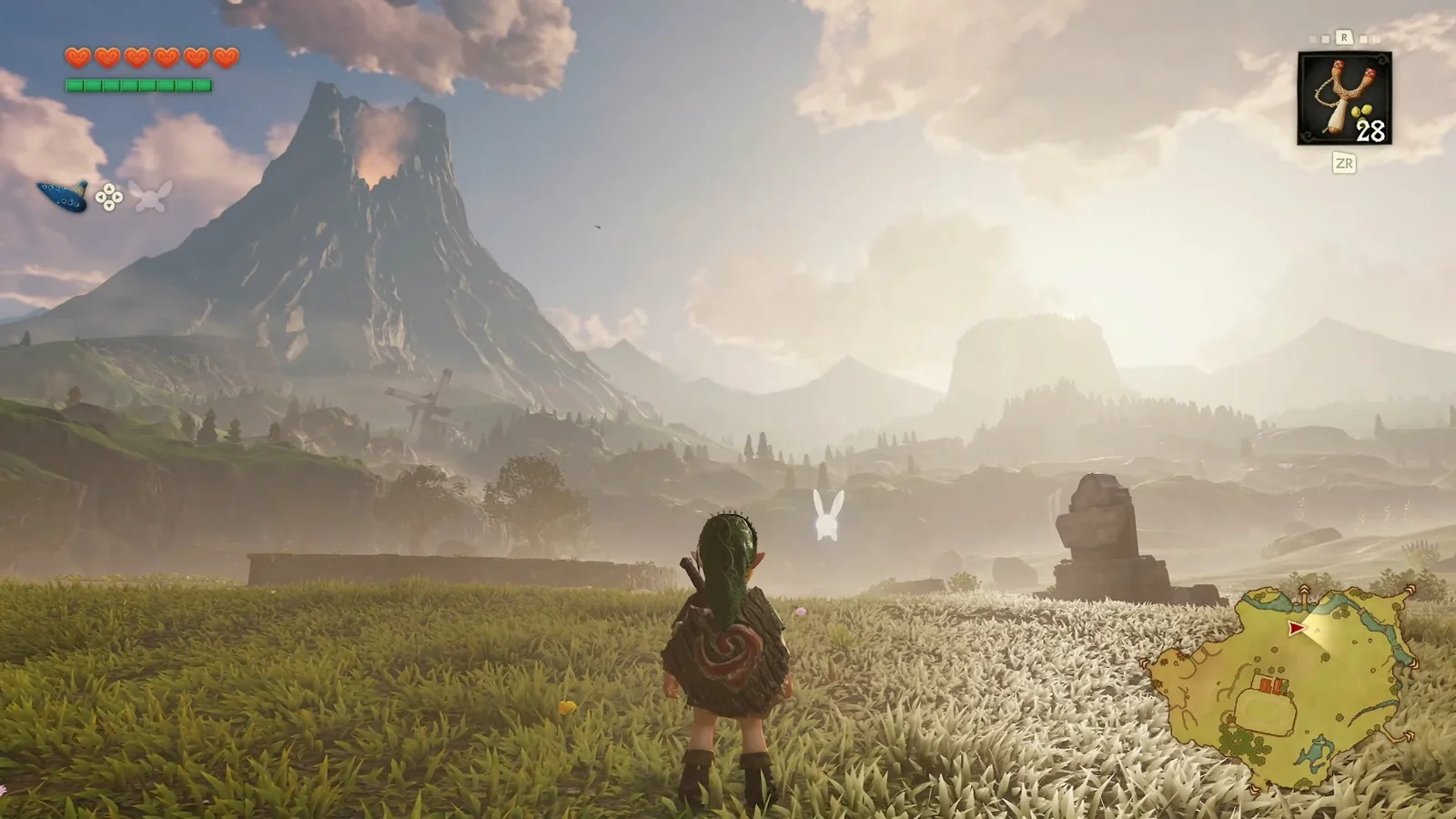
According to the project’s GitHub documentation, Kokiri Forest, Kakariko Village, Death Mountain Trail and its crater, the Temple of Time, and the Great Fairy fountains can run at 60 FPS or higher on current graphics hardware. These are developer-reported results rather than independently verified benchmarks, and the project remains in early development.
NX2navi includes several PC-specific graphics features. Players can select frame-rate limits between 30 and 240 FPS, match their monitor’s refresh rate or remove the limit entirely. The default setting is 60 FPS, matching the remake’s 60 FPS performance target on Nintendo Switch 2.
Display options include resolutions above the console version’s 1440p output, with 1800p, 4K, 5K and custom window resolutions supported. Ultrawide configurations include 21:9 and 32:9 aspect ratios, although the HUD, menus and cinematics remain at 16:9.
For image reconstruction, NX2navi supports NVIDIA DLSS on compatible RTX graphics cards and AMD FSR 3.1 across supported GPUs. AMD FSR 3.1 frame generation is also available, including on NVIDIA hardware, while DLSS Frame Generation has not yet been implemented. Other options include FSR 1, native or enhanced HDR, adjustable sharpening and a performance overlay.
The port also supports keyboard, mouse and gamepad controls with remapping, rumble, gyroscopic input and selectable Nintendo or Xbox button layouts. Players can configure docked or handheld rendering modes and choose between stereo and 5.1 surround audio.
Installing NX2navi requires a personally obtained copy of the Switch 2 remake, specifically game version 1.1.1, dumped from the user’s own console. No copyrighted game files are distributed with the project. Instead, the launcher uses the supplied game dump to construct a Windows executable locally, a process the developer estimates takes approximately 10 to 25 minutes during initial setup.
The published minimum requirements include Windows 10 or later, an x86-64 processor supporting SSE4.2, 16 GB of system memory and approximately 30 GB of storage for the game, plus another 1.5 GB for the launcher and its tools. Graphics hardware must support Vulkan 1.3 alongside the VK_EXT_external_memory_host and VK_EXT_mesh_shader extensions.
Version 0.5.0 specifically corrects visual problems introduced in the previous release. Foggy environments such as Kokiri Forest no longer display an excessive white or yellow haze, small foliage elements no longer flicker white between frames, and rendering artifacts that stretched trees into dark vertical columns have been addressed.
However, compatibility remains incomplete. The developer acknowledges occasional crashes, including a rare issue involving particle effects, and temporary stalls when entering new areas or preparing graphics resources. The first launch following an update may also require additional shader preparation.
NX2navi is an independent, non-commercial fan project and is not affiliated with or endorsed by Nintendo. Although several areas are reportedly playable at 60 FPS or above, the developer has not established complete-game compatibility or consistent performance across all supported PC hardware.
The public release gives PC players a more accessible way to experiment with native recompilation of the Switch 2 remake, provided they have the required game files and compatible hardware. Its broader reliability will depend on continued development and compatibility testing.
