


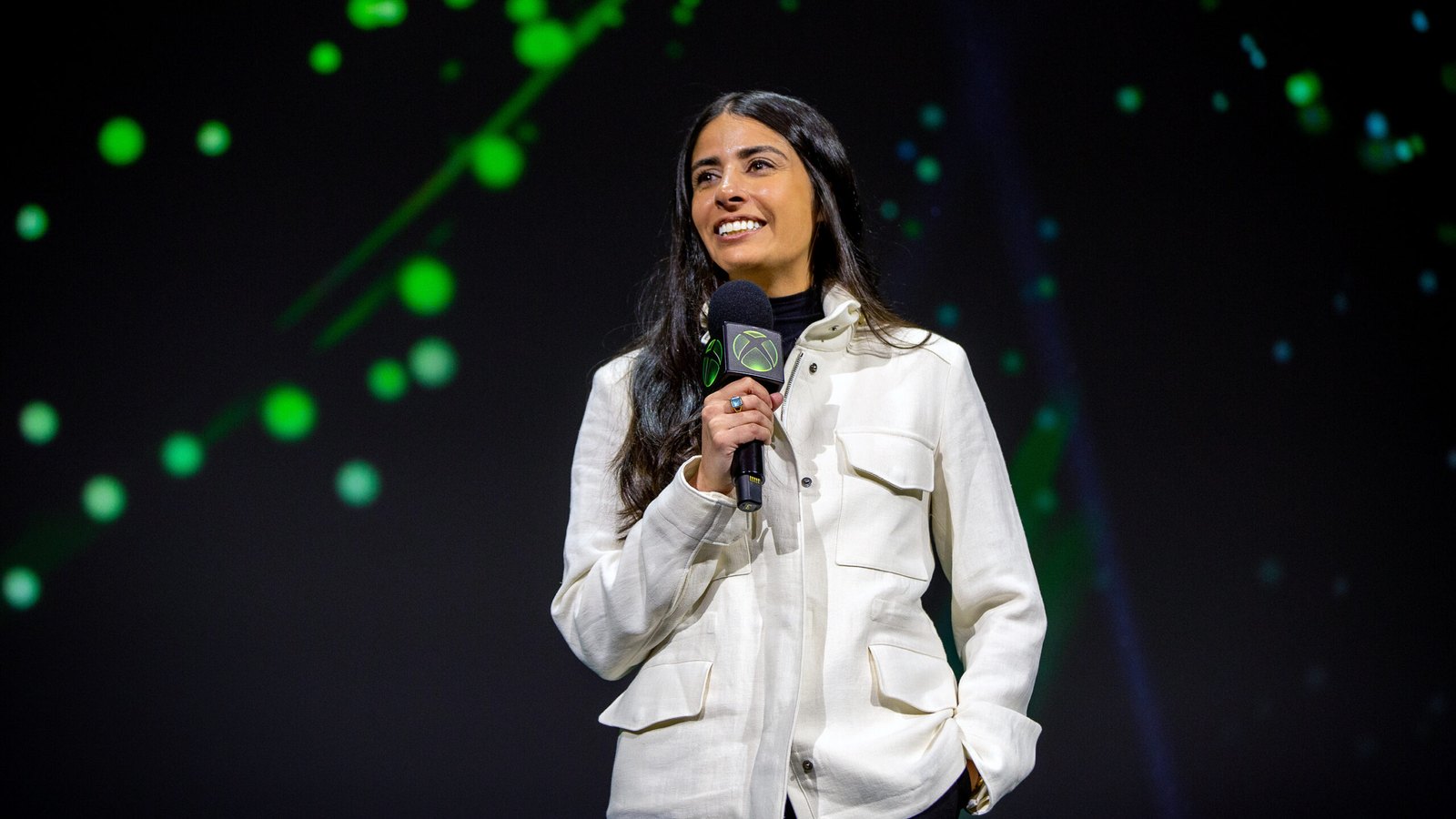
Xbox CEO Asha Sharma has been personally responding to customer support tickets as part of an effort to better understand the problems players encounter across Microsoft’s gaming ecosystem. According to a new Wall Street Journal profile of the executive, Sharma spends a few hours each month working through real support cases rather than relying solely on reports and summaries prepared for senior leadership. The unusual approach has also shown her how complicated resolving even a single player’s issue can become.
Sharma took over Microsoft’s gaming division in February 2026, succeeding longtime Xbox leader Phil Spencer. Microsoft initially appointed her executive vice president and CEO of Microsoft Gaming before formally renaming the division Xbox in April, making her title CEO of Xbox. In her first message to employees, Sharma said understanding and protecting what already worked would be her first priority, while also promising a renewed focus on Xbox’s established player base.
The support-ticket work appears to be one practical extension of that strategy. Rather than only receiving aggregated customer feedback, Sharma is directly seeing issues involving games, hardware and the broader Xbox ecosystem, according to reporting based on the Wall Street Journal profile. Spending time inside the support process also gives her exposure to the friction players experience when trying to solve account, service or device problems.

Her hands-on approach comes as Xbox undergoes a significant restructuring. Sharma has been tasked with improving a gaming operation facing declining revenue, thin margins and internal pressure to make investments more selective, with her broader plan to restructure and improve the Xbox business placing greater emphasis on major franchises, player needs and long-term profitability. The Wall Street Journal describes her management style as considerably more direct than that of her predecessor, with Sharma repeatedly using the phrase “clarity is kindness” when communicating difficult information internally.
That strategy has already produced several consumer-facing changes. Xbox has expanded its efforts around physical ownership, including a new Disc-to-Digital feature that can provide digital licenses for some physical games, while Microsoft has also removed an Xbox AI assistant that had attracted criticism. Sharma’s willingness to handle support requests herself fits the same broader effort to identify problems through direct player experiences rather than treating customer feedback as an abstract metric.
Microsoft appointed Sharma despite her having no previous professional background in the video game industry. Before joining Microsoft, she held senior positions at Meta and Instacart, building experience around large consumer platforms and operations. Microsoft CEO Satya Nadella said when announcing her appointment that Sharma’s background in scaling global services and developer ecosystems would be important as Xbox moved into its next phase.
Her tenure has also coincided with a renewed focus on Xbox hardware and services. Sharma has described the company’s upcoming Project Helix hardware initiative as a “family of devices”, while Xbox continues investing across consoles, PC and cloud gaming. At the same time, Microsoft’s gaming organization encompasses nearly 40 studios across Xbox, Bethesda, Activision Blizzard and King, giving Sharma responsibility for one of the industry’s largest collections of developers and franchises.
Personally working support tickets will not by itself resolve the larger challenges facing Xbox, but it offers a direct view of the everyday problems affecting the people using its products. For an executive overseeing a gaming business serving hundreds of millions of users, spending several hours each month inside the customer-support queue is an unusually granular way to gather feedback. It also reinforces Sharma’s stated intention to rebuild Xbox around a clearer understanding of what its existing players actually want from the platform.
