


Danchi Days sold approximately 1,500 PC copies during its first week despite accumulating 55,000 Steam wishlists before launch, falling substantially short of its developer’s expectations. Melos Han-Tani, the indie developer behind Anodyne and Angeline Era, disclosed the figures in a November 8, 2026, retrospective examining why the game’s marketing generated considerable interest but relatively few purchases.
Released on October 29, Danchi Days had been expected to sell at least 5,000 copies during its opening week. Instead, it achieved roughly 30% of that target, with a first-week Steam wishlist conversion rate of just 2.2%.
Han-Tani’s analysis highlights a problem facing independent developers: accumulating thousands of Steam wishlists does not necessarily translate into strong launch sales, particularly when those wishlists originate from advertising campaigns and gaming showcases rather than established fans.
The disappointing launch has also raised concerns about the game’s financial performance. Han-Tani estimates that Danchi Days cost approximately $200,000 to develop and is now unlikely to recover that investment.
However, the developer clarified that the situation does not threaten the studio’s survival, partly because of the successful release of Angeline Era in 2025 and the financial flexibility provided by self-publishing.
Danchi Days Steam Wishlist Conversion Falls Below Expectations
According to Han-Tani’s publicly shared Steam statistics, Danchi Days accumulated approximately 60,000 total wishlist additions before release, leaving around 55,000 outstanding wishlists after removals.
The game ultimately converted 2.2% of its pre-launch wishlists into purchases during its first week. Han-Tani considers a conversion rate of approximately 6% to 7% acceptable based on previous experience, while earlier games had achieved rates between 6% and 10%.
A closer examination of Steam’s monthly wishlist data revealed substantial differences between audiences.
Players who wishlisted Danchi Days during its September 2024 announcement period had a first-week conversion rate of 7.4%. By comparison, wishlists added during July 2026 converted at just 1%.
The September 2024 group was therefore more than seven times as likely to purchase the game during launch week.
Han-Tani believes the difference reflects how players discovered Danchi Days. People who followed the developer’s previous work generally demonstrated stronger purchasing intentions, while those encountering the game through promotions often expressed more tentative interest.
The developer also noted a limitation in Steam’s reporting. Because its monthly wishlist statistics do not fully account for deleted wishlists within individual cohorts, the calculated conversion rates may slightly underestimate actual conversion.
Gaming Showcases and Reddit Ads Generated Weaker Sales
One of the biggest findings concerned the effectiveness of different marketing channels.
Han-Tani explained that most Danchi Days wishlists originated from gaming showcases, while approximately 10% to 15% came from Reddit advertising.
Although these campaigns helped build the game’s wishlist total, they attracted audiences that were considerably less likely to purchase it.
Using relative conversion likelihood scores derived from the game’s data, Han-Tani assigned announcement-period followers a score of 100, compared with 60 for streamer audiences, 40 for organic discovery and Steam’s personalized calendar, 25 for showcase viewers, and 15 for advertising clicks.
These figures represent comparative likelihoods rather than actual conversion percentages.
The analysis suggests that a wishlist from an established fan was approximately seven to eight times more likely to become a purchase than one acquired through advertising.
Han-Tani also reconsidered his earlier enthusiasm for paid advertising, arguing that its value depends heavily on a game’s price, genre, and expected conversion rate.
Another warning sign was relatively weak Steam follower growth throughout development. Despite the substantial wishlist total, Danchi Days attracted fewer organic followers than Angeline Era, which launched with fewer wishlists.
The developer believes this should have prompted a more cautious sales forecast.
Why Danchi Days Struggled to Convert Interest Into Purchases
Beyond marketing channels, Han-Tani identified a possible mismatch between Danchi Days’ presentation and its actual gameplay.
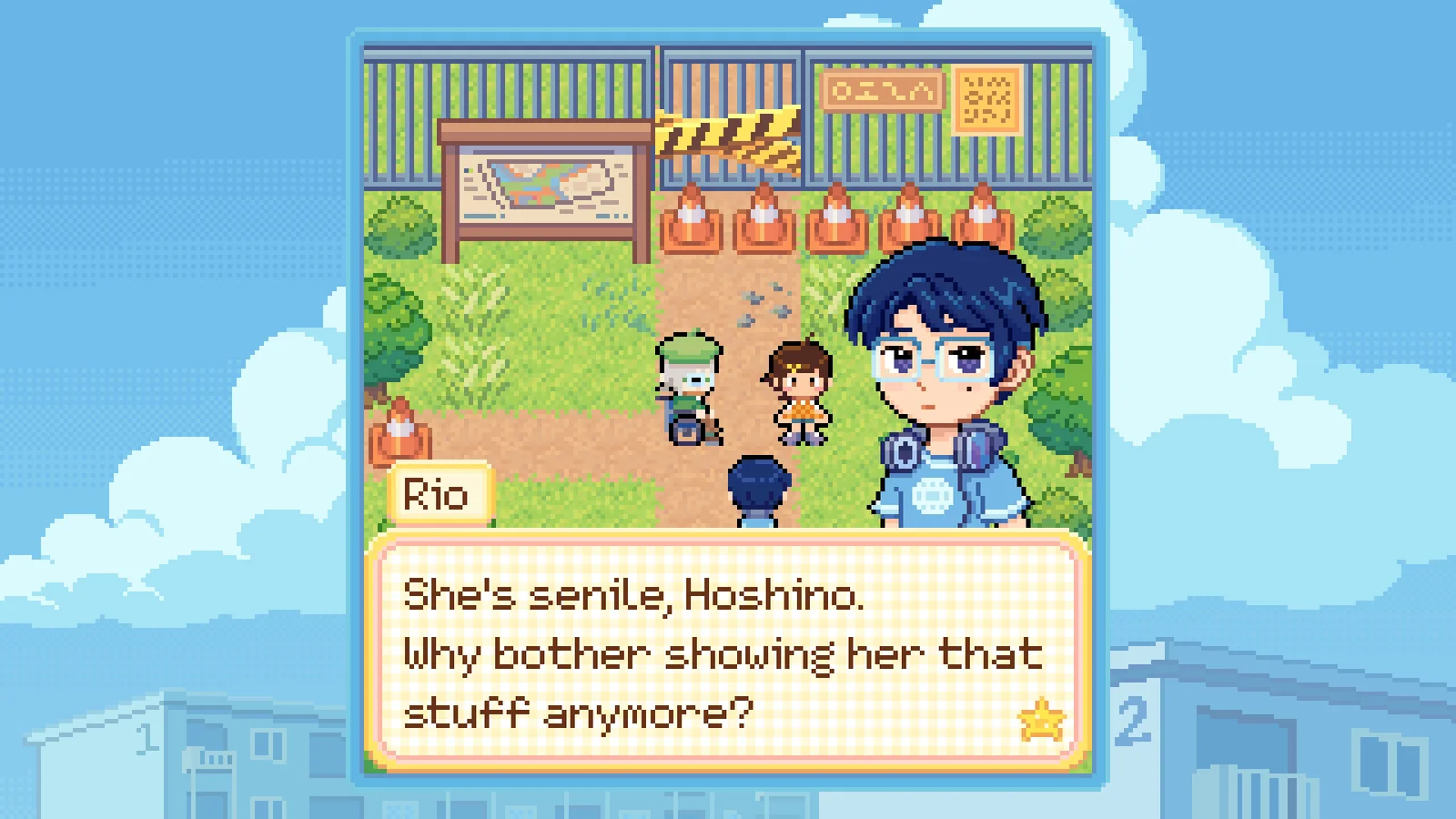
The five-chapter adventure follows Hoshino, a young girl living in a Japanese housing complex with her father and grandmother, who has dementia. After learning about a discontinued neighborhood summer festival, she attempts to revive the celebration by reconnecting with residents.
Danchi Days combines colorful, nostalgic visuals with exploration, dialogue, character relationships, and bittersweet storytelling.
Han-Tani describes the game as “post-cozy,” reflecting its resemblance to cozy games despite lacking many familiar mechanics associated with the genre.
Unlike conventional farming or life-simulation games, Danchi Days does not revolve around farming, crafting, business management, friendship meters, or similar progression systems.
Instead, its appeal comes from exploring the neighborhood, interacting with characters, and gradually understanding their relationships.
Han-Tani suspects that the game’s cheerful appearance attracted players expecting a more conventional cozy experience. Those players may have added it to their wishlists because of its visual style without developing a clear understanding of its gameplay.
At the same time, the developer believes that players interested in its unconventional narrative mechanics may have overlooked it because its presentation suggested a different type of game.
The inclusion of serious subjects such as aging and dementia further complicated its marketing, particularly when combined with a deliberately cheerful visual style.
Han-Tani does not believe launch timing, competing releases, or broader economic conditions sufficiently explain the disappointing performance. Instead, he attributes much of the problem to relying too heavily on wishlist totals while underestimating the difficulty of communicating the game’s unconventional design.
Danchi Days May Struggle to Recover Its $200,000 Investment
Following the launch, Han-Tani revised his expectations to approximately 5,000 PC copies sold during the first year and around 10,000 over three years.
These are developer projections rather than confirmed future sales.
The developer also revealed that the game’s peak concurrent player count reached approximately 35 to 40, compared with an anticipated peak of around 100.
Accounting for development time, marketing expenses, localization, Steam’s revenue share, and selling prices, Han-Tani considers recovering the estimated $200,000 investment unlikely under the revised sales forecast.
Nevertheless, he emphasized that the disappointing release does not mean the studio is closing.
The commercial success of Angeline Era has provided some financial protection, allowing the developer to continue despite Danchi Days falling short of expectations.
The contrast also illustrates how different commercial outcomes can be for independent games. While Danchi Days struggled to reach its initial target, other recent releases have experienced significantly stronger launches, including Queen's Domain surpassing 100,000 sales in less than five days.
Another example is Probably Stolen's transformation from a small Steam demo into a much larger commercial release, demonstrating how differently indie-game launches can develop.
Developer Plans to Adjust Marketing Without Changing the Game
Despite the disappointing commercial performance, Han-Tani does not intend to fundamentally redesign Danchi Days to fit a more established genre.
The developer argued that changing the art direction, introducing conventional cozy-game mechanics, or altering the narrative simply to increase sales would undermine the original creative vision.
Instead, future marketing will place greater emphasis on explaining how the game works.
Planned promotional efforts will focus more directly on character interactions, quest design, and the mechanics involved in talking to neighbors and organizing the festival.
Han-Tani acknowledged that clearer marketing might improve conversion modestly but does not expect it to completely overcome the challenges associated with selling an unconventional game.
Nintendo Switch and PlayStation versions are also planned, although the developer currently expects those releases to do little more than break even over the longer term. No specific console release dates were provided in the retrospective.
Danchi Days remains available on Steam for Windows and macOS, alongside a free demo.
The developer’s disclosed figures provide a detailed example of why Steam wishlist totals alone can be unreliable indicators of commercial demand. In this case, the origin of those wishlists, limited organic audience growth, and difficulty communicating the game’s mechanics all contributed to a launch substantially below expectations.
