


The DockCase Mount Ling 2 Pro, a multifunctional gaming handheld dock with built-in game capture and support for up to 4TB of NVMe SSD storage, has undergone hands-on testing that reveals both its capabilities and limitations. Published on November 3, 2026, testing by Tom’s Hardware recorded approximately 820 MB/s sequential SSD speeds and identified intermittent connection problems with Nintendo Switch 2. The Pro model is being offered at a $149 early-bird Kickstarter price, with a planned regular price of $249.
Designed for Nintendo Switch 2, Steam Deck, ASUS ROG Ally and other compatible handhelds, the Mount Ling 2 Pro combines an external SSD enclosure, capture card, display output and USB connectivity in a single docking station. Its main advantage is consolidating accessories that portable gaming users might otherwise purchase separately.
DockCase offers two versions of the device. The standard Mount Ling 2 costs $109 through its early-bird promotion, increasing to a planned $199 regular price. The Pro version adds an integrated capture card for $149 during the promotion, with a planned regular price of $249.
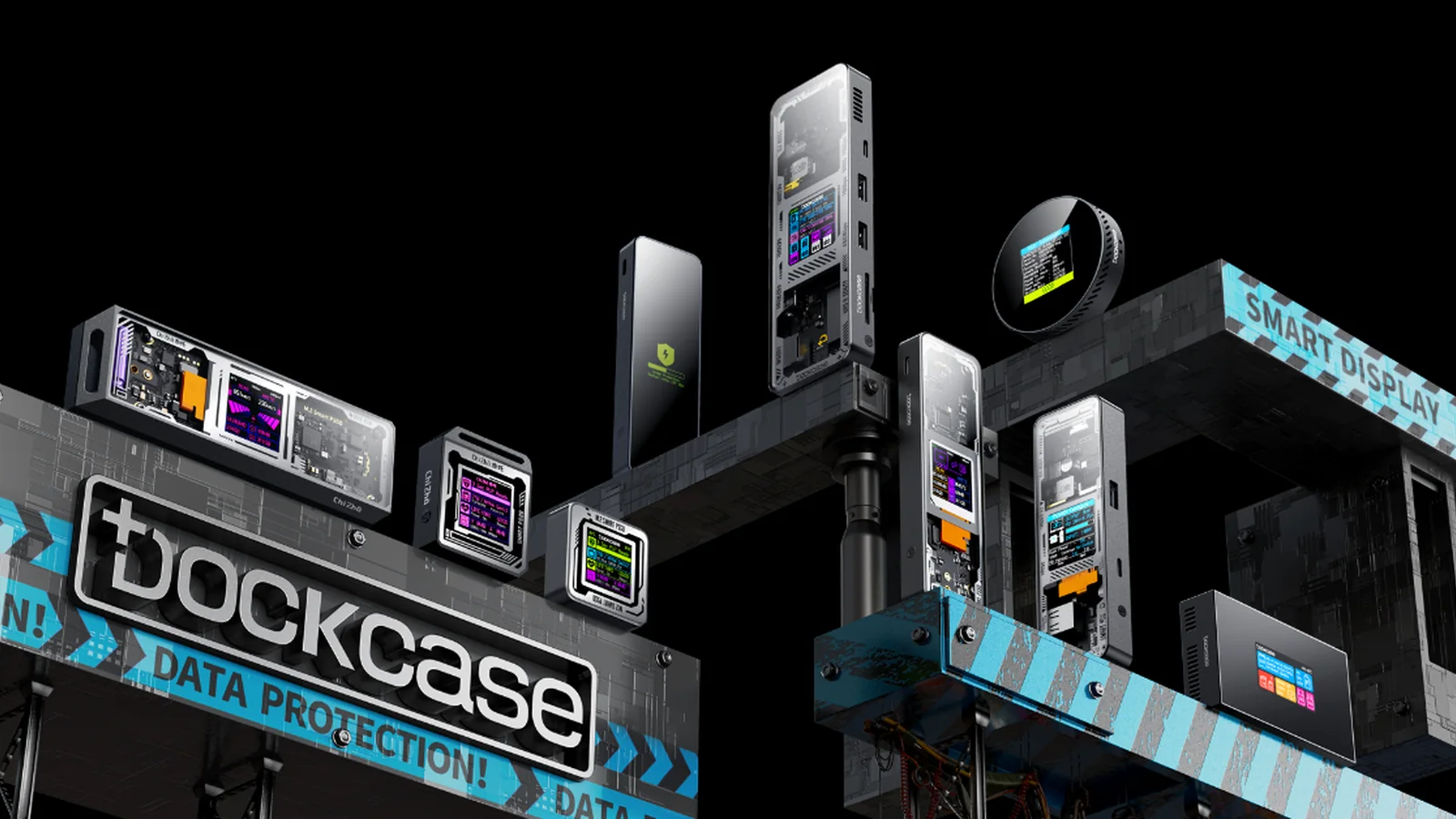
Both models accommodate M.2 NVMe SSDs in 2230, 2242 and 2280 form factors, supporting capacities up to 4TB. The dock also includes an internal 40mm cooling fan with automatic and manual speed controls, although its compact SSD compartment does not provide space for a conventional heatsink.
Connectivity includes HDMI 2.0 output supporting 4K at 60Hz, Gigabit Ethernet, USB-A connections, optical audio and up to 100W USB-C power delivery. The dock communicates with the connected handheld through a USB 3.2 Gen 2 interface rated at 10Gbps.
A built-in touchscreen provides information about HDMI output, SSD activity, power delivery and connected devices. Users can also access SSD health information, adjust cooling settings and manage the dock’s lighting through the interface.
Tom’s Hardware tested the storage functionality using a 2TB WD Black SN770 PCIe 4.0 SSD. CrystalDiskMark results showed sequential read and write speeds of approximately 820 MB/s, substantially below the drive’s advertised maximum read speed of 5,150 MB/s when connected directly to a compatible motherboard.
The difference reflects the dock’s 10Gbps USB connection, which limits how much of the SSD’s performance can be utilized. Random storage performance was also considerably lower than sequential transfer speeds.
For Steam Deck owners, however, the external storage remains functional. Testing confirmed that the dock worked smoothly with Valve’s handheld, although configuring the SSD for Steam games required entering desktop mode, partitioning the drive and setting up a suitable game library location.
Nintendo Switch 2 compatibility proved more complicated.
Although DockCase advertises support for Nintendo’s handheld, Tom’s Hardware encountered intermittent failures involving charging, HDMI output and device recognition. The dock sometimes established one connection while failing to maintain another, and incorrect connection sequences occasionally caused the dock itself to restart.
Getting HDMI output working reliably required a specific setup procedure. The Switch 2 needed to be unlocked before connecting it to the dock’s bottom USB-C port, rather than the upper connection.
The publication also highlighted a major storage limitation: neither the original Nintendo Switch nor Switch 2 can access the dock’s installed NVMe SSD. Consequently, the advertised 4TB expansion capability is useful for compatible PC handhelds but cannot provide additional game storage for Nintendo’s consoles.
Switch 2 owners instead remain dependent on the console’s supported storage expansion methods, including compatible microSD Express cards. The limitation is particularly relevant as the platform continues to receive major releases alongside updates to demanding games such as Cyberpunk 2077.
DockCase’s built-in capture card offers another function for gameplay recording and streaming. Testing confirmed that the capture hardware was recognized as a video capture device, but DockCase does not supply dedicated recording software. Users must instead rely on third-party applications such as OBS Studio.
The capture functionality also depends on the dock maintaining a working video connection. Tom’s Hardware raised concerns that future Nintendo system updates could affect compatibility with third-party docking hardware, potentially requiring DockCase firmware updates. This remains a potential risk rather than a confirmed future incompatibility.
The dock supports firmware updates over USB, providing a mechanism for correcting software problems. However, the connection issues documented during testing had not been demonstrated to be fully resolved.
The Mount Ling 2 Pro therefore offers different practical benefits depending on the connected system. Steam Deck and other compatible PC handheld users can potentially take advantage of its external storage, display output, charging and capture capabilities, while Switch 2 users cannot access the NVMe storage and may encounter additional connection requirements.
At its $149 promotional price, the Pro model combines several functions in one accessory, but the $249 planned regular price and documented Switch 2 limitations are important considerations for buyers primarily interested in Nintendo’s handheld.
